Tuesday, 20 February 2007

The final word


This is the last of the posts of Fr Fleming's visit, and it is apt that the theme should therefore be end of life, rather than beginning of life. After the John Paul II Evangelium Vitae lecture on Thursday evening, Fr Richard and myself were treated to the second half of the double bill, along with about 20 priests from the Archdiocese of Birmingham, to Fr Fleming's talk on 'End of Life Decision Making: Priestly Pastoral Care and Responsibility' on Friday, at a clergy information day put on by SPUC at the Paragon Hotel in Birmingham.

Fr Fleming started by noting that, at one time, one could take it for granted that doctors and priests had the same objective - to care for the whole person. However, a parting of the ways has happened, in a similar way that there has been a parting of the ways between faith and culture, such that for many doctors care is directed only at the physical self, in an almost mechanical sense. Worse still, for many health service bureaucrats, medicine has become a service, with customers, and has been reduced to an element of the market economy, governed by cost effectiveness. But we are dealing with 'patients' (those who suffer) and not 'customers' (pawns in a consumer society).

The first quality which governs decision making in end of life care is 'beneficence' - that is, the need to do good rather than evil. At its most basic level, this means primum non nocere (not to do the patient any harm), but it should also include acting for the good of the patient, and in its more radical forms, benevolent self-effacement (which includes some personal cost) and even heroic sacrifice (like those doctors who have stayed behind in epidemics to treat the sick and have fallen foul of disease themselves, or Damian the Leper, the priest who cared for lepers in a colony and caught the disease himself). The second quality is compassion. This is the virtue of being willing to act once one realises what is the right thing to do. Very often we are presented with cases in the media of people who want to kill themselves, and we are called to be compassionate to their plight. True compassion can only act in accordance with what is morally right, and never be what is morally wrong dressed up as compassion. Compassion does not release us from moral responsibility, and is not a quick fix.

The first aim of medicine is to cure. In end of life situations, though, medicine is dealing with care not cure. Compassion is the first virtue that is required in this circumstance. It follows that there must be adequate nursing care, the assurance that the person is not going to be abandoned in their pain, and the requirement of competence (being incompetent is effectively not caring). In these ways doctors and priests share in the priestly ministry. They care on the basis of need not right. They are not 'service deliverers'; they are not caring because of a contractual duty, but based upon trust.

The flagship of those who support such things as euthanasia is 'autonomy', the right to free choice and self-determination. We are not, however, free to choose what is morally wrong. Sickness clouds over our own self-image and so reduces the ability to act autonomously. Claims that very sick people are competent to make these life and death decisions has to be questioned simply from the point of view of their own competence to view the matter clearly. The right to life has to be above all autonomy, as it is the fundamental moral principle. Often when a sick person is saying to their relatives 'It would be better if I were to die', they are not looking for a way out but an assurance that their relatives will be there. The worst thing is for the family to stand there and say 'Yes you ought to die'. Studies in Australia reveal that in a hospice a small percentage of those with terminal illness (around 10 per cent) wished to be killed. But once they were assured that they would not be alone, and they would not suffer unnecessary pain, that number dropped to zero. Often the call for euthanasia is based on our inability to watch suffering. It's more a case of "Please put grandma out of my misery."

The major principle for us must be the inherent dignity of human life, no matter how frail, how vulnerable or how damaged. Once we surrender this profound respect for human life in some hard cases, it is just a matter of where you draw the line, and who draws it and why. And on what do we then base those decisions? Where do we draw the line? Do we judge it on cost? On our disgust? On our whim? On our convenience?

Eugenics is nothing new. It was around long before Hitler. He just picked up on what was already there in literature. The so-called archetypal English gentleman, Bertrand Russell, wrote: "Feeble-minded women, as everyone knows, are apt to have enormous numbers of illegitimate children, all, as a rule, wholly worthless to the community. These women would themselves be happier if they were sterilised, since it is not from any philoprogenitive impulse that they become pregnant" (Marriage and Morals, London 1972, p.130). There are others like James Lachs who wrote that "the only way to treat hydrocephalic children 'humanely' is to 'mercifully' put them to death". And Mary Anne Warren advocated "the kind, quick, painless, and direct method of lethal injection." Notice how they use the language of compassion in order to justify direct killing. More insidious still, in pre-Nazi Germany, was the opinion of Karl Binding that "we are spending lots of time, patience and care on the survival of life devoid of value."

In response contemporary secular bioethics is driven by the rejection of suffering as an unredeemable evil. It follows that in order to get rid of the suffering one should get rid of the person. The Church however continues to promote the inherent dignity of the human individual. For the Church, the definitive suffering is the loss of eternal life, being rejected by God - damnation. Of this definitive suffering modern day followers of the Enlightenment project have no account.

Pope John Paul II is the great witness to hope and antidote to the desire to eradicate visible suffering. Nietzsche wrote that "the doctor should give to the sick each day a fresh dose of disgust." Pope John Paul II disgusted many commentators in the secular media by publicly living out his life to the end, not hiding his frailty and disability. Even though his activities were curtailed, he made the most of the life he had until the very end. He practised what he preached in relation to his duty of care of his own life.

When we look at those most cruel forms of euthanasia - the killing of those in a persistent vegetative state - we see the lie of 'mercy killing'. Indeed the very name 'persistent vegetative state' objectivises and dehumanises the person. We should, rather, call them the 'permanently unconscious'. Under the Mental Capacity Act, and indeed taken from the Bland case judgement, it is now legal in this country to kill those who are permanently unconscious by withdrawing feeding after one year of unconsciousness. This is a most cruel thing to do, as it makes the person starve to death and dehydrate. The thing is the media often present such people who are permanently unconscious as near to death anyway. But nothing could be further from the truth. They are far from death. In fact, that is the problem for the health care bureaucrats. They simply WON'T die, unless killed by withdrawing basic care. The law gets around it by stating that feeding is medical care. Certainly the insertion of a feeding tube is a minor medical procedure, but thereafter it is only the administration of food. When we have lunch it is not a medical procedure. It is something necessary for our self-preservation. So when we feed the incapacitated we are feeding - a corporal act of mercy - someone too vulnerable to feed themselves.

The words of Pope John Paul II resonate especially: "I feel the duty to reaffirm strongly that the intrinsic value and personal dignity of every human being do not change, no matter what the concrete circumstances of his or her life. A man, even if seriously ill or disabled in the exercise of his highest functions, is and always will be a man, and he will never become a 'vegetable' or an 'animal'". It is therefore the duty of all who have care of those who are incapacitated to respect this dignity in every way: "Medical doctors and health-care personnel, society and the Church have moral duties toward these persons from which they cannot exempt themselves without lessening the demands both of professional ethics and human and Christian solidarity." This solidarity calls for us to be there for the sick and dying and to act on their behalf when they are robbed of their voice and cannot respond. It follows that "the sick person in a vegetative state, awaiting recovery or a natural end, still has the right to basic health care (nutrition, hydration, cleanliness, warmth, etc), and to the prevention of complications related to his confinement to bed." In other words, a right to basic nursing care. "I should like particularly to underline how the administration of water and food, even when provided by artificial means, always represents a natural means of preserving life, not a medical act. Its use, furthermore, should be considered, in principle, ordinary and proportionate, and as such morally obligatory, insofar as and until it is seen to have attained its proper finality, which in the present case consists in providing nourishment to the patient and alleviation of his suffering."

"The evaluation of probabilities, founded on waning hopes for recovery when the vegetative state is prolonged beyond a year, cannot ethically justify the cessation or interruption of minimal care for the patient, including nutrition and hydration. Death by starvation or dehydration is, in fact, the only possible outcome as a result of their withdrawal. In this sense it ends up becoming, if done knowingly and willingly, true and proper euthanasia by omission."

I really have to thank SPUC for bringing Fr Fleming to Birmingham once again, so that we could hear his clear reasoning and be guided by his teaching. If you have the opportunity to hear him speak then take it.

The Dawkins Delusion

I've not read it yet, but I've been recommended a recently published book (recommended by Fr Fleming actually). It rather reminds me of what someone wrote after Jean-Paul Sartre died: "God is Dead - Sartre" - "Sartre is dead, God". In answer to the fundamentalist rant of Dawkins in 'The God Delusion', SPCK have brought out a book by Alister McGrath 'The Dawkins Delusion: Atheist fundamentalism and the denial of the divine'.

Monday, 19 February 2007

Forty days...a new blog

At the University of Birmingham Catholic Chaplaincy we have started a blog just for Lent, with the daily readings, plus reflections, prayers, and anything else we think of. Take a look at it here.

Saturday, 17 February 2007

Dignity confirmed

Fr John Fleming's lecture on Abortion in International Law hardly moved from the secular frame of reference, giving us a competent analysis for a foundational understanding of the issues which surround this matter.

His lecture gave us a framework for identifying and refencing the important values which are at stake in this issue. We should congratulate Fr John for the great service he has done; for as a Catholic Priest, confining himself to examining human values, he has made this study available to all, whatever their persuasion. Moreover, he has grounded the debate in fundamental principles such that we can recognise anew those essential human values which are so prone to mis-representation by political and media handling.

Allow me to present some of his material here:

1. The basic question - Do United Nations documents protect the rights of the unborn? Yet the issue currently hinges on two opposed positions - those who want a right to abortion and those who say that embryos have rights. In fact United Nations Law is a prima facie case for the protection of the unborn. United Nations Law transcends all philosophical, religious and cultural trends and uses reason to apply universal moral principles. So, once we recognise certain things to be true, we have a duty to respond to them in a morally adequate manner.

2.The nature of Rights. They are inalienable - you can't take them away, and they are inviolable - you can't override them.

3. "Everyone". This means all members of the human family - there can be no distinctions.

4. "Personhood". Equality is referenced to personhood - you can't distinguish between people. Nor is personhood determined by function - rather, "being" defines function. The question of function can't then be used against an embryo.

5. Interchangeable language? No, mixing two kinds of language doesn't help. "Person" is a philosophical term; "embryo" is a scientific term. Yet there is a relationship between these two frames - the basis of personhood is science. Science tells us that there is an embryo and what an embryo is, therefore we know that a person has come into existence.

6. With regard to what is Catholic the same principle applies. Namely, the Church applies a principle to that which science has determined. So we cannot say, a thing is right becuase it is Catholic, but rather, a thing is Catholic because it is right.

Specific cases:

1. Freezing embryos prevents embryo research. De-frosted embryos have serious metabolic disorders which makes them an unreliable source.

2. Rape. It is possible to discover where a woman is in her cycle are provide treatment which will prevent fertilisation. Also, it is not proper to prejudge the response that a woman might make. In cases of rape, there is a whole situation to consider in which people have rights.

3. Could we employ a better term than "person" and for instance, speak of "genetic coding" to distinguish an individual? Broadly speaking yes we could, but we have to remember that science changes and so such scientific terminology could become obsolete.

4. Using vaccines developed from foetal tissues. Actually, there should be moral pressure to develop vaccines that don't come from this source.

5.NaProtechology. Yes, we need to promote this kind of infertility treatment which co-operates with a woman's natural reproductive processes.

I hope that this will give you some idea of the lecture which Fr John presented. A small Google search made on his name will reveal just how extensive is his learning and what a competent guide he is in the whole field of Bioethics. If you hear of any future talks or lectures by Fr John - don't miss the opportunity, he is an excellent speaker.

Opening up the situation to truth

I am so pleased that I made the effort to attend Fr Fleming's lecture on Abortion in International Law at Birmingham University. Fr Fleming exposed the underlying principles of Human Rights and their consequent Laws, and the extensive knowledge that science has given us, which have been somewhat hidden by the rhetoric and polemic of the Abortion debate, but which nonetheless, comprise the extensive ground from which humanity is called to resolve the issue of abortion even in its most difficult cases. Indeed, I would suggest that both pro and anti abortionists have many steps to retrace in order that the abortion question, which confronts humanity at this time, may be resolved by a careful, yes, difficult, but coherent reference to all the issues which are involved and to truth which underpins the whole situation. Yes, we have to look at real life situations, but we are able to address them in the best way possible, if we recognise the truth which is reflected in law and in science.

The fact is that Law recognises the rights of the unborn, and that "personhood", a difficult category for law to handle, is nonetheless confirmed by today's science. Indeed, science shows us how the embryo from the moment of fertilisation activley establishes a relationship with its mother in the womb.

The entire lecture presented us with a call to seek a resolution to the question of abortion precisely because the secular frame of reference, in law and science exists to help us do this. Fr Fleming, in a clear, challenging, and honest way has opened up the abortion debate, in Birmingham University at least, to the foundations of this issue which we have to recognise as the basis for any honest debate. (I'll cover some of the issues Fr Fleming raised in another posting.)


Thanks Fr Julian for organising yet another top event.

Friday, 16 February 2007

The Rights of the Unborn Child under International Law

What a tremendous couple of days we've had up here in Birmingham! Last night we had the first annual Pope John Paul II Evangelium Vitae lecture, given by Fr John Fleming of Campion College, NSW, Australia, on the theme "The Rights of the Unborn under International Law". The previous evening in the University, a speaker who was doing and Introduction to Marxism attracted a mere 15 people, so I was getting worried having booked a sizeable lecture theatre for our lecture. However, I was pleased by the 100 people - roughly half of them students - who came along, as well as doctors and other people associated with the Catholic Chaplaincy.

After introductions Fr Fleming began his fluent, clear, precise and concise delivery of his presentation on the topic. In about 45 minutes he managed to make a rationale for his two major points: that the Declaration on Human Rights and associated United Nations texts - upon which International Human Rights law is based - recognise the rights of the unborn, and that personhood - which is a philosophical concept informed by science - begins at conception.

In the first half of the lecture, Fr Fleming dealt with the documentation of the United Nations. His reasoning went like this:
1. Human rights are the basis for international law, and all nations are subject to that law without distinction.
2. Human rights are 'inalienable' - this is, cannot be taken away, or even given away by an individual - and 'inviolable' and pertain to 'all members of the human family'.
3. While it is received wisdom that the United Nations declarations do not defend the unborn, it is not so and indeed there is a Declaration of the rights of the unborn doing the rounds of nation state members at the moment.
4. Everyone has the right to recognition everywhere as a person before the law.
5. All are equal before the law and are entitled without any discrimination to equal protection of the law.
6. The child, by reason of his physical and mental immaturity, needs special safeguards and care, including appropriate legal protection, before as well as after birth (Declaration on the Rights of the Child 1959).
7. Parallel legislation regarding capital punishment stipulates that a woman cannot be put to death while pregnant, because it would take the innocent life of the child (some infer that it means that, in order to safeguard the well-being of an unborn child, the woman should not labour under pain of the threat of capital punishment at all.)
8. Motherhood and childhood are entitled to special care and assistance, and that all children, before or after birth or whether born in or out of wedlock, shall enjoy the social protection of their family, society and the State without any discrimination.

In the second half of the lecture, Fr Fleming spoke about the beginning of life and personhood based upon the best scientific data available at the moment. His basic thesis was to show that the human embryo, whether brought into being by sexual reproduction or otherwise, and whether inside or outside the womb of the woman, is a separate and distinct, living human individual; will progress through all the stages of development in a continuum, through the embryonic and foetal stages, to birth, unless it dies or is killed; is a distinct and autonomously developing human being, whose right to survival depends upon a protected, hospitable and interpersonal environment that provides life sustenance in the form of nutrition, hydration and oxygen - the basic rights of every human being at all stages of life.
In order to demonstrate this thesis Fr Fleming showed:
1. The newly formed embryo is not some featureless bundle of cells, but that the human body is already shaped at the moment of conception. Indeed the sides of the embryo which will be the back and head are not left to later development but are already distinguishable at conception.
2. The embryo communicates with the mother from conception using chemical substances to signal to the mother's body that it needs to get ready for its implantation.
3. The concept of personhood is a philosophical concept which is based upon scientific understanding. Sometimes scientists will change their understanding of personhood to suit their own ends. Eg Embryo research scientists hold 14 days as the threshold above which they see the embryo as becoming human. But a different level is used for abortions.
4. Denying personhood involves denying rights. The law then becomes arbitrary in apportioning rights (such as in the past slaves had no rights as they were not acknowledged as persons under the law).

Fr Fleming ended the lecture with a reference to the teaching of Domum Vitae stating that "the human being is to be respected and treated as a person from the moment of conception."

After the lecture the audience raised a number of points. Some were from the stalwart pro-lifers who were present, but it was interesting that a number of students were there who came from different backgrounds - some from law, from philosophy, theology and above all medicine - and with different viewpoints. But what was notable was the openness of everyone to hear Fr Fleming and to dialogue with him. There were no acrimonious interventions at all. This contrasts with my memory of being a student in the 1980s where these life issues really got the adrenalin flowing as well as the rhetoric. I was interested to learn more about something I knew nothing about before, and that is NaProTechnology, which is a new form of dealing with infertility in women, which is very successful, and is totally in accordance with the teaching of the Church, but which is getting very little support in Britain, unlike IVF.

It is certainly very pleasing to have been able to bring life issues into the public forum within the University. It was important that this did not seem to be a minority interest, so I deliberately did not hold it in the Catholic Chaplaincy nor even in the multi-faith Chaplaincy. The lecture was in the large lecture theatre in the University's School of Education. I'm sure this helped people who were coming from outside the chaplaincy to feel that they were not threatened or overawed by their environment. Now all we have to do is plan next year's lecture and try to increase interest throughout the University.

Fr Richard will do his own post tomorrow on the lecture and he'll be able to share some of the photos...

Thursday, 15 February 2007

Leading the way


Before Fr John Fleming gives his lecture this evening at Birmingham University, I thought I would draw your attention to the new college of which he is the President: Campion College Sydney.
Imagine having an academy of further education which offered a broad range a secular subjects, each of which was approached from a genuinely Catholic perspective. On its website it desribes itself in these terms:
Campion College Australia is distinctive in both educational and religious terms. Educationally, the College's basic curriculum of the Liberal Arts is a time-proven means of intellectual development and career preparation. It entails systematic study across a broad array of subjects, which cultivates genuine freedom of mind by opening it to the discovery and embrace of truth.
Religiously, it is recognisably Catholic in its affirmation of belief in the teaching authority of the Catholic Church. Students will receive a proper grounding in Catholic belief and thought, and be exposed to the richness of the Church's spiritual, moral, intellectual and cultural traditions. The teaching authority of the Church is of decisive importance in the Campion's life. The Church has a recognised competence in its own sphere of theological enquiry. More broadly, its authority safeguards the search for truth by keeping in balance a range of intellectual freedoms.
Take a look for yourself: www.campion.org.au and do download the Powerpoint Presentation on the "About Campion" page. What about there being a Catholic college in the UK with this vision?

Wednesday, 14 February 2007

Disappeared Blog

How sad that a seminarian putting decent stuff on a blog is forced to take it down because the liberal staff at his seminary can't stomach real Catholicism. No nothing extreme. Just the real thing. I've seen this sort of persecution first hand. It involves other seminarians sneakily going behind the back of the ones who are oppressed for being 'traditionalists', telling tales to staff who are always willing to listen to tittle tattle. Well my experience tells me also that it's those who are sneakily playing politics for their own ends who come to a sticky end, and the oppressed who make very fine priests. I don't need to mention the name of the blog - if you're a blog watcher you'll be able to tell. Suffice it to say, the blog has been taken off our blog roll.

If you happen to be a self-seeking sneaky seminarian looking to bring other people down, then please get a life...outside seminary.

On a more serious note...Human Love and the Pope's message for Lent


Yesterday the Holy See published the Holy Father's message for Lent. Lent may immediately bring to mind abstaining from nice things, and doing penitential devotions, but Pope Benedict has pointed out the true nature of Lent: to be perfected in love. The ultimate icon of love is the divine love made human love, that is the heart of Christ which draws us into friendship with himself. This icon reaches its most transparent in the crucifixion. And so the Pope invites us to meditate on this text throughout the course of Lent: "They shall look on Him whom they have pierced".
"'They shall look on Him whom they have pierced' (Jn 19:37). This is the biblical theme that this year guides our Lenten reflection. Lent is a favourable time to learn to stay with Mary and John, the beloved disciple, close to Him who on the Cross, consummated for all mankind the sacrifice of His life (cf. Jn 19:25). With a more fervent participation let us direct our gaze, therefore, in this time of penance and prayer, at Christ crucified who, dying on Calvary, revealed fully for us the love of God."
In speaking of the love of God, the Holy Father comes back to the wonderful mystery of which he spoke in his Encyclical letter Deus Caritas Est, where he dwelt upon the different types of love expressed by the Greek terms agape and eros. Agape is the self-giving love where one is wholly consumed by seeking the good of the other person, whereas eros is a love where the person seeks the love of another in order to feel fulfilled. The love of God is most obviously agape because it is providential, and seeks the good of man, especially in the ultimate will of God which is that all men might be saved and come to live in friendship with Him. But the Scriptures also show us times when God is looking for us to return love to Him. Although God in himself needs nothing from us, for he is perfect being and perfect love, he makes humbles before man so that it can be seen that He longs for our love in return for his. He longs for love which has been given to be returned - just as it is between the Father and the Son through the Holy Spirit - for perfect love is reciprocal - a two-way process.
"In the Encyclical Deus Caritas Est, I dwelt upon this theme of love, highlighting its two fundamental forms: agape and eros. The term agape, which appears many times in the New Testament, indicates the self-giving love of one who looks exclusively for the good of the other. The word eros, on the other hand, denotes the love of one who desires to possess what he or she lacks and yearns for union with the beloved. The love with which God surrounds us is undoubtedly agape. Indeed, can man give to God some good that He does not already possess? All that the human creature is and has is divine gift. It is the creature then, who is in need of God in everything. But God's love is also eros. In the Old Testament, the Creator of the universe manifests toward the people whom He has chosen as His own a predilection that transcends every human motivation. The prophet Hosea expresses this divine passion with daring images such as the love of a man for an adulterous woman (cf. 3:1-3). For his part, Ezekiel, speaking of God's relationship with the people of Israel, is not afraid to use strong and passionate language (cf. 16:1-22). These biblical texts indicate that eros is part of God's very heart: the Almighty awaits the 'yes' of His creatures as a young bridegroom that of his bride. Unfortunately, from its very origins, mankind, seduced by the lies of the Evil One, rejected God's love in the illusion of a self-sufficiency that is impossible (cf. Gn 3:1-7). Turning in on himself, Adam withdrew from that source of life who is God Himself, and became the first of 'those who through fear of death were subject to lifelong bondage' (Heb 2:15). God, however, did not give up. On the contrary, man's 'no' was the decisive impulse that moved Him to manifest His love in all of its redeeming strength."
The self-giving offering of the love of God is so blatant on the Cross. But as Christ hangs there he says those words "I thirst". He did not just express that he thirsts for physical drink - though that is the external human meaning of the words. He also expresses a deeper thirst - the internal thirst of which his human thirst is a sacramental expression - a thirst for your love. He has shown his love to the extreme. Now he thirsts for your love.
"It is in the mystery of the Cross that the overwhelming power of the heavenly Father's mercy is revealed in all of its fullness. In order to win back the love of His creature, He accepted to pay a very high price: the blood of His only begotten Son. Death, which for the first Adam was an extreme sign of loneliness and powerlessness, was thus transformed in the supreme act of love and freedom of the new Adam. One could very well assert, therefore, together with Saint Maximus the Confessor, that Christ 'died, if one could say so, divinely, because He died freely'. On the Cross, God's eros for us is made manifest. Eros is indeed - as Pseudo-Dionysius expresses it - that force 'that does not allow the lover to remain in himself but moves him to become one with the beloved'. Is there more 'mad eros' (N. Cabasilas) than that which led the Son of God to make Himself one with us even to the point of suffering as His own the consequences of our offences?

"Dear brothers and sisters, let us look at Christ pierced in the Cross! He is the unsurpassing revelation of God's love, a love in which eros and agape, far from being opposed, enlighten each other. On the Cross, it is God Himself who begs the love of His creature: He is thirsty for the love of every one of us. The Apostle Thomas recognized Jesus as 'Lord and God' when he put his hand into the wound of His side. Not surprisingly, many of the saints found in the Heart of Jesus the deepest expression of this mystery of love. One could rightly say that the revelation of God's eros toward man is, in reality, the supreme expression of His agape. In all truth, only the love that unites the free gift of oneself with the impassioned desire for reciprocity instills a joy, which eases the heaviest of burdens. Jesus said: 'When I am lifted up from the earth, I will draw all men to myself' (Jn 12:32). The response the Lord ardently desires of us is above all that we welcome His love and allow ourselves to be drawn to Him. Accepting His love, however, is not enough. We need to respond to such love and devote ourselves to communicating it to others. Christ 'draws me to Himself' in order to unite Himself to me, so that I learn to love the brothers with His own love."
There you see how the Holy Father refers to the Heart of Christ drawing us to Himself. This friendship with Christ, the true living relationship with Him, is what he so desires in his Heart. It draws us closer into the mystery of who He is. We become completely one with Him. We don't just receive a condescending shower of love from above. He comes to be completely one with us. This oneness with Him means we also become that love for others. It is not that we sort of condescend to love others because God has condescended to love us. We love because we are loved. We are loved deeply in a vulnerable way by God Himself, who thirsts for our love. We should love others in the same way, opening ourselves in vulnerability to others, offering them our lives. This means we need a real victimhood with Christ, in order to offer our lives to the world in union with Him, so that others may be drawn in to the mystery of this love of Christ. How do we draw deeper into life with Christ? The ultimate way of experiencing this grace is through the sacraments. The sacramental life of the Church was itself born from the side of Christ, so we draw closer to that Heart of Christ when we receive sacramental grace.
"'They shall look on Him whom they have pierced.' Let us look with trust at the pierced side of Jesus from which flow 'blood and water' (Jn 19:34)! The Fathers of the Church considered these elements as symbols of the sacraments of Baptism and the Eucharist. Through the water of Baptism, thanks to the action of the Holy Spirit, we are given access to the intimacy of Trinitarian love. In the Lenten journey, memorial of our Baptism, we are exhorted to come out of ourselves in order to open ourselves, in trustful abandonment, to the merciful embrace of the Father. Blood, symbol of the love of the Good Shepherd, flows into us especially in the Eucharistic mystery: "The Eucharist draws us into Jesus' act of self-oblation; we enter into the very dynamic of His self-giving" (Deus Caritas Est, 13). Let us live Lent then, as a 'Eucharistic' time in which, welcoming the love of Jesus, we learn to spread it around us with every word and deed. Contemplating 'Him whom they have pierced' moves us in this way to open our hearts to others, recognizing the wounds inflicted upon the dignity of the human person; it moves us, in particular, to fight every form of contempt for life and human exploitation and to alleviate the tragedies of loneliness and abandonment of so many people. May Lent be for every Christian a renewed experience of God's love given to us in Christ, a love that each day we, in turn, must 'regive' to our neighbour, especially to the one who suffers most and is in need. Only in this way will we be able to participate fully in the joy of Easter.

"May Mary, Mother of Beautiful Love, guide us in this Lenten journey, a journey of authentic conversion to the love of Christ. I wish you, dear brothers and sisters, a fruitful Lenten journey, imparting with affection to all of you, a special Apostolic Blessing."

St Valentine part 2 - on a lighter note


On a lighter note indeed. Writing about St Valentine has brought to my mind - with a little chuckle - what happened last year, and I thought I would share it with you. It shows how St Valentine's day does rather get forgotten when you're a priest. Our good friend Fr Stephen Langridge was up at Maryvale convent giving a retreat to the good sisters of the Bridgettine Order. He called me and asked if we might meet up for a little dinner one evening. So I suggested the Tuesday of that week as it was quite free in my diary. So we met for an early dinner and decided to go for a simple steak at La Reserve in Sutton park, near to the convent. We arrived, thinking there would be no problem getting a table on a Tuesday evening at 6pm. We were quite surprised when we were asked to wait while they saw if there were a table free. We thought the steak must be good here if it's booked out on a Tuesday. It was only when we were shown to the table - having been asked that we be out within an hour and a half as there was another booking due in - that we realised why it was so fully booked. Imagine the scene if you will, two priests in clerical attire, one more portly than the other, sitting under inflated pink love hearts hastily eating a 10oz rib eye. It still makes me cringe/laugh. It must have been an interesting sight for the other 'couples' around the restaurant.

Happy St Valentine's Day!


You can hardly miss the fact that today is St Valentine's Day (though the St part of that often gets dropped). Although dropped from the Roman calendar in favour of Ss Cyril and Methodius, the Slavic co-patrons of Europe, St Valentine's day is well and truly established on the calendar of the commercial/secular calendar.

What do we know about St Valentine? Well, virtually nothing for sure. Pope Gelasius I, who was a bit of an authority on early saints, simply lists him as one of "those whose names are reverenced among men, but whose acts are known only to God." It is not even very clear which St Valentine is the one being celebrated, as the name Valentine is attributed to three different martyrs of the third century; one a priest in Rome, one a Bishop from Terni in Italy, and one a north African martyr. And yet, in medieval England, the saint had a great following, and it is through the legends invented in the fourteenth century that this saint became connected with romantic love. There is an ancient basilica in Rome dedicated to the saint, and interestingly, relics which were exhumed from the Catacomb of St Hippolytus were identified as those of St Valentine, and they were donated to the Whitefriar St Carmelite Church in Dublin, which has a shrine to the saint.

One of the connections is that this day was - in the pagan Roman calendar - a feast of Juno, the Queen Goddess. She was goddess of women and of marriage. After this day began the feast of Lupercalia. At this feast, boys and girls drew lots to pair them up, and they would be paired up for the duration of the feast. As with most pagan feasts, they were christianised. There are those who object to our celebrations of feasts - most notably Christmas - because they say they are pagan feasts. But, just as Jesus Christ was God who assumed our sinful human condition, so the Church took pagan feasts and transformed them into celebrations of the Christian mysteries. This even included using some of the symbolisms of paganism but purifying them, and transforming them into Christian symbols. This is part of our 'incarnational' approach to culture and faith. Part of the problem in contemporary western society is that we have seen the divorce of culture (way of life) and faith (way of believing), such that culture - and this feast is an example - has returned to being pagan, and faith is separated out as a specialist interest of the few, characterised often in the media as the loony few. Notice how the media treat religious conviction as dangerous, and as a source of conflict in our safe rational world.

One legend of St Valentine relates to his subversion of the Emperor Claudius' decree forbidding marriage, as it was discouraging soldiers from going to war. Valentine arranged secret marriages for Christian couples, and helped the martyrs, and thus found himself on the wrong side of the law. He was thus martyred for his support of Christian marriage and freedom. So today is a good time to ask his intercession - whichever St Valentine it is we are asking - for the defence of Christian marriage and the freedom to defend it in our neo-pagan society.

Tuesday, 13 February 2007

Pro-Life Lecture


The lecture with Fr John Fleming is almost upon us at Birmingham University. Please do come along if you are able, so that it can be seen that this is something we care about. If you need any details please do get in contact j.c.green@bham.ac.uk

Monday, 12 February 2007

More on relationships

I have added a section to the Community of Grace website for young people who are looking to start a relationship. Some of this stuff was inspired by Dave Sloan's www.godofdesire.com, and by the many young people I meet who wish to discuss with me the whole world of relationships. You can find this material by visiting www.communityofgrace.org.uk and then click on "Relationships". I would be interested to hear your thoughts.

Sunday, 11 February 2007

Visitors from Balham

Our readers in south London and further afield, will recognise these two personalities - Declan and Marie, who are expecting their first baby soon. It is great for a priest to have a visit from a fledgling family-to-be. Their trip north was a break from work and apostolate in London - we wish them every blessing as they await the birth of their baby.
I am grateful to Declan for the keen edges which he has given to all my kitchen knives. If you need any knives sharpening - he's your man.

To be a person

As I was making the shortened version of John Paul II's "Letter to young people" I was struck by the difference that Christ makes to our lives, a difference which we can easily take for granted. I would like to make a few postings about the "Letter to young people" especially in terms of the "christian personality" - what openness to Christ means.


The first experience of an encounter with Christ is of him bearing witness, by his words, his gestures, his very being, to God the Father. “He who has seen me has seen the Father.” (Jn 14:9). With Christ we are in the presence of God. Our culture laughs at this event and it tries to stifle and inhibit our spirits from responding. Yet, in Christ’s presence we are suddenly free to ask the essential questions that are in our hearts. John Paul II cites a number of truly human questions:
Is it true that God exists? Is it true that He created the world?
Is it true that the Son of God became man, died and rose from the dead?
What values really deserve my attention?
What must I do so that my life may have meaning?
What must I do to be happy? What must I do to inherit eternal life?
We have a need to ask these questions and, we need someone who is competent to answer them.

Our culture today acts like a lid on a jar, preventing our natural openness to Christ from expressing itself - preventing us from coming out of ourselves in response to him, stifling our capacity to hope.

Yet in Christ’s presence I discover a truth about myself: that I am a mystery in myself and that Christ holds the key to this mystery. We who have met Christ should not remain in any way complacent about the greatness of our encounter, nor the process which He has begun in us. And we should intercede on behalf of many each day that the power of his presence may break through the sullen culture of paganism which hangs in our air. Check out what the Catechism of the Catholic Church says in paragraph 359.
You can find my precis of the "Letter to young people" on the Community of Grace website.

Thursday, 8 February 2007

St Josephine Bakhita


The last revision of the Roman Missal a few years ago gave us some more saints in the Roman calendar, one of them being St Josephine Bakhita. It is her feast day today. Her story has really impressed me and I find her a real model for young people, for she came from slavery to find true freedom in friendship with Christ.

Briefly, she was born in Darfur in Sudan. She was kidnapped at the age of seven, and sold into slavery, having various masters, until she was 'bought' by an Italian consul. He passed her on to another Italian friend, who took her into his home in order to look after his daughter. When the daughter went to the convent school, our saint felt called to become a Catholic. And so she was instructed and was baptised and confirmed at the age of 22. She expressed a wish to join the sisters, but her 'owner' wanted her to return to Africa with his family. However, the Patriarch of Venice intervened, and in a court case it was held that as, in Italy, slavery was illegal, Josephine was free and had been since arriving in Italy. So she entered the convent of the Institute of St Magdalene of Canossa, and made her profession three years later. Her duties in the convent were the usual activities of household work, but her love for the children was returned by them. She was well known for encouraging them to love the Lord and to pray for those who do not yet know him. She herself said "What a great grace it is to be a friend of the Lord". She died in 1947 and was beatified in 1992 and canonised in the great year of jubilee by the Great Servant of God Pope John Paul II.

What strikes me about this saint is how she went from slavery to true freedom in Christ. Her slavery was a literal slavery. Today young people often live in other slaveries - drugs, drink, gambling, poor self-image, self-hate, despair, sex. St Josephine is a sign that friendship with Christ, which she exemplified, has the power to release us from the slavery to anything. This is really what our Holy Father meant when he said, at the beginning of his Pontificate:

"If we let Christ into our lives, we lose nothing, nothing, absolutely nothing of what makes life free, beautiful and great. No! Only in this friendship are the doors of life opened wide. Only in this friendship is the great potential of human existence truly revealed. Only in this friendship do we experience beauty and liberation. And so, today, with great strength and great conviction, on the basis of long personal experience of life, I say to you, dear young people: Do not be afraid of Christ! He takes nothing away, and he gives you everything. When we give ourselves to him, we receive a hundredfold in return. Yes, open, open wide the doors to Christ and you will find true life. Amen"

Winter at last


I've been longing for some snow and here it is...the early morning view from Newman House. And then the mid-afternoon view of the Aston Webb building on the University campus. (Thanks to Miriam for the second photo - I nicked it from her Facebook profile.)

The first question

Fr Julian's appraisal of the Holy Father's message to young people lifts our spirits; today we need a spirituality which literally does that. Pope Benedict is giving great life to the whole Church, not just to the young.
While I was preparing the shortened version of John Paul II's "Letter to young people" I was struck by the way in which he was building up the spiritual life of the young in the midst of a hugely secular environment.

Friendship is itself something which happens in freedom. The most natural friendship is the friendship we have with Christ, for Christ is the one who approaches us in utter freedom. A relationship with him is like no other for with Him we can emerge as persons - people whose identity and task in life are closely aligned.

This is how John Paul II describes the beginning of friendship with Christ:


Around you, you hear all kinds of words. But only Christ speaks words that stand the test of time and remain for all eternity. The time of life that you are living calls for decisive choices on your part: decisions about the direction of your studies, about work, about your role in society and in the Church. It is important to realise that among the many questions surfacing in your minds, the decisive ones are not about “what”. The basic question is “who”: “who” am I to go to, “who” am I to follow, “to whom” should I entrust my life? (JPII, Homily for the Conclusion of World Youth
Day, Rome, 2000)


Of all the contacts and friendships we have, one relationship stands out because in it there opens up a dialogue that concerns the whole of my life. Ask yourself: who do I spend time with? Who are my special friends? What do I talk about with them? What other questions exist in my heart that are not expressed in those friendships?

The great treasure of a young person is that he or she can be open to an encounter with Christ as the whole plan of his or her life is emerging. And in that encounter there begins a school of faith – founded in friendship. A friendship which will “give meaning and shape to [his or her] entire life.” (Rome, 2000)
“To whom should I entrust my life?” This is the fundamental question of friendship.

Tuesday, 6 February 2007

Dare to Love

What a message the Holy Father has delivered to young people in preparation for this year's World Youth Day (not the International one which is next year in Sydney, but the Diocesan level one which should be taking place on Palm Sunday)! Pope Benedict is certainly becoming a true Apostle of Love and Friendship. This could be the real inheritance he leaves to the Church. His message to young people begins by contrasting real love with the cheap versions of love which we have in our human experience of infidelity. He says this can really lead to a personal crisis - living by the assumption that true love is an impossible dream. This really is a tremendous crisis for postmodern culture. The reason that people are so cynical about marriage and commitment to celibacy is precisely because they find it impossible to believe in a love which is completely faithful and lasting. Of course, for humans subject to original sin, such a prospect as lifelong faithful love seems a mere dream, but for God's grace it is not only a reality, but it is the essence of what grace is...the essence of God who is love.

Everybody feels the longing to love and to be loved. Yet, how difficult it is to love, and how many mistakes and failures have to be reckoned with in love! There are those who even come to doubt that love is possible. But if emotional delusions or lack of affection can cause us to think that love is utopian, an impossible dream, should we then become resigned? No! Love is possible, and the purpose of my message is to help reawaken in each one of you - you who are the future and hope of humanity-, trust in a love that is true, faithful and strong; a love that generates peace and joy; a love that binds people together and allows them to feel free in respect for one another. Let us now go on a journey together in three stages, as we embark on a “discovery” of love. What an invitation the Holy Father gives us: the pilgrimage of discovery of love. This is the real meaning of living a life of grace. As the Pope says, it comes in three stages.
The first of these stages is the love of God. As the first letter of St John says, "It's not our love for God, but God's love for us in Christ Jesus". At the weekend, I was lecturing on the BA Divinity course at Maryvale on the Trinity, where my starting point is always that the Trinity is not a problem to be solved, but a mystery to live, grow into. Precisely because 'God is love', he is Trinity.

The first stage concerns the source of true love. There is only one source, and that is God. Saint John makes this clear when he declares that “God is love” (1 Jn 4: 8,16). He was not simply saying that God loves us, but that the very being of God is love. Here we find ourselves before the most dazzling revelation of the source of love, the mystery of the Trinity: in God, one and triune, there is an everlasting exchange of love between the persons of the Father and the Son, and this love is not an energy or a sentiment, but it is a person; it is the Holy Spirit.
Of course, we cannot see the Trinity - not as it is in eternity in itself. But as the Gospel of St John says: "Nobody has ever seen God, it is the Son who is closest to the Father's heart who has made him known" (Jn 1.18). And it is upon the Cross that we see that love revealed in its fullness. So discovering Christ crucified, and meditating upon that immensity of love is the second stage of our pilgrimage of discovery of love.

How is God-Love revealed to us? We have now reached the second stage of our journey. Even though the signs of divine love are already clearly present in creation, the full revelation of the intimate mystery of God came to us through the Incarnation when God himself became man. In Christ, true God and true Man, we have come to know love in all its magnitude. In fact, as I wrote in the Encyclical Deus caritas est, “the real novelty of the New Testament lies not so much in new ideas as in the figure of Christ himself, who gives flesh and blood to those concepts unprecedented realism” (n. 12). The manifestation of divine love is total and perfect in the Cross where, we are told by Saint Paul, “God proves his love for us in that while we still were sinners Christ died for us” (Rm 5:8). Therefore, each one of us can truly say: “Christ loved me and gave himself up for me” (cf Eph 5:2). Redeemed by his blood, no human life is useless or of little value, because each of us is loved personally by Him with a passionate and faithful love, a love without limits. The Cross, - for the world a folly, for many believers a scandal-, is in fact the “wisdom of God” for those who allow themselves to be touched right to the innermost depths of their being, “for God’s foolishness is wiser than human wisdom, and God’s weakness is stronger than human strength” (1 Cor 1:25). Moreover, the Crucifix, which after the Resurrection would carry forever the marks of his passion, exposes the “distortions” and lies about God that underlie violence, vengeance and exclusion. Christ is the Lamb of God who takes upon himself the sins of the world and eradicates hatred from the heart of humankind. This is the true “revolution” that He brings about: love.
The third stage of this pilgrimage of discovery is translating the love God has for us into love for one another. This is not a mere liking or sentimental love, but a love which is even till death. As Christ has called us his friends, and he has not refused to lay down his life for his friends, so also we should - out of our friendship with Christ - lay down our lives for our friends. That may not mean actually giving up our life in the sense of physical death, but rather to make of our lives a true sacrificial offering to bring our friends to friendship with Christ, and to serve them in their needs.

Now we have arrived at the third stage of our reflection. Christ cried out from the Cross: “I am thirsty” (Jn 19:28). This shows us his burning thirst to love and to be loved by each one of us. It is only by coming to perceive the depth and intensity of such a mystery that we can realise the need and urgency to love him as He has loved us. This also entails the commitment to even give our lives, if necessary, for our brothers and sisters sustained by love for Him. God had already said in the Old Testament: “You shall love your neighbour as yourself” (Lev 19:18), but the innovation introduced by Christ is the fact that to love as he loves us means loving everyone without distinction, even our enemies, “to the end” (cf Jn 13:1).
This of course means that we become witnesses of love. As the Holy Father told us in his encyclical letter there are many ways in which we can bear witness to that love: some heroic, some which just require us to put ourselves out a little. But, if our lives are given over to friendship with Christ, then we will not refuse any act - no matter how small or great - to bear witness to this love. The Holy Father gives us three areas in which young people need to be able to grow in love, and in a demonstration of that love. The first is within the context of the Church.

I would like to linger for a moment on three areas of daily life where you, my dear young friends, are particularly called to demonstrate the love of God. The first area is the Church, our spiritual family, made up of all the disciples of Christ. Mindful of his words: “By this everyone will know that you are my disciples, if you have love for one another” (Jn 13:35), you should stimulate, with your enthusiasm and charity, the activities of the parishes, the communities, the ecclesial movements and the youth groups to which you belong. Be attentive in your concern for the welfare of others, faithful to the commitments you have made. Do not hesitate to joyfully abstain from some of your entertainments; cheerfully accept the necessary sacrifices; testify to your faithful love for Jesus by proclaiming his Gospel, especially among young people of your age.
Young people are also engaged in a constant formation for life. That's part of what it is to be young, and isn't about going on courses and and formation programmes all the time - though they can be very helpful. It is about making your youth a true building block for the rest of life. This means not treating being young as an excuse to be irresponsible or just as a time to enjoy with no responsibilities (though of course it is a very enjoyable time of life, but even more so if we engage in the real project of our life). This is the Holy Father's second point therefore. And here he speaks most especially to those who are in love - to engaged couples and to boy/girlfriends.

The second area, where you are called to express your love and grow in it, is your preparation for the future that awaits you. If you are engaged to be married, God has a project of love for your future as a couple and as a family. Therefore, it is essential that you discover it with the help of the Church, free from the common prejudice that says that Christianity with its commandments and prohibitions places obstacles to the joy of love and impedes you from fully enjoying the happiness that a man and woman seek in their reciprocal love. The love of a man and woman is at the origin of the human family and the couple formed by a man and a woman has its foundation in God’s original plan (cf Gen 2:18-25). Learning to love each other as a couple is a wonderful journey, yet it requires a demanding “apprenticeship”. The period of engagement, very necessary in order to form a couple, is a time of expectation and preparation that needs to be lived in purity of gesture and words. It allows you to mature in love, in concern and in attention for each other; it helps you to practise self-control and to develop your respect for each other. These are the characteristics of true love that does not place emphasis on seeking its own satisfaction or its own welfare. In your prayer together, ask the Lord to watch over and increase your love and to purify it of all selfishness. Do not hesitate to respond generously to the Lord’s call, for Christian matrimony is truly and wholly a vocation in the Church. Likewise, dear young men and women, be ready to say “yes” if God should call you to follow the path of ministerial priesthood or the consecrated life. Your example will be one of encouragement for many of your peers who are seeking true happiness.
Relationships are what it's all about. But it's not just about the deepest friendships which are at the basis of the companionship of boy/girlfriend or fiancés. We have many relationships which build up our lives and enrich them. These are the third platform on which we can build our life in love.

The third area of commitment that comes with love is that of daily life with its multiple relationships. I am particularly referring to family, studies, work and free time. Dear young friends, cultivate your talents, not only to obtain a social position, but also to help others to “grow”. Develop your capacities, not only in order to become more “competitive” and “productive”, but to be “witnesses of charity”. In addition to your professional training, also make an effort to acquire religious knowledge that will help you to carry out your mission in a responsible way. In particular, I invite you to carefully study the social doctrine of the Church so that its principles may inspire and guide your action in the world. May the Holy Spirit make you creative in charity, persevering in your commitments, and brave in your initiatives, so that you will be able to offer your contribution to the building up of the “civilisation of love”. The horizon of love is truly boundless: it is the whole world!
The life of grace is something which is not abstract and other worldly. It is seen in the example and life of the saints. We are called to imitate them, and to benefit from their intercession. The Holy Father puts before us most especially the life and witness of Blessed Teresa of Calcutta.

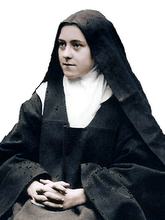
My dear young friends, I want to invite you to “dare to love”. Do not desire anything less for your life than a love that is strong and beautiful and that is capable of making the whole of your existence a joyful undertaking of giving yourselves as a gift to God and your brothers and sisters, in imitation of the One who vanquished hatred and death forever through love (cf Rev 5:13). Love is the only force capable of changing the heart of the human person and of all humanity, by making fruitful the relations between men and women, between rich and poor, between cultures and civilisations. This is shown to us in the lives of the saints. They are true friends of God who channel and reflect this very first love. Try to know them better, entrust yourselves to their intercession, and strive to live as they did. I shall just mention Mother Teresa. In order to respond instantly to the cry of Jesus, “I thirst”, a cry that had touched her deeply, she began to take in the people who were dying on the streets of Calcutta in India. From that time onward, the only desire of her life was to quench the thirst of love felt by Jesus, not with words, but with concrete action by recognising his disfigured countenance thirsting for love in the faces of the poorest of the poor. Blessed Teresa put the teachings of the Lord into practice: “Just as you did it to one of the least of these who are members of my family, you did it to me” (Mt 25:40). The message of this humble witness of divine love has spread around the whole world.
Although the prayers of the saints are a great benefit to us, they cannot replace the reality of love which is given to us as a gift when we receive Holy Communion. This is the greatest gift for it is the gift of Christ giving us his very presence to live in our hearts. But it is not a static presence. When we celebrate the Mass, or kneel in adoration before the Blessed Sacrament, Jesus Christ is not just present there doing nothing. The silence and hiddenness of the sacramental presence of the Eucharist may lead us to think that Christ is merely resting among us. But he isn't. The very same self-giving and self-sacrificing love which was in his Heart the night before he died for us, when he instituted this great Sacrament - that same love is active in the Eucharist. The Eucharist is a dynamic presence. It is the presence of Christ loving us.

Each one of us, my dear friends, has been given the possibility of reaching this same level of love, but only by having recourse to the indispensable support of divine Grace. Only the Lord’s help will allow us to keep away from resignation when faced with the enormity of the task to be undertaken. It instills in us the courage to accomplish that which is humanly inconceivable. Above all, the Eucharist is the great school of love. When we participate regularly and with devotion in Holy Mass, when we spend a sustained time of adoration in the presence of Jesus in the Eucharist, it is easier to understand the length, breadth, height and depth of his love that goes beyond all knowledge (cf Eph 3:17-18). By sharing the Eucharistic Bread with our brothers and sisters of the Church community, we feel compelled, like Our Lady with Elizabeth, to render “in haste” the love of Christ into generous service towards our brothers and sisters.

Pope Benedict ends with an invitation to come to Sydney for the next World Youth Day in Sydney.

On this subject, the recommendation of the apostle John is illuminating: “Little children, let us love, not in word or speech, but in truth and action. And by this we will know that we are from the truth” (1 Jn 3: 18-19). Dear young people, it is in this spirit that I invite you to experience the next World Youth Day together with your bishops in your respective dioceses. This will be an important stage on the way to the meeting in Sydney where the theme will be: “You will receive power when the Holy Spirit has come upon you; and you will be my witnesses” (Acts 1:8). May Mary, the Mother of Christ and of the Church, help you to let that cry ring out everywhere, the cry that has changed the world: “God is love!” I am together with you all in prayer and extend to you my heartfelt blessing.
Just to summarise then. There are three dimensions to our pilgrimage of discovery of love:
  • The love of God, the source of love
  • The love of Christ crucified
  • Our love for God
These dimensions have a real incarnation in our lives, in these ways:
  • Love experienced within the Church
  • Love of man for woman
  • Love of all people in all sorts of different relationships
We are helped most especially by:
  • The example and prayers of the saints
  • The Holy Eucharist
Many of you will have read or at least seen George Weigels' tremendous biography of Pope John Paul II 'Witness to Hope'. I think maybe Pope Benedict XVI is showing himself to be 'Witness to Love' and that his teaching on friendship with Christ will be the true legacy to the Church.

Sunday, 4 February 2007

Other blogs

A new blog belonging to a friend of mine who is studying theology here at Birmingham University is Catholic Apologetics. It looks like it's going to be worth dipping into from time to time. Remember where you heard it first.

And also take a look at John Paul's comments on this Sunday's readings - I saw it after I'd done my own Duc in Altum post. Commiserations for the rugby score JP!

A blog I often visit and really like from the States is Evangelical Catholicism. Just looking at some recent contributions there, there is a great little article on dealing with aridity in prayer, and on the rights and wrongs of Youth Masses. There's lots of stuff there anyway. Worth a browse.

Duc in altum!

Put out into the deep! That was the call of the Servant of God Pope John Paul II at the beginning of his great Apostolic Letter for the beginning of the New Milennium, Novo Milennio Ineunte. I was reminded to think about this again with the Gospel today, where Jesus invites Simon and the others to "Put out into deep water". Sometimes we really need to be awoken from the complacency of our lives or, in the language of so many today, challenged to leave our comfort zone. God's plan is not for us to become stale but to be dynamic, just as his love is dynamic. It means that we should not get into a rut, but be open to change. In the three readings at today's Mass, we see three characters going through change: Isaiah, St Paul and St Peter. In each case they become aware of the glory of God (Isaiah has a vision of God's glory in the Temple, Paul was blinded by the light from heaven, Peter sees the great haul of fish and hears the gracious words of Jesus. This arouses in each of them a feeling of unworthiness and an awareness of sin ("What a wretched state I am in! I am lost, for I am a man of unclean lips" - "I hardly deserve the name apostle" - "Leave me Lord: I am a sinful man"). The Lord then brings the grace of cleansing and forgiveness ("See now, this has touched your lips, your sin is taken away..." - "by God's grace that is what I am" - "Do not be afraid"). This is then followed by a commission which each of them accepts, to be a prophet, an apostle, a fisher of men.

If we wish to evangelise the first stage is that we need to be evangelised. This means having that vision of the glory of God. He gives this through his word, through his Church, through his presence with us by grace. We need to pray for this vision - not a vision with the eyes but with the heart, that is able to respond by bowing low before the presence of God to us. It is the light of that glory of God which shows up our sin. It should make us feel unworthiness, so that we can then ask for the grace of forgiveness and healing. It is only by being aware of the glory of God, and having true sorrow for our sins that we arrive at knowing God's will for us. That may come quickly - it may take a long time for us to see and understand, but if we truly risk 'putting out into the deep', trusting in Christ but being willing to take risks, then we will be rewarded with the deep joy which comes from knowing we do God's will.

Pope John Paul II wrote this prayer very shortly before he died:
Jesus, Son of God, in whom the fullness of the Divinity dwells, You call all the baptized to "put out into the deep", taking the path that leads to holiness. Waken in the hearts of young people the desire to be witnesses in the world of today to the power of your love. Fill them with your Spirit of fortitude and prudence, so that they may be able to discover the full truth about themselves and their own vocation. Our Saviour, sent by the Father to reveal His merciful love, give to your Church the gift of young people who are ready to put out into the deep, to be the sign among their brothers of Your presence which renews and saves. Holy Virgin, Mother of the Redeemer, sure guide on the way towards God and towards neighbour, You who pondered his word in the depth of your heart, sustain with your motherly intercession our families and our ecclesial communities, so that they may help adolescents and young people to answer generously the call of the Lord. Amen.

Dedication of Our Lady & St Werburgh's Church, Clayton


I had a great day yesterday. I went back to my home parish - Our Lady and St Werburgh, Clayton, Newcastle-under-Lyme, for the great occasion of the consecration (or solemn dedication) of the Church. It is where I was ordained almost 11 years ago. The liturgy of the consecration of a Church is not often seen, as it only ever happens once in each Church, but it is so full of symbolism, demonstrating what the sacramentality of the Church building. The Church as a building, as well as a place for the celebration of the sacraments and the teaching of the Word and meeting place of the People of God, is also a permanent visible sign of the presence of the Church in that place. As such, the building represents not just the people who gather in it, but the whole Church, and most especially the Church in glory. It is a symbol of the new Temple of the New Jerusalem, which St John saw at the end of his apocalyptic vision in the New Testament.

Our Church buildings are important. It is important that they bring people into a communion with God, and also with each other. It is i
mportant that they should be beautiful, peaceful, never cold nor remote. Beauty leads us to communion with God, who truly is the supremely beautiful one. The ugliness of contemporary urban architecture speaks of nothing to the soul - the Church should not ape this style but inspire the faithful to a love of God through the symbolism and beauty of the sacred space.

You can see in the photographs some of the scenes from the Mass: the incense being burnt in a brazier u
pon the altar, the lighting of one of the candles in front of the consecration cross which had been anointed with chrism, and the placing of the relics inside the altar.

The rites themselves are deeply expressive. The consecration of the altar, firstly with the placing of relics within, reminds us of the early Christian tradition of celebrating the Mass on the tombs of the ma
rtyrs. It reminds us that the Mass is celebrated always in the communion of saints, in communion with the saints who are at rest, as well as with the saints suffering and the saints on their pilgrim way through life. The altar is also anointed with the Sacred Chrism - the oil which represents consecration to Christ, priest, prophet and king. As it says in one of the Easter prefaces, Jesus Christ reveals himself not only to be the priest and victim but also the altar of sacrifice. The incense then placed in a brazier on the altar is the sign of the prayers of the saints rising from that altar up to heaven. The Eucharistic victim to be placed upon that altar is to be the intercessor who pleads to heaven for us in the Eucharistic sacrifice. The walls of the Church are also anointed, to show that the building, which represents the people, is also consecrated to Christ. Indeed together, Christ himself and the Church form what St Augustine calls the 'Christus Totus' - the whole Christ. As well as being anointed the walls are also incensed at the same time as the people are incensed by two deacons who carry their censers around the inside of the Church. The final part of the Consecration is the celebration of the Mass, and at the end of the Mass the solemn placing of the Eucharist into the tabernacle.

The whole liturgy speaks not only of what the Church building is, but also what we should be - a true light and witness to other people. The preface to the Eucharistic prayer makes it clear:
We thank you now for this house of prayer
in which you bless your family
as we come to you on pilgrimage.

Here you reveal your presence
by sacramental signs,
and make us one with you
through the unseen bond of grace.
Here you build your temple of living stones,
and bring the Church to its full stature
as the body of Christ throughout the world,
to reach it's perfection at last
in the heavenly city of Jerusalem,
which is the vision of your peace.

Saturday, 3 February 2007

The next series of FWC Retreats

Fr Julian and myself have now arranged dates for the next set of "Friends with Christ Retreats". Again we are offering one for young men, 1st - 4th April 2007, and one for young women, 12th - 15th April 2007. These retreats take us to the very heart of our life in Christ; those we have already held have enabled the grace of friendship with Him and amongst us to flourish. Places are limited - so apply early. Application forms have been attached to the home page of www.communityofgrace.org.uk