Tuesday, 30 August 2011

Still catching up on things.


Today I learned of the fatal shooting of Facundo Cabral. This Argentinian novelist, singer-songwriter was shot dead in Guatemala City on 9th July. It seems that the gunmen were intending another target. How evil breeds evil! May he rest in peace and rise in glory.

You may already know of this extraordinary singer's work, if not you can find him on YouTube. I recommend the song, "No soy de aqui, ni de alla".

And of course, two years ago the other great Argentinian singer, Mercedes Sosa, died. Sadly, I never saw either of them in concert.

Saturday, 27 August 2011

Who sets the agenda?


Before coming to post on my jorneys overseas I wanted to make a comment on the demise of the UK Sunday newspaper the "News of the World". Its demise is a great thing to have happened; it is just a shame that more British newspapers did not fall in the "phone hacking" scandal. Who now will pick up where the "News of the World" left off.

The scandal revealed just how embedded in the media is British society, to the point of extensive corruption. Is it society or the media who sets the agenda? The classical answer has always been that society must set its own agenda; that the media must never control us. My point is that this recent scandal reveals that the media is no longer a passive mirror, reflecting society, but that the secular media has now expressly crossed a line.

There is scarcely a newspaper in the UK which is worthy of the name. Instead of "news" they feed us with sensationalism, propaganda and the mindless secular project. "Media objectivity" (the alignment by the media with the truth about humanity - a concern for true human values) is now very hard to find, and what we see is a form of human neurosis which which flows from the fact that the media empire has abandoned its relationship with the truth. Perhaps the best newspapers in the UK are the local and regional ones in which one can detect an attempt to communicate that which is actually going on.

A major issue in this matter in the integrity of journalism. Jornalism is a very great skill - a God-given skill - by which the truth of (often complex) human affairs can be communicated in an accesible way to those who don't have the opportunity to see or discern this for themselves. Both JPII and B16 have this gift but, of course Popes have a different mission to that of the journalist. George Weigel, amongst others, has this gift, and we should be discerning of all those who call themselves journalists or presenters, or editors, to look for the authentic gift in them. I have said before on this blog - we need authentic journalists.

The overriding concern for Catholics is to situate ourselves within the context of truth. We do this first by entering into the Liturgy of the Church, for here the essential truth about reality is revealed and formed in us. Secondly, by praying with the Scriptures (Lectio Divina), in the sense of actively endeavoring to read the signs of the times in the light of the Gospel and so to live our lives in faith. And if we are unable to do these things, to ask. We human beings cannot rely on the secular media empire to form our lives.

Friday, 26 August 2011

"Well, I'm back", he said.


The last words of Tolkien's "The Lord of the Rings" are a fitting expression of my return from having circumnavigated the world in about ten weeks. It's very good to be back and I will return to posting in a few days.

I left Sydney in early June and arrived back there yesterday; my journey took me first to Los Angeles, then Omaha, Nebraska, Chicago, England, Barcelona, Zaragoza and then to Madrid for World Youth Day, then on to Hong Kong, and so back to Sydney. All told, about 28,000 miles - a lot of jet-setting!

Monday, 6 June 2011

Blog-gap coming up


Tomorrow is the first day of my world tour; back in a few months.

Saturday, 4 June 2011

A teacher of the New Evangelisation


While I was at seminary in Spain, the archbishop of Madrid was Cardinal Angel Suquia. In 1992 he gave an address to the Spanish Bishops about the New Evangelisation; this address was published in the Winter 1992 edition of Communio. I would like to comment here on some of the ideas which he spoke about in his address. (The Cardinal died in 2006.) I recomend the original article to you, particularly if you have a good Theological library that you have access to.


1. First the Cardinal speaks about what the New Evangelisation is not. It is not the recovery by the Church of privilages she used to have in society. Nor is it a seeking to (re)impose Christian values on a pluralistic society. It is not a question of placing Catholics in strategic positions in society, nor a removal of the 'enemies' of the Church from places of power, so that Catholics can hold centres of power. The reason for this is that these ways of thinking imply, on our part, a lack of trust in the redemptive power of Christ. Such ways of thinking are actually an obstacle to the New Evangelisation, becuase by thinking thus we relegate our responsibility to witness to Christ, in favour of relying upon political, cultural or social influence. Indeed, many in our era have yielded to these ways of thinking, and today we see two strong, but impotent currents: those who identify themselves with the dominant culture (those who have indicated that we should allow ourselves to be evangelised by the culture), and those who have endeavoured to preserve a Catholic identity within a bastion mentality, thereby renouncing the significance of Christianity for humanity.


2. Secondly, the Cardinal speaks about what the New Evangelisation is. It is the proclamation of the Gospel to a humanity that is 'new'. 'New' because post-Christian humanity has lost the sense of the Mystery of God and of its own mystery. Today's culture has deformed our humanity, such that men and women today need to be 'touched' by the Redemption so that they can incarnate it into their lives.


In what then, does this 'newness' of proclamation consist? It means that the Catholics must stop trying to legitimise themselves through culture and society, and dare to be who they really are, living the Mystery of Christ. It also means that the Catholics must become the companion of today's men and women. To do this they must renounce their lack of understanding for all those false ideologies and ways of living which have wounded so many people in our age, so that they can be concerned for people as they actually are.


The Church of the New Evangelisation is a people that carries in its life the signs of the Redemption, a people whose communion and whose life is a testimony that the Redemption has happened in them. The New Evangelisation then, is not a witness to 'Catholicism', nor to Catholic culture or prestige, but is the call to witness to Jesus Christ who has freed us. Our riches lie not in our own resourcefulness, but are the riches of Jesus Christ, who is able to fill to overflowing the hearts of today's men and women, just as He did twenty centuries ago.


Monday, 30 May 2011

More thoughts on the New Evangelisation


The relationship between the Church and the world is somewhat misunderstood today. Both have a life and a mission, but the Church's life and mission are for the world. Whereas presently, the world does not value in the Church. This disparity lies at the heart of the New Evangelisation as a challenge.


I say that the Church's life and mission is for the world; the Church calls both us and the world to transformation in Christ. The New Evangelisation then, does not seek to promote the power or the prestige of the Church as an Institution, but seeks to make room in the world, and in the Church, for He who is Life. For the Church, transformation in Christ is the clear project for all humanity to embrace; the world however, does not see this clearly, even though transformation in Christ is its way forward. Thus, the Church today finds herself called to a new evangelisation. That which brings the Church and the world together is transformation in Christ. It is Christ alone who brings about an ecology of relationship between the Church and the world. The proclamation of Christ by the Church causes an effect in both the Church and the world.


Christ and the Church are bound so closely that they cannot be separated. Indeed, the New Evangelisation rounds upon the saying of St John the Baptist: "I must decrease, He must increase." Human issues, whether inside or outside the Church, revolve around one single issue, which is man's relationship with the one person who is necessary to him: God. Here the Church is called to help men and women (both the baptised and the non-baptised) to discover and express their issues in the light of this overriding truth. For human issues - whatever they are - are the hinge upon which the necessity of transformation in Christ can be proclaimed. Any human state of affairs is an opportunity for the Gospel to come to life. The primary way that Catholics do this is in showing by our lives that Christ is the answer. In other words, it is all about Christ and, who today, will be bothered about telling the world about Christ!


The fact is that all issues (unemployment, sexual orientation, climate chaos etc) can all be expressed in the context of our deepest aspiration: to be united with God. Issues, in a sense, condition the way in which the Gospel is proclaimed; that is, if people are involved in a particular activity and lack Christ, how can Christ be proclaimed in that context? It must be seen by Catholics then, that the New Evangelisation contains no element of judging, still less of condeming, but is wholly a mission of pastoring towards and in Christ.


Having said this, it seems to me that there are some fundamental questions for Catholics to reflect upon and embrace, and upon which, in some way, the New Evangelisation itself depends (since, in fact, the New Evangelisation depends upon me):


1. What does it mean to be at the heart of the Church; that place from which my life and my mission spring?


2. What does it mean to hear the Gospel, especially for those who have never heard it or live lives far from Christ?


3.What does transformation in Christ mean?


4.What does it mean to discover one's life within the Church and to participate in the mission of the Church?


5. What does it mean to contribute to the proclamation of the Gospel with my life?


6. What does it mean to learn from Christ?


7. When do I speak about Christ and what He has done, and what He has done for me?


8. How has Christ changed me and how is He calling me to change?

Thursday, 26 May 2011

What is the New Evangelisation?


The New Evangelisation is a movement of grace in the Church which is changing it from being a Church of maintenance to being a Church of mission.
It was Paul VI who first saw the need for a new evangelisation. in his 1975 Apostolic Letter Evangelii Nuntiandi he saw, prophetically, that "a new period of evangelisation" is needed because, he said, the “split between the Gospel and culture is without doubt the great drama of our time" (Evangelii Nuntiandi, 2, 20).
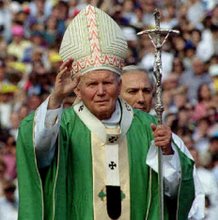
John Paul II, recognising the insight of his predecessor's intuition, endeavoured to help the whole Church to see the need for a new evangelisation. He described it as new "in ardour, methods and expression". (Address to the Latin American Bishops, 1983) The New Evangelisation then, looks to new ways of proclaiming and witnessing to the Gospel, because so many people in the world are so affected by the kind of culture in which they live that they cannot hear the Gospel being proclaimed by the older methods of evangelization. Yet he said, "the vital core of the new evangelisation must be a clear and unequivocal proclamation of the person of Jesus Christ." (Ecclesia in America, 66).
For John Paul II our task is not simply one of re-evangelisation, but of a new evangelization; because faith and culture have come apart the Church must discern new ways of sowing the Gospel in culture, as was the case originally in the Apostolic era, and then later in that era which began with the Christianisation of the Roman Empire.
John Paul II spoke of the New Evangelisation as a task of the whole Church; "God is opening before the Church the horizons of a humanity more fully prepared for the sowing of the Gospel. I sense that the moment has come to commit all of the Church's energies to a new evangelisation and to the mission ad gentes." (JPII, Redemptoris Missio, 3) In this new task, Dioceses, parishes, families, new movements and communities, young people, older people, priests and religious are called to take part.
"The Spirit”, he said, “is the principal agent of the new evangelisation." (JPII, Tertio Millenio Adveniente, 45) This means that God himself, through the presence of the Holy Spirit, is the principal cause of this new movement within the Church, a movement which touches upon the very identity of the Church, for the Church is both communion and mission.
In his 2001 Apostolic Letter Novo Millenio Ineunte, John Paul II expressed the ethos of the New Evangelisation at its beginning. He called Christians to fall in love with Christ again and to put out into the deep, courageously taking the Gospel into the heart of contemporary culture. "We must rekindle in ourselves”, he said, “the impetus of the beginnings and allow ourselves to be filled with the ardour of the apostolic preaching which followed Pentecost." (NMI, 40)
John Paul II spoke many times with great optimism about our era. In his 1990 Encyclical about the mission of the Church, he said, "If we look at today's world, we are struck by many negative factors that can lead to pessimism. But this feeling is unjustified: ... God is preparing a great springtime for Christianity, and we can already see its signs." (Redemptoris Missio, 86)
“The present generation of Christians is called and sent now to accomplish a new evangelization among the peoples of Oceania, a fresh proclamation of the enduring truth evoked by the symbol of the Southern Cross. This call to mission poses great challenges, but it also opens new horizons, full of hope and even a sense of adventure.” (Ecclesia in Oceania, 13)
"Church in Europe, the new evangelisation is the task set before you!" (JPII, Ecclesia in Europa, 45)
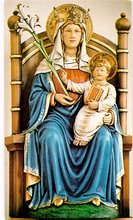
John Paul II named Our Lady as the "Star of the New Evangelisation", pointing to her "as the radiant dawn and the sure guide for our steps" (Novo Millennio Ineunte, 58).
In his Jubilee 2000 address to Catechists in Rome, the then Cardinal Ratzinger spoke of evangelisation as teaching "the art of living." The New Evangelisation, he said, starts with the sign of the mustard seed; it does not mean great numbers but rather, "new evangelisation must surrender to the mystery of the grain of mustard seed and not be so pretentious as to believe to immediately produce a large tree. The method of the new evangelization”, he said, “consists in making the voice of the Lord accessible and comprehensible. Jesus had to acquire the disciples from God. The same is always true. We ourselves cannot gather men. We must acquire them by God for God."
Bendict XVI wishing to help the Church to embrace the New Evangelisation has created a new Pontifical Council for promoting the New Evangelisation. In doing this he said that, “without doubt a mending of the Christian fabric of society is urgently needed in all parts of the world. But for this to come about what is needed is to first remake the Christian fabric of the ecclesial community itself present in these countries and nations.” (Ubicumque et Semper) The Holy Father is teaching us that evangelization flows out of the very being of Christians; that if we are truly living the Redemption, then the New Evangelisation will arise organically from within the Church.
The New Evangelisation then, has been set in motion by the Holy Spirit who is guiding the Church to respond to the need of the world today, by bringing the Gospel and culture together, so that people can be transformed by Christ. Today’s era is similar to that of the Early Church; we are living in a newly pagan culture, in which the Church is being called to proclaim and witness to the truth and the power of Christ. New Evangelisation involves the whole content of faith right from the start, witnessing to Christ and the Redemption and inviting others to live the new life of grace in the universal communion of the Church.
As in the Apostolic era, so today, we do not know what the Church will look like in the future; what we can see is what the Church looks like today at the start of this era of the New Evangelisation, and we can offer ourselves humbly to God, that He might find us full of faith-filled hope in the mission of His Son, Jesus Christ.

Wednesday, 25 May 2011

Every priestly vocation is a mystery


Here is the link to the Cardinal's homliy at the Ordination Mass last Saturday, 21st May 2011, in Sydney.

Sunday, 22 May 2011

Five new priests in New Antioch


Yesterday the Archbishop of Sydney ordained five men to the Priesthood in his Cathedral. It was a wonderful ordination Mass; "almost the whole city gathered to hear the Word of the Lord" (Acts 13:44). The Cardinal preached a tremendous sermon (which I will endeavour to post on the Blog), and the enormous congregation burst into a spontaneous applause as the recessional procession made its way from the sanctuary. The five new priests finally emerged into the sunlight shimmering with grace and joy. There is great happiness at present in the Church in Sydney - this is a grace in itself. Another grace, not to be overlooked, is simply the grace of being ordained priest by Cardinal Pell, who exhibits a real charism of fatherhood of priests.

Friday, 20 May 2011

Less than 100 days


World Youth Day certainly does create a kind of excitement and culture which is unparalleled, and with less than 100 days to go the enthusiasm is mounting. MADWYD will be the fourth WYD that I have participated in, and I am looking forward to connecting with Spain again. The Australian contingent for MADWYD is now forming up - from Sydney alone, 1030 young people have registered, together with one Cardinal, two Bishops and thirty five priests. Many pilgrims are coming from other parts of Australia too. If you are still deliberating whether you should go or not, all I can say is that there is still time to register. Registration is open till the end of May. The rest of the world is waiting for you to say "yes"!

Tuesday, 17 May 2011

The accompanying Letter


On 22nd February this year I posted a piece titled "Important Sources", in which I indicated those elements which are now important for the "reform of the reform" of the Liturgy. Although I mentioned in that post the Motu Proprio Summorum Pontificum, I did not mention the Letter to the Bishops which accompanied it. Here now, a few words on this important ingredient. I will draw you attention to just a few points, but it is obviously important to read the whole Letter.


1. The Holy Father says, "It is not appropriate to speak of these two versions of the Roman Missal as if they were "two Rites". Rather, it is a matter of a twofold use of one and the same rite."


The Motu Proprio has then indeed brought the two Forms of the Roman Rite together, and there is no contradiction between them, but they both express the same action of the Mass.


2. Later he writes, speaking about those who are attached to the older form; "This was especially the case in countries where the liturgical movement had provided many people with a notable liturgical formation and a deep, personal familiarity with the earlier Form of the liturgical celebration."


Now, it is good to note that the "liturgical movement" was something which began in the mid 1800s, and that it is still in progress now. And that this movement is something which was initiated during the "Tridentine" era, and its sole focus, for over 100 years, was the older Form. Also, it is good to note how the Holy Father points to a relationship between liturgical formation and liturgical development. Today's era of poor liturgical formation does not compete well with the liturgical formation of the era our grandparents and their forbears.


3. Later, speaking about the new Form he says that, "in many places celebrations were not faithful to the prescriptions of the new Missal, but the latter actually was understood as authorising or even requiring creativity, which frequently led to deformations of the liturgy which were hard to bear." The Holy Father honestly recognises that during recent decades we have not necessarily had a good celebration of the new Form, and in such circumstances, it is not easy to evaluate the genuine development of the Liturgy.


4. He speaks about how young people today "have discovered this liturgical form, felt its attraction and found in it a form of encounter with the Mystery of the Most Holy Eucharist". Well, young people are not simply bthe Church of the future but are a part of the Church of today, and they especially have discovered (on behalf of the whole Church) that the old Form is an essential reference point for a deeper understanding of the Liturgy.


5. He states that "there have been exaggerations and at times social aspects linked to the attitude of the faithful" who are attached to the old Form. Yes indeed, it is one thing to be attracted to the old Form, it is another when the old Form is, as a ritual, made into the central focus of the Christian life. That place belongs to Christ.


6. In speaking about how the two Forms are now in a position to reform each another, he simply says; "the two Forms of the usage of the Roman Rite can be mutually enriching". This is a tremendously important aspect of the present liturgical era. Each Form can see, in the light of the other, its own inherent need for reform and development. It is important to note here that wherever the two Forms are kept apart, the potential for mutual enrichment is diminished. This is the case wherever the two Forms are seen as mutually exclusive, and where there is no intention for dialogue.


7. The Holy Father points to a certain updating of the old Form by the new in saying that "new Saints and some of the new Prefaces can and should be inserted into the old Missal." In this regard we look to the Ecclesia Dei Commission to take the lead here.


8. I note finally that the Holy Father then speaks about a consequence of the Motu Proprio, which we should look for is the enrichment of the new Form: "The Celebration of the Mass according to the Missal of Paul VI will be able to demonstrate ... the sacrality which attracts many people to the former usage."


This accompanying Letter to Bishops is then, an important instrument for us to refer to in interpreting the call which the Church has made to all of us with regard to the Liturgy.

Saturday, 14 May 2011

The enabling grace of "Universae Ecclesiae"


The new Instruction Universae Ecclesiae points to the freedom of the Church in its Liturgy, which is the high point of her life. It opens up the whole Church to a much greater liturgical horizon than has been possible for some time. We have lived, for some decades now, an inadequte liturgical settlement, in which there was on one hand, an entrenched and disapproved of Tridentine usage, and on the other, a poorly initiated and developed New usage, both sides being prejudiced against the other.


The atmosphere which has surrounded this liturgical polarity has been, in my experience, one of personal opinion (like this one), narrow mindedness and an abscence of liturgical formation. In fact, the Church needs to occupy a much greater space than that which the liturgical settlement of the last forty years has permitted. It is a shame that we did not have the Motu Proprio Summorum Pontificum some years ago.


From the Council there was a clear desire to reform the old Rite (which was then never undertaken), and now there is a clear need to develop the new Rite so that it can be more Catholic. B16 has developed the context for this to take place. An era of inadequate dogmatism is being replaced by an era of freedom for reform. B16 is ushering in an era of openness to what the Liturgy is, rather than what we think it is. It is the way into the Mystery of Christ, who has the power to transform us.


Both sides may see inadequacies and deficiences in the new Instruction, but this document cannot be either totally prescriptive, nor can it legislate against prejudices, which ever side they are on. But it is endeavouring to establish a context in which the whole and undiminished Liturgy (which includes Latin, all the elements of the Tradition, and the developed sense of the Church that the liturgical reform has given us), can be better seen, celebrated and engaged with.

Thank you, Holy Father.

Thursday, 12 May 2011

Tradition and progress


The Holy Father gave a very helpful address a few days ago in Rome to the St Anslem Liturgical Insititute concerning the reform of the Liturgy. The text, published on Zenit, caught my eye when I read the Pope saying that the Liturgy needs both tradition and progress. He spoke of how today, these two concepts are often seen as "clumsily opposed", when "in reality, [they] are integrated: tradition is a living reality, which because of this includes in itself the principle of development, of progress." How important it is for us to really appreciate this in an era when the new and the old form of the Mass are contrasted by many as opposites, and when the tradition is regarded by many as little more than a bad memory.
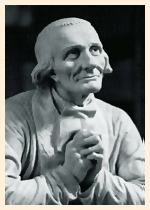

However, the kernel of this address is the way in which the Holy Father describes the the intention of the reform of the Liturgy, and the way in which that reform is wrongly understood by some today. He says that the objective of the conciliar reform "was not primarily to change the rites and gestures, but rather to renew mentalities and to put at the centre of Christian life and ministry the celebration of the paschal mystery of Christ. Unfortunately, perhaps, also for us pastors and experts, the liturgy was taken more as an object to be reformed rather than as a subject capable of renewing Christian life".


These words really speak to my experience of the liturgical changes; that the reform became primarily a matter of mere change for the sake of change, and even change at the level of experimentation, as though the Liturgy was something that we could take and bend to our purposes. And that the desire to renew the lives of the faithful by placing the Paschal Mystery more truely at the centre of their lives, was undertaken in an inadequate fashion. This task seems now, at last, to be underway (at least in some quarters) in the whole project of the 'reform of the reform'.


Moreover, the Holy Father at the beginning of his address describes the basic outlines of the current liturgical settlement - the two main camps or liturgical positions within the Church today. He says that the reform needed to have been accompanied by a profound study of the Liturgy, so that it did not fall "into ritualism or subjectivism". The truth of this statement is seen today in that the old form of the Liturgy is seen as over-ritualised, whereas the new form has the tendency to be too horizontal, a tendency that allows both celebrant and people to make themselves the focus of the Liturgy. Yet the Holy father declares that the focus of the Liturgy is "the active presence of Christ". The true reform is the reform of ourselves and of the entire Church, which takes place when we come to Christ in order to draw life from Him.


We are still very close to the conciliar reform and clearly, it will take time for the true nature of the Liturgy and the purpose of its reform to be better grasped by the whole Church, and for us to learn again that the Liturgy is our greatest way to Christ; that the bond which links the renewal of the Liturgy and the renewal of the Christian life might become more evident. Let us thank God that he has given us such a great leader in Benedict XVI.

Poor grammar


Reading the sermon given by the Archbishop of Westminster on May 7th to celebrate the Carthusian Martyrs, I was sorry to see him use the wrong grammer, which is currently so widespread in the UK. Refering to the recent Royal Wedding he said, "Furthermore, it struck me, sat as I was in the choir stalls with the Chief Rabbi and leaders of other religions as neighbours ... " This should have read, "Furthermore, it struck me, sitting as I was ... "

It is so common to hear, in the UK, people saying, "I was sat watching telly", or "He was stood at the bus stop"; News presenters too incorrectly use the preterite tense. And now, even the Archbishop as fallen into this incorrect grammar. "I was sitting", "he was standing", "I sat", "I was sitting", "he stood at his post"; this is correct English grammar.

Wednesday, 11 May 2011

Welcome postings


I do hope that you have been pleased to see the last ten postings; they conclude the notes which I made some years ago when I undertook a reflective reading of the first half of Karol Wojtyla's book, "Love and Responsibility". I hope to do the same with the second half one day.


This precis can also be found on the tremendous web resource, http://www.xt3.com/, which has become a real hub for the younger part of the Church in New Antioch (which is what I like to call Sydney). Sydney today, like Antioch of old, is a growing center of the Faith. And like Antioch of old, people are coming to live in Sydney precisely because it is a growing centre of the Christian life. And again, just as in Antioch of old, today the Catholics of Sydney live 'cheek by jowl' with the secular/pagan world. Pray that vibrant centres of Faith will emerge and develop in all parts of the world, and that the Communion of believers will be full of confidence and joy.

Tuesday, 10 May 2011

Love and responsibility 10


Love and Responsibility.
Love has a particular responsibility: Is my love complete and mature enough to justify the love of another person? Will my marriage enlarge my existence or will I lose my own personality, my ‘self’?
Marriage will call me to be responsible for my spouse, and to have feelings of responsibility towards him or her. Ultimately, this "being responsible" for my spouse rests upon my choice of the person on whom to bestow my gift of self. In marriage I will be called to rediscover myself daily in another person, and for this reason I cannot choose a spouse by sexual values alone. Sexual values do not determine the authenticity of choice. The value of the person must be the decisive one.
The truth about choice is tested when emotional reactions grow weaker and sexual values lose their effect, and only the value of the person remains. It is only when love is put to the test that its true value can be seen. My love for this particular person is real love because I have given myself this person with my whole life, and because the other person has made the same gift of themselves to me.
End.

Love and responsibility 9


Married love.
Married love is very different from all the other forms of love, such as friendship and the relationships of family or work. In these relationships, love exists inside the person. Actions of goodwill and service to others deepen my relationships. But in marriage love exists between two people. Love which is given and received in marriage creates something new – the union of two persons – a new way of living.
The question arises: how can I make my inalienable and non-transferable ‘I’ someone else’s property? This can’t be done in a physical way but it is done in a spiritual way. Self-surrender as a form of love is the result of a process. Marriage is the culmination of a process of love which is blessed by God and in which spouses are called to live love in a decisive way. In the Gospel Christ speaks about love in these terms: "Whoever finds his life will lose it, and whoever loses his life for my sake will find it." (Matt 10: 39)
In marriage spouses cannot live love according to feelings or values, or what they might think about such and such a situation. No, spouses are called to affirm each other as persons. They must decide to love. Love is a virtue which is produced by the will. It is the authentic commitment of my will towards my spouse. Married love is expressed in the orientation of all my actions and attitudes towards my spouse.
This is done first of all by choosing this person to be the companion of my whole life such that my life’s vocation will now have a particular direction. And then, in betrothed love, I no longer wish to be my own exclusive property.
Love, which has friendship at its heart, proceeds by way of renunciation, guided by the conviction that love doesn’t diminish or impoverish me, but enriches and enlarges me. I am aware of the magnitude of the gift which I have received – the self-gift of another person to me. In love I go out of myself to find a fuller existence with that person. Betrothed love commits my will in a particularly profound way. The consequence of this commitment is communion of life.

Monday, 9 May 2011

Love and responsibility 8


How can I test my love?
How can I test my love before I marry? I can only do this by asking myself what the content of my love is. And, most importantly by listening to discern if the other person intuits the same thing as I – that a life of mutual self-giving is possible for us.
Love cannot be tested in a genital way; experimental sex is an obstacle to love because a couple need to get to know one another as persons. Sexual experimentation prevents this kind of knowing to develop between them and instead, sexual knowledge will override their need to know one another as persons.
The content of my love rests not upon my feelings or emotions but upon my struggle first to know myself and secondly to know the other person. The fact is that every person has the capacity for love, but this capacity is not ready made; it must be nurtured and protected. So, I should look at myself at the level of the virtues: how do I relate with the other, how do I influence him or her, how am I influenced by him or her, how have I changed, how have my other relationships changed, how integrated is my life, my work, all my other relationships, how do I listen to the advice of other people, how do I now respond to my family and friends. I need to look at my stability of character, my stability of interests, my confidence in decision-making, the way I pray, the way I approach God in the sacraments, the way I embrace the life of grace. And if the relationship is creating a true process of growing in maturity, then I can begin to know whether or not I can give myself, my whole self, to this other person in marriage.
For marriage to be a real possibility this same process has to occur in the other person as well. We both need to intuit the same thing, individually, within our selves; that we can make of ourselves a mutual self-gift. For this to happen I have to be able to listen to and to hear the other. I also need to be able to hear God speaking to me; prayer and God’s grace – His closeness to us - will help us both to test our love.

Love and responsibility 7


Love as goodwill.
Loving a person for my benefit is incomplete love; I am called to seek the other person’s good. Love as goodwill is free from self-interest. There is a tendency in the experience of love to move from longing for the other person to seeking his or her good. This must be the case within marriage where sexual desire can be so conspicuous and make life both rich and difficult. Goodwill must always keep company with desire if love is to be true.
How does goodwill mature? It matures hrough trust. If I am always looking for the other person to respond to me, then I am too concerned about myself and this will paralyse the relationship. In fact, such self-interest can easily turn into jealousy or fear of unfaithfulness. This will overwhelm the relationship. If both parties only bring desire to the relationship then trust will not develop.
It is trust which allows love to become durable and reliable and to be a source of peace and joy. Every moment together is an opportunity to test our faith in each other and to reinforce it with virtue – this is what "dating" is really about. Honesty and patience are necessary ingredients here. A relationship then, becomes a school of life; I should ask myself, can I develop myself to the point that I can give my whole "self" to this person?

Sunday, 8 May 2011

Love and responsibility 6


Love as desire.
Desire is not the same as lust. Lust is using sex to satisfy desire. Desire is a natural, God-given experience. It springs from the fact that human beings are incomplete beings – we need other people. Sexuality is a limitation of our personality, an imbalance of our being. This however is a positive thing because it means that each one of us finds his or her completion or fulfillment outside ourselves – each one of us is made for someone. Acknowledging this limitation is the key to understanding the most important dimension of human life - our relationship with God. "Blessed are the poor in spirit, theirs is the Kingdom of Heaven." This Beatitude is the basis of our Spiritual lives.
Love as desire is the experience of longing for a person; the desire that love should be perfected in me. This longing must be protected from lust because desire has a great role to play in a relationship. Desire should set in motion the true project of a relationship, where dating is received as a God-given task. This means that I am called to allow my sexual feelings to be harnessed by love. Remember, I am much more than my feelings, I am a person, and desire is actually a call placed upon me, the call to mature, to integrate all the elements of my personality and so to be able to use my freedom: to make a gift of myself to another. If I do marry, this same project will continue in a new way in married life.