Tuesday, 16 April 2013

The superficial root of secularism.


Secular asceticism is a form of the Enlightenment, having risen from the historical movement which we call the Enlightenment, and taken shape in the Western societies in the aftermath of two World Wars; the individual considers himself the autonomous subject – the individual decides for him self who he is or should be. Secular asceticism places personal subjectivity at the centre of everything, exalting freedom of choice whilst losing sight of the full truth of human freedom.  The questions about my identity and the meaning of my life are avoided, in favour of questions of superficial consequence – a sort of ‘playing for time’. Human interiority can never be seen in an objective way and the individual conceals the mystery which lies at his heart.
The root of secular asceticism, which is the secular identity or anthropology, seeks to build human life and activity upon those things which are marginal in terms of man’s life: material things, entertainment, and opinion. The secular person is then, a consumer, an economic unit, a collector of data. The root of secular asceticism then, suggests to people today that the human spirit and the human body represent two separate orders, that Gnosticism offers a fragile perspective on life, and that we are a sort of ‘given’ – we are as we are, and that is all that there is.
The novelty of contemporary secularism is its agency: the secular mass media. Never before has a human movement had such a powerful tool with which to impress itself upon human lives. Secular culture then, is of a form and nature hitherto unseen in the Western world.
We should note here that it is not simply Christians who discern the secular ascetic to be inadequate; many people though not possessing the gift of faith, are nonetheless searching for something better.

Sunday, 7 April 2013

Independence or engagement.

Secular asceticism happens in response to sin and sets about building a culture which limits human experience, a culture which is defensive against the mystery of God and the whole mystery of human life itself. Thus, secular asceticism channels human energy into independent activity, independent in the sense of disassociated from man's real life. It is a busying of oneself as a distraction from subconscious fear. Secular asceticism is well represented by the Sunday newspapers: matters of marginal importance being presented as central to human life.
Spoken of in these terms, we can see why today there is a call for a new evangelisation. The mystery of man without the proclamation of Christ is virtually unbearable; like the woman bent double after forty years of pain, with nothing but herself to gaze at. Sin is not reality for just some of us; without Christ our best option is probably secular asceticism.
The Christian attitude happens in response to being offered a new life. In contrast to the secular ascetic, the Christian attitude unfolds before a wide open field. The openness, availability and inexhaustibility of Jesus Christ is radically transformative of the person. Quite simply, the reality of love, when encountered in person, sets in motion a whole new project in life: answering love with love. So much is this the case that the greatest way we have of understanding or describing humanity, once it is set on its true course, is 'the Church': man's real life is his connection with the inner life of the Holy Trinity.
The Christian attitude then, places the encounter with Jesus Christ, and the possibility of really engaging with Him, as the most important human event. So, prayer and the sacraments hold first place, alongside that of witnessing to Him, so that others can encounter Him. 
I will continue to post on this subject, introducing the moral life and Christian anthropology, enabling a fuller treatment of the daily living of the Christian attitude. I am going to be busy this coming week, so my next post will most likely be at least seven days away.

Saturday, 6 April 2013

Growing in attitude.

Continuing this discourse about the difference between Christian and secular asceticism in which I call the Christian approach "attitude, and the secular approach "asceticism", before speaking about the concrete ways in which we engage with these approaches (morality, daily choices and life-styles), I need to speak more about the essential ingredient, which is defined by this somewhat ambiguous expression "spiritual life".
Attitude or asceticism is the way in which we open ourselves to be formed as persons. We are all spiritual beings and so we are going to be formed by what we open ourselves up to. The Christian attitude is that approach which, having experienced something of the Spiritual life - our relationship with God, in Christ - having in some way received Christ, sets him or herself to grow in friendship with Christ. The Christian attitude is all about the relationship with Christ; following Him and seeking union with Him. Allowing my life to be shaped by who He is. This approach to life is pure gift, pure grace: the transformation of my person through the relationship that I have with Jesus Christ. This, at its heart is "Christian attitude". "Spiritual life" then, for the Christian is an expression which has concrete meaning: my relationship with God in Christ. Christ's presence in my life is the essential ingredient in the Christian life: it is a gift, it gives power, the power of His love to my life, it is my starting point, I do nothing apart from this gift. He is my life! The Christian attitude then, is the way in which I open myself to be formed by Jesus Christ. More on this in a later post.
This transformative presence of Jesus Christ is denied by secular culture, for whom the Christian life is all about what I choose, what I do. The secular view of the Christian life is erroneous and is not something that is worth attempting.
If we look now at secular asceticism in the context of what is essentially formative of it - the spiritual life - we immediately hit a problem: "spirituality". Since secular culture and choice denies God and the Christ that He has sent, "spirituality" does not now mean one's relationship with the Living God. Instead it has come to refer to the formation of human personality or life-style at the level of mind and body. Note the difference between the formation of my "life" (for the Christian), and the formation of my "personality or life-style". The secular asceticism reduces human potential to mere psychology or human feeling.
Secular asceticism places the formation of the person squarely on the shoulders of the individual, and on his or her resourcefulness. It's down to me and to what I can make out of my life. This leads the person ultimately to envisage his or her own life in terms of the human condition, which we know is flawed. "Life-style choices" are in currently in vogue, conditioned by culture, and leaving people wide open to be "de-formed" by whatever is out there.
Again, the pressing need in today's world in the announcement of the Gospel: get to know Christ and let Him take the strain.

Friday, 5 April 2013

The real connection.


Secular asceticism is something which belongs to the world, but if it exists at all in the Church, it is misplaced. The mission of the Church today is to enable the world to open itself to a full experience of the Mystery of Christ. But  for this to happen, the Church herself must be living this experience. The true human attitude then, is that which stakes all on the relationship with Jesus Christ.
In our culture the lines between secularism and the Christian life have been somewhat blurred, which is why so many baptised people today live a secular life. What is secularism? I would answer the question in this way: what secularism amounts to is the pursuit of fulfilment on the back of technological progress, together with the claim to moral relativism as an ideological imperative - forget God, we can make it; success is almost in our grasp! It is truly another Tower of Babel.
Secularism is not founded upon human nature, but upon human desire (which as we know is a "mixed bag"). Thus, although the secular pursuit has brought a minority to the fore, it has cost the lives of millions of babies, and has brought disillusionment, depression and loneliness in its wake. 
The Christian attitude is founded upon the Gospel, which perhaps unexpectedly, embraces and nurtures all that is truly human. The Gospel proclaims an astonishing reality: that our real life connects with the inner life of God. Therefore, the one relationship which we should never loose sight of is our relationship with Him.
The most foundational teaching which the Second Vatican council made is the very first part of the Dogmatic Constitution Dei Verbum, paragraphs 1 to 6. All Catholics should have read this and know it. But I sometimes feel that, having made this Proclamation the Church then forgot it.
This Proclamation, which the Church made in 1965, announced the truth that we are called to Eternal Life; God wants to share His life with us. It is in the face of this awesome truth that the Christian attitude is formed. When God reveals Himself, when He comes to relate with us as friends, we surrender before so great an encounter.
The secular ascetic, which is such a draining, life-sapping, endeavour, is precisely what God does not look for in us. It is an ascetic born of fear. It is an ascetic born of a culture which has not heard the Gospel because the Gospel has not been announced there.
Dei Verbum, 1-6, teaches and proclaims the very beginning of new life for any one of us: that the inner life of God is made open to us so that we might have a new life, and that life is founded on love, born of love and so, uniquely is able to fulfil us. It takes root in us, not by us having to go through any 'obstacle course', but by saying 'yes' to grace. What does secular asceticism need today, whether it is found inside or outside the Church? The proclamation of the Gospel.

Thursday, 4 April 2013

Transforming secular asceticism.

The word “asceticism” can be interchanged with the word “attitude”; the meaning is the same but it doesn’t have the overtones of religiosity. In fact, what I will endeavour to do from now on is to speak of the “secular ascetic” and the “Christian attitude”. This is entirely congruent with the meaning of the word “ascetic”; one who is severely abstinent.  Secular asceticism is the endeavour to separate oneself from God, evaluating everything from the perspective of self, and acting as the one who is enlightened and who enlightens. In contrast, the Christian attitude seeks to allow God’s love to enter into us and transform us, to be enlightened by God.

The secular ascetic seeks to be free, to be independent, to be in control – you must be in control! To do this is to possess true understanding, real enlightenment. The individual who is free from all imposition, social, cultural, and religious, so long as he or she doesn’t cause public disorder, has become truly themselves. (Note how the secular attitude is deeply infused with Gnosticism.)

When this attitude enters the Christian person, it makes us become Pelagian: ‘faith’ (my life) becomes a human project, I don’t really need Christ. The secular ascetic has today entered into Christ’s people. We see this in the way that we too begin to evaluate the worthiness or unworthiness of the Christian life as though it is just one way of life among many. For according to secularism, Christianity is merely one religion among many, just another way in which human beings can choose to seek a better way of living – as though every individual, in his or her self-enlightened freedom should be able to do just that. (Only, how silly to choose this particular, rule-bound, way of life.)

Yet, being Christian is not the result of an ethical choice, but is the result of an encounter with Christ. Being Christian is not about what I do, but is about being joined to a person and being transformed by Him. Christianity is not another way of seeking a better life; it is being given a life!

The Christian attitude seeks to be free of self-fixation, and to engage with Christ so that the reality of His power becomes a lived experience. This is knowledge – receiving His friendship, His power, His love. The Christian attitude doesn’t seek to be in control, but to be converted, changed, transformed; the Christian attitude seeks enlightenment from the one person who is able to give light. Openness, rather than control. Relationship and commitment, rather than independence. Surrender to God, rather than mere choice. This is what marks the Christian attitude, and how different the reality of the Christian life is from the way in which secularism portrays it.

The Holy Spirit was given to humanity so as to get humanity accustomed to Christ, so that we could be united to Christ. The secular ascetic is attempting precisely the opposite; to work as hard as he or she can to close him or herself to Christ. The true human attitude is that which the Holy Father will show us and lead us to be formed in.
"How beautiful on the mountains … "

Tuesday, 2 April 2013

The secular ascetic.

Secular asceticism is not often referred to like this. We generally speak of the secular attitude to life, but that is precisely what asceticism is - our attitude or approach to life. A secular asceticism sees the subject as all important, the individual. The object of secular life then, is what ever you choose it to be.
How different this is from Christian asceticism for whom the subject is of great dignity, the person. The object of life then, is the saving presence of Christ.
Our Holy Father is having to approach the secular ascetic first of all inside the Church. The secular mind is quite well established here. One thinks of those religious interest magazines, and all those so-called Catholic places of learning, which rather than evaluating human stuff from the perspective of the Christian life, evaluate the Christian life from the perspective of the secular mind. I'm aware of the secular ascetic in my own mind; I need a renewal of the mind.
The renewal of the Christian mind, the undoing of the secular mind, the secular attitude within the Church, is now a work in progress for the Holy Spirit and Pope Francis. 
It was Bl John Paul II who, I think, saw clearly this interior dimension of the Christian life and the way in which its renewal is essential, given the context of today's secular culture. In the analysis of the Second Vatican Council (Sources of Renewal, Collins, 1980), which he wrote before being elected Pope, he said that the fundamental intention of the Council was to enrich the faith in all the baptised by an "increasingly full participation in divine truth."(p15) Asceticism, or rather a renewed asceticism, is the unspoken reality which we are seeing again in the Pontificate of Pope Francis, opening us to more than simply human categories. 
We used to think of asceticism as ways of fasting and mortification, forgetting that first of all, it is the way in which we take Christ into our personal subjectivity. The new secular craze is to fill our personal subjectivity with all sorts of opinions and experiences, none of which has any power to give us new life. No, we need to open ourselves to receive and be formed by Jesus Christ. That is real asceticism! The work of the Council is very slowly coming into the experience of the Church.
I'll post more on this subject over the next few days/weeks.

Monday, 1 April 2013

Marked by the essential.

Since the appearance of Pope Francis on the balcony after his election I have been deeply impacted by him, and I am beginning to come to terms with this impact.
Pope Francis seems so different from both Bl John Paul II and from Benedict XVI and I feel as though I have been waiting for him to show us 'his true colours', as it were. Yet, I think that he has been showing us his overt intentions and his leadership from the very moment he appeared on the balcony. 
It was way back in 1975 that Pope Paul VI saw, prophetically, the need for a new evangelisation (he indicated this clearly in his Letter Evangelii Nuntiandi). And it was eight years later that John Paul II again, prophetically, began calling the Church to commit all her energies to evangelisation. He drew out for the whole Church the broad brush strokes of the New Evangelisation and, although many in the Church responded to his call, many did not. Then, Pope Benedict, carefully drew out for us a deeper appreciation of the New Evangelisation. And again, although some responded, many did not. Whilst we in Europe, in response to the Pope's calls, have talked about evangelisation (including myself), the Church in the Americas has been doing it! This is the difference that we are seeing in Pope Francis. Three Pope's now have taught us and called us to a new evangelisation. That time is now over; now we must let go of our reticence and allow Christ to love the world into life.
But what really makes me think that in Pope Francis we are already witnessing an evangelising Pope, are some words of Pope Benedict which have been resonating in my heart since he gave them to us. In his first Encyclical Letter he said that "Being Christian is not the result of an ethical choice or lofty idea, but the encounter with an event, a person, which gives life a new horizon and a decisive direction." Again, in his last Letter, Verbum Domini, he repeats, "The Christian life is essentially marked by an encounter with Jesus Christ, who calls us to follow him." Our lives are all about Christ; we live by grace or not at all!
We have received so much formation and enrichment from John Paul II and Benedict XVI, a formation and an enrichment which was intended to lead us to better serve the world. Pope Francis is already giving, and showing us that the life we profess is a life which is the gift of Christ, and it is that life which we are called to witness to and make available to others. This is the unique purpose of our being Catholics.
In some quarters people are calling him, as a matter of urgency, to reform the Roman Curia. Yet by his witness and example he is already making that reform - by shining light on what actually needs to be done - to enable people across the world to have a life-changing encounter with Jesus Christ.  
When I was studying in Valencia, 1998 - 2000, I remember a Spanish priest remarking to me that, although much of the Church in the New World was getting into gear with the New Evangelisation, an ancient Archdiocese like Valencia would need an awful lot of effort to get it to change course. For more than thirty years now the Holy Spirit and three Pope's have called us stake everything on Christ and to serve the world through Him. The talking is over; there is a new Pope who will simply do it.

Saturday, 30 March 2013

Leaking grace.

Many thanks to Fr Stephen of "Southwark Vocations" for giving us a translation to Cardinal Bergoglio's handwritten note made before the Conclave. What a great vision and what an extraordinary way that it has come to light. Grace at work! These few lines do indeed represent an agenda for another Pope of the New Evangelisation.
I also found the reference to Cardinal Hummes' fraternal support of Cardinal Bergoglio, during the Conclave, to have a note of grace about it. Cardinal Hummes was a great Prefect of the Congregation of the Clergy in his time, and is said to have offered words of support and encouragement to Cardinal Bergoglio as the votes in his favour began to mount. I can imagine that you would need some very dear and heartfelt support in a Conclave if the voting began to point towards you!

Thursday, 28 March 2013

A wonderful read.

During this my Silver jubilee year I have been enjoying reading more than ever. In fact, these past three months have been enriched enormously by much that I have read.
I recommend here some of the books which I have read. And just as a little encouragement I paste a photo of the windowed chamber where Charles II sat with Fr Huddleston on 9th September 1651 in Moseley Old Hall, talking, reading, and watching for the approach of news.
"Secularisation" by Edward Norman. This is an very insightful book which analyses the current social movement from the point of view of Anglicanism. His observations are very pertinent and, when referring to the impact of secularism on Christianity he speaks of how Christians and especially Christian leaders have let go of Christ, in favour of a secular project.
"Tolkien: the making of a legend" by Colin Duriez. I read the Humphrey Carpenter biography many years ago and found this new biography very refreshing, particularly in terms of appreciating the interconnection of Tolkien's own life and the growth of his mythology. Also, for the way in which Duriez speaks of Tolkien's Catholic faith.
"An accidental jubilee" by Alice Warrender. This fascinating account by Alice of her unexpected solo pilgrimage across Europe is utterly engaging. I could hardly put it down. Many congratulations to Alice for her courage in undertaking this journey alone and in the immediacy of her narration.
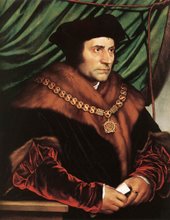
"Thomas More - portrait of courage" by Wegemer. As I read this book I felt as though the author was someone who had known More personally. This book is very enlightening and inspiring, especially for men.
"How many will be saved?" by Ralph Martin. A thorough theological exposition of 'Universalism' - the way in which we understand God's will for all men and women to be saved. The author has really gone into the matter and shows a whole theological movement; where it came from, where it went wrong and where it is secure. The author has done a great job here for the Church.
"All glorious within" by Bruce Marshall. This novel set in Catholic Scotland during the first half of the last century was, unexpectedly for me, a sort of antidote to recent revelations from the Church in Scotland. It a novel it speaks very intimately to anyone with a Catholic heart, and reveals much about Catholic life for our grandparents generation.
"The essence of prayer" by Ruth Burrows. This Carmelite nun from Norfolk has written a tremendous book about the very heart of Christian living, and has also made the Carmelite experience particularly accessible in the way she speaks about some of the great Carmelite saints. I think that this book really should be standard reading for Catholics.  
I have also begun making a systematic reading of the Timothy McDermott edition of St Thomas Aquinas' "Summa Theologiae". All I will say at this stage is, it is brilliant.
There are a number of other books which I have read but which, although I have enjoyed them, are not books that I would particularly recommend. My next book in waiting is George Weigel's "Evangelical Catholicism". I'm looking forward to this one very much.

Tuesday, 26 March 2013

4th May 2013.

Following my last post about St Margaret Clitherow here are the details of the National Pilgrimage to honour the Pearl of York, which takes place on Saturday 4th May this year.
Note that the Pilgrimage begins with Holy Mass at 1.30pm in St Wilfred's church, close to the west front of the Minster and, following the procession through York, ends with Benediction of the Blessed Sacrament at 4.00pm in the church of the English Martyrs, close to the Knavesmire. I will be participating in this pilgrimage and hope that you too will be free to take part.

Monday, 25 March 2013

The Pearl of York.

Today is her feast day; the day of her martyrdom, 25th March 1586. I was in York a few days ago and visited her shrine in the Shambles. St Margaret Clitherow is one of my favourite people; she is for me the greatest british person in the history of England. She is wonderful and, in the company of a friar of the Renewal, we visited all the sites which are connected with her, finishing our visit by calling into the Bar Convent to venerate the relic of her hand.
During our tour we popped into the Merchant Adventurer's Hall where hangs a painting of the old Ouse Bridge. It was at one end of this bridge that St Margaret Clitherow was pressed to death. Today's Ouse bridge dates from the 1800s, but the painting which hangs in the Adventurer's Hall depicts the old bridge. The painting was made in 1784 by Joseph Faringdon; it depicts the bridge almost 200 years after her execution. However, it is so interesting to see what the old bridge and its associated buildings looked like. 
St Margaret was pressed to death at the Toll Booth, which is one of the buildings on the left of the picture on the viewers side of the bridge. Before her trial and execution she was held in prison in a building on the right hand side of the bridge, probably on the further side and so, somewhat obscured in this painting.
There are a number of paintings and prints of old York and the old bridge in the Adventurer's Hall, which is well worth a visit if you in York. As a building of this kind, it is unique in this country.
St Margaret Clitherow's witness and intercession is so powerful; I rely on her so much. For priests she is pure grace.

Friday, 22 March 2013

Hope springs again.

The words of the new archbishop of Canterbury, that England recognise what it is presently doing with its Christian personality, and that he, as archbishop, personally desires fraternity with Pope Francis, are words of great hope indeed.
I visited Canterbury Cathedral in January and beheld again that awful empty space where the shrine of St Thomas Becket had been, and which the whole architecture of the building seeks to emphasise. This vacuum in Canterbury cathedral is symbolic, I think, of the dreadful emptiness which lies in our culture; that scoured out place when faith had  been. Christ was planted here in this island and, as the archbishop pointed out, for a thousand years we had embraced Him. And that this emptiness is organically linked to England's rejection of unity with the Church. The archbishop's voice, calling as it does from an Impeded See, is a voice of real hope. If our country can recognise what he is speaking of and allow it to resonate, this would be a moment of grace on grace.

Thursday, 14 March 2013

Faith, Catechesis and Schools.

I returned yesterday in time to see the news programs showing white smoke emitting from the Sistine Chapel, from a three-day conference for priests. The 'Thornycroft Priests Conference 2013', held at Thornycroft Hall (photo above), in Cheshire.
Over thirty priests, mainly from dioceses in northern England took part, and it was really quite enriching to experience the wealth of talent and priestly contribution which is present in our northern dioceses. Our effect on one another, one springing from priestly fraternity, was an experience of grace in itself and an expression of the value and need for such priestly encounters.
The subjects which we covered, led by a superb range of speakers, are summed up in the title of this post: the morality of economics, an analysis of the last Synod on the New Evangelisation, bio-ethics and the renewal of the mind, the priority of adult catechesis, re-evaluating the relationship of faith and science, and the role of our Catholic Secondary schools. I know that what I learned during this Conference will influence much of what I think and do in the future.
This Conference and then the election of Pope Francis mean that this week has, so far, been almost a life-changing experience. Thanks go, in the first place, to the organisers of the Conference, the priests of the Opus Dei Prelature.

Wednesday, 13 March 2013

A great joy indeed.

How wonderful it is that we have a new Pope so soon. He looks like a Pope too! His presence expresses a new experience of that fraternity which is always welling up from deep within the Church; priestly fraternity, Christian fraternity, ecclesial fraternity. It is indeed a great joy. We thank our heavenly Father for this great gift.