Monday, 30 June 2014

Lying with a saint.

What a tremendous mystery is the Priesthood; to lie in prostration alongside the relics of a priest-saint, awaiting the imposition of hands!
Congratulations to the three men who were ordained on Saturday, the feast of St John Southworth, at Westminster. The relics of this holy martyr priest had been brought into the centre of the Cathedral for the ordination ceremony, and the Cardinal, in his sermon, linked the ordination to the priesthood of this saint. The more we draw on our martyrs, the more we are marked by the Mystery of Christ.
It was a particular joy for me to see one of the former Youth 2000 Mission Team members being clothed with the Priesthood of Jesus Christ.

Thursday, 26 June 2014

A celebration of Priesthood.

Last week I took part in the Silver Jubilee celebration of Fr Stephen Langridge, the Vocations Director of the Southwark Diocese. It was a tremendous celebration of the Priesthood; a sung Mass with a great homily by Fr Alexander Sherbrooke.
Following the Mass there was a Hog Roast, outside The Vocations Centre, for the crowd of participants in the celebration.
Celebrations of the Priesthood are not that common but are very important in the Church. Not only do they mark a priest's service, but they honour God's plan for the life of the Church.
Congratulations to Fr Stephen on his 25th Anniversary!

Wednesday, 25 June 2014

Congratulations!

Congratulations to my 100,000th visitor, whoever you are. You should receive a New Evangelisation medal!

Monday, 23 June 2014

A House of witnesses.

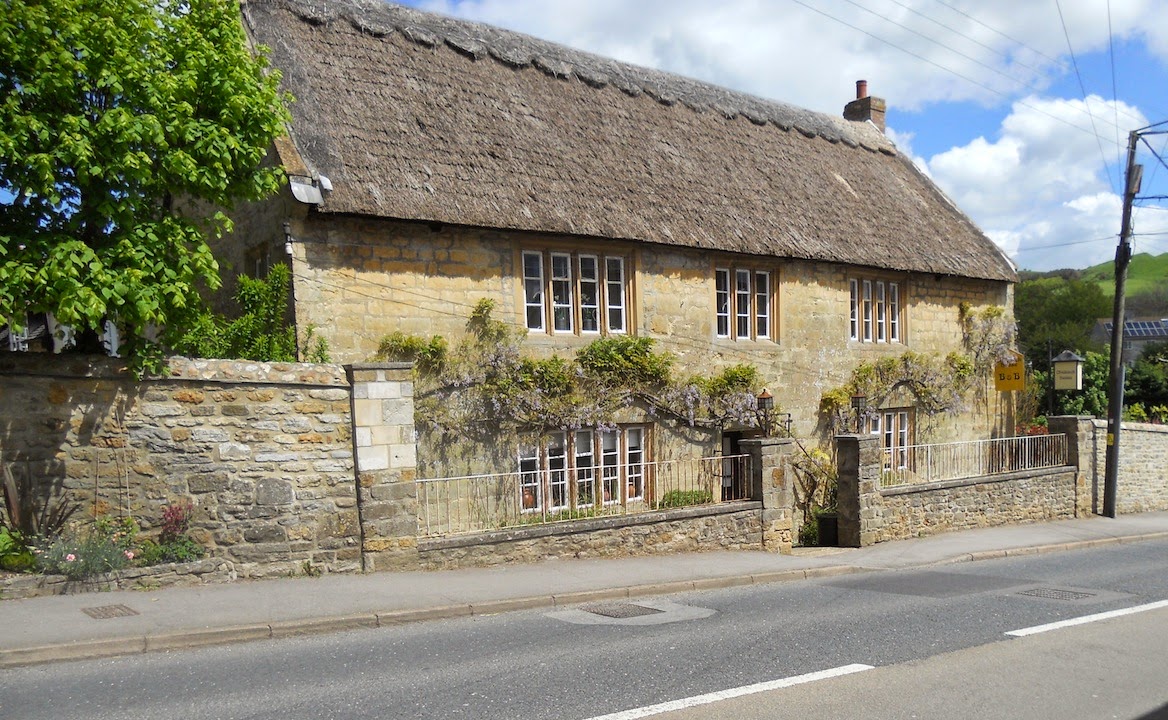
Another site in the village of Chideock which should not be overlooked in Chideock House on the High Street. This house, now a B&B, is the place where the trail of Fr John Cornelius, Thomas Bosgrave, John Carey and Patrick Salmon took place. They gave their witness to Christ in this building before being taken to the gaol in Dorchester, and from there to the gallows.
The pub on the other side of the road is also worth a visit!

Thursday, 19 June 2014

A household of faith

No pilgrimage to the gallows site in Dorchester is complete without also visiting the Dorset village of Chideock. Here, the Arundell family kept the Faith through the darkest part of the Penal days. The Arundell family of Cornwall became the ownners of Chideock Castle in 1479. They remained Catholic as the sixteenth century progressed. In the late 1500s Sir John Arundell was imprisoned various times for recusancy and for nurturing a household of Faith in his castle. All the martyrs who were executed at Dorchester had been a part of this centre of formation and evangelisation. The castle was destoyed folowing the Civil War. 
In 1786 the Weld family of Lulworth, also Catholics, bought the Chideock estate and, in 1872, a new Church, honouring Our Lady and the martyrs was opened just north of the village.
This exquisite church is now a beautiful place of pilgrimage, its interior adorned with images of the martyrs of both Dorset and beyond.
The site of the castle, about half a mile from this Church, and entered via Ruins Lane, is now just an open field overlookiing the village. In the 1950s a cross was erected in the centre of the castle site to honour all those who were nurtured in this former household of faith.
The course of the original moat can still be clearly picked out, but there is not one stone standing on another. It is now a very partoral scene with the field given over to ewes with their lambs. However, the site is a wonderful place to pray the Rosary and to ask for the new evangelisation of this island. With such a great cloud of witnesses as our forbears, let our endeavours not fall silent.


Tuesday, 17 June 2014

An everyday matter.

Passing along the South Walk in Dorchester one sees a group of figures whose presence and demeanour do not catch one's attention until one draws near. Suddenly the figures, which seems like a group of friends in conversation stand out from the other people on the pavement.
In fact, these are stautues cast in metal. They are set on the site of the former Gallows, which, four hundred years ago would have stood just outside the old town walls of Dorcehester. They represent the Catholic Martyrs of Dorset, six of whom were executed at this site. The statues depict two people who are facing death, and although lacking a certain comeliness, could in fact, stand for any casual group of people. Therein lies the significance, to my mind, of this memorial. For the people who were executed here for Christ, were ordinary people. What distinguishes them is that they gave public witness to the Mystery of Christ before the people of Dorchester, of Dorset, and of the whole country. This memorial is quite extraordinary, given the culture and attitude of this country today. Its human dimension together with its very public, yet urbane nature, places these martyrs right at the centre of our life and our culture. Before any religious distinctions can cloud the reality, and before any polemic can take away from the directness of their example, six men, gave public witness, before all the authorities and before all the people, to the reality of the saving Mystery of Jesus Christ. What an extraordinary sign for any town in our country to be marked with.
Blessed Thomas Pilchard, priest, hung, drawn and quartered here 21st March 1587.
Blessed William, Pike, layman, hung, drawn and quartered here in 1591.
Blessed John Cornelius, Jesuit priest, hung, drawn and quartered here 4th July 1594.
Thomas Bosgrave, layman, executed here 4th July 1594.
John Carey, layman, executed here 4th July 1594.
Patrick Salmon, layman, executed here 4th July 1594.
Hugh Green, priest, hung, drawn and quartered here 19th August 1642.
Martyrs of Dorchester, pray for us, that the witness we give may also give life to many.
The memorial stands at the south end of a road called Icen Way. This road begins at the High Street where, in former times, the gaol stood.
I took the above photo from the High Street looking down Icen Way, the lane down which the martyrs would have been dragged. The site of the gaol is now a take-away. Much of the town of Dorchester was burned down in the 1700s and therefore very few of its mediaeval buildings remain. It was in this gaol that the martyrs were held before their execution.


Sunday, 15 June 2014

A centenary approaches.

On 28th July we will observe the 100th anniversary of the start of the First World War. I hope that it will be a moment when the whole world will stop again and recognise the terrible destruction that this war caused and the incalculable sacrifice which was made by so many. We should never let a single year go by without observing Remembrance Day, and more importantly, without holding up this moment of our history before the Throne of Grace.
The vaunting hopes of that age of technology, science and rationalism came to a unexpected and sudden end in the Battle of Verdun. A century of human advances, hoping for a future in which we would establish firmly the dominance of human reason and resourcefulness over shreds of all the previous attempts to build human civilisation. Such a vast hope was contained with the 1800s and so few saw its weakness - the stone rejected by the builders ... 
The tale of Nineteenth Century atheism should be told again in our day, and the way in which Christian Europe dropped the ball; yet the way in which grace was never withdrawn. This is the most important lesson that we can learn one hundrfed years on, especially at a time when our culture is turning is gaze away from the Divine Initiative and is again regarding confidently the possibilities of human resourcefulness 'set free'.
Apologies for my absence; it was not intended. A holiday, a busy time in the parish and dose of flu are bound to upset regular posting. I do intend to maintain this Blog and will do my best to keep it up.

Tuesday, 29 April 2014

Roaring like a lion.

Yesterday evening I went with a group of young people to see the film "God's not dead". I really enjoyed this new Christian film. Yes, it is quite American and somewhat implausible in parts. For instance, it is hard to imagine a first-year university student being able to have such a command of the contemporary debate about science and faith in the way that the film portrays. Yet, it was very refreshing to see faith in Jesus Christ so explicitly referenced on the big screen, and to hear grace being referenced in ordinary conversation. We long to hear people speak about grace and the work of God in normal life, yet it hardly ever happens, in my experience. Instead, we confine ourselves to more hollow subjects.
I also applaud the film for the way in which it "took the lid off" the reality of the Christian presence in our society, a presence which, today, tends go unspoken and unexpressed. In spite of this, the whole of life is lived at the interface of grace, and this film went some way to show this and, hopefully, to inspire a more normal public expression of faith in Jesus Christ.
What is of particular note in the film is the way in which masculinity is portrayed. In our era, in which there is a crisis of masculinity, "God's not dead" really does set masculinity in relief. The main character in the film, the young man, played by Shane Harper, expresses the basic identity of masculinity: leadership, service, strength of character and, above all, responsibility for the Gospel. Responsibility for the Gospel is the foundational task which all men have, a role which goes to the heart of today's crisis and one which the film nurtures and expresses quite well.
Christian films are few and far between; this film is a worthy addition and, I think, has been made with both self-confidence and the Gospel as its blueprint. "God's not dead … He's roaring like a lion!" I hope that we will get more and better Christian films as our era progresses.

Saturday, 19 April 2014

The whole world is waiting.

The whole world is waiting to celebrate the victory of Jesus Christ. There is a strange expectancy in the Church. After the long Lenten fast and the impacting events of Holy Week, I wonder if we don't all feel as did the first Apostles in the Upper Room, or the souls who had waited for so long in the place of death.
Yet today there is a new ingredient in our pause before Easter; today the Novena seeking the intercession of Blessed John Paul II begins. This Novena will end the day that he is made a saint - 27th April.
Amongst the many needs that we can place before him are surely the ending of contraceptive mentality and practice, and the ending of abortion; these two have brought our civilisation to its knees. The power of this great advocate of grace when he was among us, tells us how powerful must be his prayers now that he is in his Father's House.
I have placed the Novena prayers on my parish website: takenupingrace.wordpress.com

Wednesday, 16 April 2014

Post mission rewind.

Although this photo was taken last year at the shrine of St Thomas More in St Dunstan's church, Canterbury, and shows the Southwark Mission Team (including a couple of others) at the very start of their life together, I am still reeling from the impact of their missionary endeavour in my parish these last nine days.
I am extremely grateful to Fr Stephen, and to Michael, Anthony, Will, John and Tony for the considerable work that they undertook in giving a parish mission in Ossett and Horbury. The mission was entitled, "Heart speaks to heart, an introduction to living Christianity today". They achieved that very purpose, leading the parish through the basics of the Christian life, bringing people together to live that very vision, and bringing both newcomers and those who have not been a part of this life for some time, to practice the faith with a new openness.
I was sorry to see them leave on Palm Sunday as I would have liked them to stay and consolidate their work for at least another two months! This is a mission which will not be forgotten for many years to come, as a new foundation stone has been given to this parish. It was fashioned for us by the Lord and worked by these men. Pray the Lord of the harvest that he would send workers into his fields … The Southwark Mission Team have been fashioned by prayer and faith-filled hope. May they all go from strength to strength.

Saturday, 5 April 2014

Awaiting a mission.

Later today, Fr Stephen Langridge and the members of The Vocations Centre mission team will arrive in St Ignatius' parish, Ossett. Here in the parish we have been looking forward to, and preparing for, this parish mission which they will lead. The mission, which we have called Heart speaks to heart, lasts for eight days during which time we hope that there will be an opportunity both for those of there household of faith, and those not already of this household, but who are attracted by the mission events, to have some contact with this team.
The mission team will be leading events each day in the parish, and you can find fuller details on my parish website: www.takenupingrace.wordpress.com.
Acknowledgements to The Vocations Centre for the above photo, which shows some of the team preparing a car for the journey from Kent to Yorkshire.

Friday, 4 April 2014

The Pearl of York.

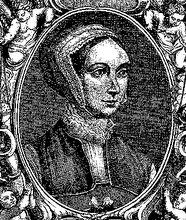
It was a great joy, last Saturday, to take part in the annual St Margaret Clitherow Pilgrimage in York. In the photo above the procession is just setting off from St Wilfred's to move through the city.
Fr Richard Duffield preached a great sermon during the Mass, speaking of how she died to protect people such as ourselves, and that, although we come on pilgrimage to honour her, we come firstly to seek her prayers.
We stopped briefly to pray outside her shrine in The Shambles before moving on to the site of her execution on the Ouse Bridge.
This year's pilgrimage was marked by the welcome we received by the Oratorian Fathers who now run the city parish of St Wilfred's; may their life and apostolate be a beneficiary of the powerful intercession of the Pearl of York.

Thursday, 27 March 2014

Soldier to Saint.

Yesterday evening I went to see the Leeds performance of Rise Theatre's production of Soldier to Saint. The play is set in 2020 and is based upon what we know of the life of St Alban. Alban was martyred in the year 140 just outside the Roman town of Verulamium for sheltering a priest.
The Rise Theatre production captured the very heart of the drama in which St Alban was entangled: loyalty to Christ in the face of the prevailing culture. The Rise Theatre group portrayed this drama without any dumming down, and showed the human context within which the Christian personality is formed and established. It was a tremendous portrayal by this company of three.
If you are able to see any of their performances in other cities in the land I warmly recommend this play and this performing company to you. As someone who comes from St Albans, I was very pleased to see, for the first time, a dramatisation of the life of this saint, our protomartyr. For more info. visit www.risetheatre.co.uk 

Friday, 21 March 2014

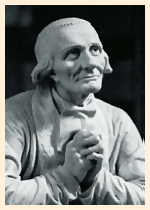
St John Vianney and Confession.

St John Vianney sometimes delayed giving absolution to a penitent, asking that he or she remain some days in his village after which he would give the absolution. He did this not to hold control over the person, but so that the person's heart could grow during those days and so be more able to receive the grace of mercy which God desired for that person. This is one of the ways in which St John Vianney insisted on the goodness of God; that human nature, not God, is called to change, precisely because God is all good at all times.
So often we can respond to our own sinfulness by a feeling of unworthiness, an attitude which closes us off somewhat from the goodness of God. In fact, because God is overwhelming in his mercy to us, my attitude should really be to seek to make reparation to his tremendous love for me.
St John Vianney's own life had been turned upside down, and then modelled upon God's mercy, so that he, as a priest, became a conduit of divine mercy to others. God's mercy is the focus and centre of human life and it is the Confessional that enables all of us to be established upon this true foundation. 
Tuesday, 18 March 2014

Theology of the Body for men.

Tomorrow, Wednesday 19th March, following the 7pm Mass of the Solemnity of St Joseph, I am giving a session on what the Theology of the Body says about masculinity. This will take place in the Upper Room at St Ignatius' Church, Ossett, WF5 0DQ. at about 7.40pm. For men only.

Monday, 17 March 2014

Insisting on the goodness of God.

St John Vianney's kitchen in his presbytery in Ars is a great sight for any pilgrim to the Cure's village. Here he was sustained in his apostolic mission to his parish. Nonetheless, being faithful to Christ made him a contradiction to the world. His attitude to life - that his life and ministry were united in the Heart of Jesus meant that, in spite of being  aware of his own fragility, he endeavoured never to be discourages by that same fragility - he insisted on the goodness of God.
There is much in the life of the world and in our own lives that seems to say that Jesus is not the Lord of history, yet every baptised person, and especially every priest, is the first beneficiary of the love of Jesus.
The image of the Cure's kitchen, which is, in a sense, a Lenten image, expresses a tremendous spiritual truth - one which St John Vianney lived so manifestly: yes, we are fragile and sinful, but these are the very things to offer to God because God is wholly good, and we should rely on Him for everything, rather than relying on ourselves.
St John Vianney suffered for insisting on the goodness of God, yet he was free for God's love.
St John Vianney is a great mentor for our Lenten journey, for there is so much today that leads us either into self-reliance or into a hopeless defeatism. No, what will really help us is a personal experience of the love of Christ, and it that which we should stake all on.

Monday, 10 March 2014

New website.

Yesterday we launched a new website in my parish, St Igantius' in Ossett and Horbury. We offer this site to Christ for His mission in and through the parish. The site is in the form of a Blog; it's early days yet, but we hope that the site will develop and become a platform for the new evangelisation in this area. Visit takenupingrace.

Sunday, 9 March 2014

TOB Intro.

This Wednesday, 12th April, I am giving the first of three presentations of the Theology of the Body in the parish centre. It begins at 7.30pm and will last for about 45 mins. This session will introduce John Paul II's great vision of human personhood. All are welcome to St ignatius' parish for this evening event; WF5 0DQ.

Friday, 7 March 2014

His desire to strengthen.

In my new parish I am about to begin, for the first time here, a time of catechesis for the sacrament of Confirmation. I have been looking at some resources which have been made by another priest of the Leeds Diocese, and have been struck by the beauty of this sacrament.
Confirmation represents the desire of Christ Jesus himself to give this anointing in addition to the grace of Baptism. Christ desires that his followers should have the fullness of the gift of his life.
So, as Confirmation builds upon the grace of Baptism, we can see what the nature of this sacrament is: it is the fullness of the gift of the Holy Spirit for taking one's place within the Church, that is, being able to use one's life for God. And it is the fullness of the gift of the Holy Spirit for evangelisation, that is, for being able to bring new life into the Church.
In a sense, the sacrament of Confirmation represents a new evangelisation of the person being confirmed, and a new awareness within the Church of Christ's desire to transform the reality of human life by letting it come into contact with, and share in, his glorified humanity.

Tuesday, 4 March 2014

Memories of Buckfast.

The South Devon Abbey built upon the foundations of its mediaeval Cistercian predecessor and modelled on the architecture of the ruins of Kirkstall Abbey in Leeds, is emerging into the New Evangelisation under the leadership of its Abbot.
I have very happy memories of Buckfast Abbey from my five, week-long, visits there in the 1980s. In beginning to discern a vocation, I stayed in the guest house of the Abbey in 1980 and immediately fell in love with it - I was completely entranced by the place. I returned the following year and stayed for the whole of Holy Week, taking part in the beautiful Easter Liturgies. These years were tremendously formative of my vocation, which I came to realise lay not in a monastic community but in priestly life and apostolate. I am grateful to the monks who I got to know during those visits and who spent time conversing with me, Abbot Placid, Dom Joseph, Dom Sebastian, Dom Stephen, Dom Francis. I returned twice more as a seminarian and again as a newly ordained priest.
My last visit was a flying one: having arrived back from Spain in the year 2000 after my two years of study in Valencia, disembarking from the ferry in Plymouth, I drove straight to Buckfast to pray in the Abbey Church at the shrine of Our Lady of Buckfast, and to give thanks for my newly achieved Licentiate and my safe return.
May Our Lady of Buckfast be a great light to the newly developing apostolate of the School of the Annunciation: may many new-comers be formed by the grace of this beautiful Abbey and its school, and may the Benedictine community receive new vocations, nurtured by Her hand.