Sunday, 6 March 2011

Shadows of men


It should not surprise us at all, nor should we be condemnatory, that in our secular age which has lost sight of the love of God, an age in which by and large people do not believe that they are really cherished by God, that many men should enter into the culture of homosexuality.
The great platform upon which human life is lived is the relationship we have with God. Are we on our own in facing life? Is God concerned about us at all, or is He merely moved from afar when we encounter all that is bad in the world, Himself remaining hidden and silent? How could we be expected to believe that God has become man and entered into the very situation of our lives? Could this be true?
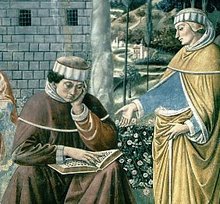
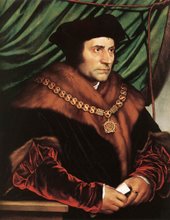
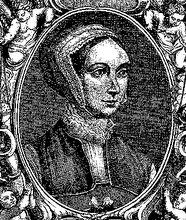
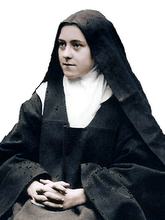
The Christian transformation of men, in history, through the action of the Gospel has revealed the greatness of masculine personality and character. What do the Apostles, St Paul, St Augustine, St Thomas More, Bl Louis Martin (the father of St Therese of Lisieux) have in common? They all pointed people towards God. In the light of Revelation which shows the first man blaming his wife and then hiding in the bushes, male greatness comes about when, in the Gospel, men accept God's company and lead others towards God. When is a man truly a man? When, by his life and example, he directs others on the path towards God.
Historically, we can see a number of contexts, in both the Church and society, where men truly embrace their masculinity. In the family, a father and a husband takes up an essential role of guiding, fostering and protecting the spiritual life of his wife and children. Bishops and priests have an indispensable Christian role of fatherhood, pointing out and leading the way. Single men also have assumed their God-given personality. It is the case that most men take up the role of becoming biological fathers, but before embracing this vocation all men have the vocation to spiritual fatherhood.
In our age, which has turned its back on the Mystery of Faith, it is sadly true that many men instead of aspiring to the fullness of their mission in the world, embrace a lie about themselves instead. Does God love and cherish these men? Of course he does. Can these men be saved? Of course they can. But that is precisely the point; it is not Salvation which is at stake, but our willingness to embrace that relationship with God which Salvation reveals.
There is a great need that today, many men will be open to God and to being loved by Him in Christ, and shake off the cultural lies that prevent them from embracing their true greatness. Every society, every community needs real men, men who point out to others and lead the way to God.

Saturday, 5 March 2011

Speaking about Scripture scholarship


Reading Pope Benedict's new letter 'Verbum Domini' put me in mind of a talk which Fr Benedict Groeschel CFR gave in Leeds in 2002 about Scripture scholarship during the twentieth century. He outlined very simply the origin of the main difficulty - rationalism - which we have had to deal with in Scripture scholarship, together with that attitude that leads to a genuine embracing of the Scriptures. I took notes during Fr Benedict's talk and enclose a summary of my notes here. Acknowledgements to Fr Benedict Groeschel CFR.
-
At the beginning of the twentieth century many Catholic Scripture scholars, people like Loisy and Tyrell had gone into the rationalism of Protestant scholarship and taken Scripture with them. So, in order to protect the Scriptures Pope Pius X commanded Catholic Scripture Scholars to get out of contemporary Scripture studies because of where they were going.

Almost half a century later in 1943 Pope Pius XII reversed the command of Pius X and opened dialogue between Catholic theologians and the Critical Methods that had been used by Protestants and in secular studies of the Bible. In his Encyclical - Divino Afflante Spiritu - he made many cautela and limitations, which as the Catholics moved into academic circles tended to be ignored. But in any case the Catholic Scholars had to enter into this circle with the rules that were in play.

The environment which the Catholic scholars encountered in 1943 was materialistic, sceptical, reductionist and profoundly anti-supernatural. One of its most important protagonists was Rudolf Bultman, whose basic hypothesis was that Scripture exists for preaching (the truth is that this is only one of its purposes), and that you can only preach that which people will believe. For Bultman, modern people do not believe in the miraculous and, he would go on to propose that the miraculous doesn’t even exist. This attitude comes from scientific reductionism, which says that if there is something which you can’t comprehend, pretend that it isn’t there.

Later, Raymond Brown the Catholic scholar, following this tradition, would propose in his book “Jesus, God and man”, that Jesus did not know who he was. In this book he declared that the only words in the Gospel which we know Jesus said are “This is my body”. These words are so extraordinary that they could not have been made up by the evangelists. However, Brown fails to ask how someone who doesn’t know who he is could have said these words, unless he thought he had divine power. The problem which all these exegetes have is a problem with accepting Mystery.

The origin of this whole attitude to the Scriptures is rationalism, which entered into Scripture Scholarship in Germany at the time of Von Bismark’s Kulturkampfe (1871-1878). This was a basically non-political attempt to bring cultural unity to the newly unified Germany. It’s principal goal was to bring Catholics into line with ‘enlightened’ Protestants. By the end of the Kulturkampfe Catholics were divided into two groups: those who embraced the achievements of the Enlightenment, represented today by Karl Rahner (that it is possible to Baptise the Enlightenment, including Kant and Freud, and get something good from it), and those who would not embrace the Enlightenment, represented by Romano Guardini, Karl Adam and von Balthasar.
(To be continued.)

Thursday, 3 March 2011

The mustard seed, again.


A new initiative has begun in parishes in the UK; small groups meeting informally to grow in faith using as their guide "The Compendium of the Catechism of the Catholic Church". I wish that there had been such groups in my parishes, when I was a Parish Priest. Visit the website to find out more. From small beginnings ....

Monday, 28 February 2011

An opportunity not to be missed


With the new English translation of the altar missal only months away I do hope that you have been able to attend, to whatever degree, to the preparatory catechetical material. Indeed, the opportunity for Liturgical formation which was unfortunately omitted at the time of the reform in the late 60s, is now again possible. The need for Liturgical formation is probably not universally appreciated, even though the lack thereof is staring us in the face. And what is such a great grace to the Church is that the present Holy Father has a profound Liturgical awareness, and has given so much of his time and energy to offering genuine Liturgical catechesis to the whole Church.

The DVD resource "Become one Body, one Spirit in Christ" is a necessary part of our Catholic education at this time. The section "Receiving the new translation" should be given particular attention. Some sequences on the DVD have limited value and in one section and English priest gives a very inadequate definition of the Priesthood. I would also say that the very heart of Liturgical formation, "active participation", which is joining ourselves to the action of Christ in the Mass, is not treated adequately. However, this DVD is an indispensible resource for personal and communal use in an age which has, to a degree, lost sight of the Mass.
Another resource is available on the internet and you can watch its videos directly on-line, without purchasing a DVD. I recommend this website for its content: http://www.romanmissal.us/
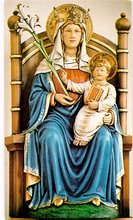
The image above is a photograph I took a few weeks ago of a gothic statue of Our Lady in the old church in Perouges, France, near Ars.

Thursday, 24 February 2011

Then saw they how there hove a dusky barge

The other day a couple of us went down to the harbour in Sydney and behold, not a hand clothed with white sammite, but an enormous volume of water displaced by two queens; the largest passenger ships on the planet. Yes, together in the harbour were the Queen Mary II and the Queen Elizabeth. We caught a harbour taxi and got up close - quite a sight! The Queen Mary II is the larger ship; I could scarcely get the whole ship in the frame in order to photograph it.

Tuesday, 22 February 2011

Important sources


While I was back in the UK for Christmas I was asked by someone about the 'reform of the reform' and what elements comprise it. This is an important matter, and here, in essence, was my reply. The 'reform of the reform' is the way in which the contemporary liturgical movement is developing the Liturgical reform of the Second Vatican Council and the implementation of the 'Novus Ordo' Mass, so that it better expresses the nature of Catholic Liturgy. The main promoter of the 'reform of the reform' is Benedict XVI.
Two important factors are involved in understanding this movement. First, it is important to have a genuine understanding of the Liturgy (a liturgical catechesis), what the Liturgy of the Church is in itself. I would cite here just two sources: The Catechism of the Catholic Church, paragraphs 1066 - 1209, and Joseph Ratzinger's book, "The Spirit of the Liturgy", especially its Preface and the whole of Part 4.
Secondly, it is important to recognise that the Liturgy develops over time, and that we are still very close to the reforms of the late 60s, and that the whole sense of a reform of the reform is only about five years old. Time is on our side and we shouldn't expect sudden developments; we are looking at an organic process of development/reform which will probably take 50-100 years.
So, with these things in mind, here are the main sources for appreciating the 'reform of the reform':
1. We should read, reflect upon and know the Council's document on the Liturgy, "Sacrosanctum Concilium".
2. We should have some knowledge of the previous Liturgy of the Mass, the so-called Tridentine Mass, in order to see where we have come from.
3. We should read and refect upon Benedict XVI's Apostolic Exhortation "Sacramentum Caritatis", which gives us an over-arching vision of the reform of the Liturgy which has taken place.
4. We should note Benedict's teachings on the Liturgy in his homilies, addresses etc. For instance, what he says in his new book "Light of the World", pp105-106, 155-158, is very important.
5. The 'Benedictine' altar arrangement of the candles and crucifix.
6. The new English translation of the Altar Missal.
7. The Motu Proprio "Summorum Pontificem", in which the Old and New forms of the Rite are brought together in order to shine light on each other; for the two forms to be reformed by each other, as it were.
Of course, there are lots of other sources, but my intention is to point out simply the heart of the matter and I hope that these indications will be helpful to others.
(I took the above photo last month in the old church in the village of Perouges, near Ars in France.)

Two A levels


Cardinal Heenan commented in a letter to Evelyn Waugh in 1964 about the rise of the new Catholic pseudo-intelligentia, saying how anyone with two A levels considered themself an intellectual whose opinions were worthy of public interest. Well, what appeared in the 60s certainly gained momentum in the UK as the years wore on, and I have encountered this syndrome so many times that it really does seem to have become an obstacle to the Christian Life.
As a newly ordained priest I remember in 1988 a lady striding into the sacristy as I was vesting for Mass and wanting to know if I would be using inclusive language in the Mass. Five years later, I remember another lady, addressing a conference of the Leeds clergy, telling us that she would give the new Catechism, which was about to be published, a shelf-life of four years. In one of my parishes, in North Yorkshire, I encountered a culture of opinion to such a degree that the Parish itself was disfuntional. I was told, as Parish Priest, that it didn't matter if young people didn't go to Mass or Confession, that we mustn't burden them with Sacred Scripture, and that if Joseph Ratzinger were elected Pope there would be a schism in the Church. Now all of these were personal opinions, but opinions which actually were an obstacle to the Gospel and to the life of Church in that place.
Today the culture of opinion is all-pervading; signs of it are clearly evident in the Catholic world. The religious interest magazine "The Tablet" would be an example of this culture and how it places itself as a guiding and moderating influence upon the teaching and the message of the Holy Father and the Church, developing its own sort of orthodoxy, one which runs parallel to that of the Church.
What Cardinal Heenan noted with some concern in 1964 is a paralysing phenomenon of our age: Catholics applying a secular critique to Christianity. In fact, it is the opposite which is true - that it is Christ and the Church who enables us to understand our lives and the world in which we live. We see this formative attitude especially in people who actually listen to the Holy Father and the Church, and in those who participate faithfully in the Mass.

Saturday, 19 February 2011

An un-ergonomic encounter


Just before I entered seminary in the Autumn of 1982, an acquiantance recommended a particular book to me. Indeed, he said that this book should be compulsory reading for all seminarians. He seemed to think that there was a very important message in this novel for all aspiring seminarians. So, I took up his recommendation and acquired a copy of David Lodge's novel "How far can you go".
It was as though in an instant I was introduced, through this book, into the whole malestrom of dissaffection with Christianity which I had somehow skipped over in the past decade. The book was trying to describe how far a Christian could go in trying to live according to the world's lights, and still call himself a Christian.
I should have asked my acquaintance why he thought all seminarians should read this book. The book was a real 'turn off' for me, for I couldn't understand why anyone who wanted to follow Christ would actually try to put a huge distance between Christ and himself. Of course, from another point of view, this novel introduced me for to a whole growing culture, among British Catholics, of dissaffection with the Church and the Christian Life, which I would not encounter again until I returned from seminary in Spain six years later.

Friday, 18 February 2011

The bravest route


My own experience of the new catechetics/religion did not happen until I went to Grammar School in 1972 - in my case to St Michael's College in Leeds. Earlier, during my years at Infant School, and even well into Junior school I had benefitted from traditional religious instruction. This was probably because my teachers had not been sent to attend courses on the new stuff, or were not ready to implement it, or because they had decided to keep teaching the Catholic Faith instead. I was also Confirmed when I was 8, and again prepared in a traditional way for this Sacrament. So, together with the whole background of Catholicism which I was growing up in, from family and parish, I emerged as a young teenager, untramelled by the new religion.
The Infant and Junior schools which I attended were later to adopt, in the early 70s, along with all other Primary schools in the Diocese, the "Veritas" RE scheme. Looking back, it is hard to imagine what lunacy drove the decision to inplement this Scheme, and in so doing to exchange the teaching of the Mysteries of Christ's life for reflections on pebbles and flowers.
At St Michael's College, where we were taught that Jesus wasn't God, and were subjected to coffee-table class Masses, I cannot now remember if a particular Scheme was followed. Certainly, I passed through High School long before "Here I am" or "Weaving the Web" were foisted upon RE departments. However, it was clear that the Catholic background in which I was brought up had instilled the Faith in me to such a degree, that the nonsense I was exposed to at St Michael's washed over me without gaining a foothold. And that, emerging from High School as a late teenager, I was eager to really deepen my undertanding and experience of the Catholic Faith. This I did as a "grace-led" project untill at the age of 21 I heard a call to be a Priest.
I sense that my experience holds two important ingredients for today's context. First, the Faith is planted and nurtured at home, rather than at school. Secondly, that the age to really form young people in living the Christian life (and of course this varies according to the individual) is precisely when they are emerging into young adulthood. Of course, the question of a person embracing the Catholic Faith concerns the whole vision which God has for a person's life, which we are all called to put ourselves in tune with.

Saturday, 12 February 2011

With hindsight


In the last post I mentioned a Catechetical College which had formerly existed in London called Corpus Christi College. This was the national catechetical centre set up by Cardinal Heenan in the late sixties and which he closed in 1975. The college was in the former Convent of the nuns of Our Lady of Sion (pictured above), on the corner of Chepstow Villas and Denbigh Road in Notting Hill near Paddington Station. The building is now divided into residential flats.
The first director of the college, Fr Hubert Richards, together with Fr Peter de Rosa and others set about producing a new catechesis and training others in its vision and method. Indeed, at the time, representatives from every Catholic school in the land were obliged to attend courses here. By 1971 it became clear that the college was a centre of heresy and a new director was appointed to re-align the college, Fr Michael Keegan, who also oversaw the closure of the college in 1975. But the damage had already been done. The original directorate and staff of the college had successfully purveyed within the Catholic Church in the UK their own new religion. With hindsight we can see that this new religion is actually a form of Pelagianism - the doctrine that human beings do not need grace in order to be saved, they can achieve salvation on their own. The new religion of Richards, de Rosa and others was spread, not so much through lay teachers but through religious and priests who thronged to Corpus Christi College to imbibe its noxious teachings. Most priests and religious who attended courses at the college returned to their posts with totally wacky ideas and many abandoned their vocations. I remember the lay RE teacher who took the class that I was in at St Michael's College in Leeds, teaching us in 1973 (I was 12/13 years old at the time) that Jesus was not God but was given a mission from God at his baptism in the Jordan. He also taught us, that same year, about all the different methods of contraception and how to put on a condom. This man, who went on to become the Head of RE at another High School in the Leeds Diocese, was for many decades paid an excellent salary in order to teach the Catholic Faith. I remember thinking, as he was speaking to us in the class, that this man was "off his rocker". We have been duped!
In the mid-nineties, Claire Richards, ex-nun and wife of the ex-priest Hubert Richards, published the heretical school RE curriculum "Roman Catholic Christianity". This book, although officially discredited, may still be in use in some Catholic schools.
There are many agents of Corpus Christi College still around in the UK today, and you will find signs of of its influence in these ways (amongst others):
1. Any explicit or implicit diminishing of the nature or mission of Jesus Christ the Redeemer of mankind.
2. Any explicit or implicit diminishing of or undermining of the nature and mission of the Church, the Pope or the Priesthood.
3. Refering to the Teaching of the Church as "Church or Vatican policy", disassociating it from the Gospel and from truth.
4. Speaking of the Christian Life in terms of those things that Catholics "do", disassociating Catholicism from the Mystery of Christ.
5. Moralising instead of showing how the Moral Life of Catholics flows from the Mystery of Christ.
6. Placing the emphasis on social issues and campaigns.
How did the phenomenon of Corpus Christi College come about? I'm not going to go into the history of how the College came about; others have written about that. But is does seem to me, looking back, that after the Second Vatican Council was over, those who did have a vision were precisely those who were wanting to change the Catholic Faith into something else. And that they were lacking who had real vision for planting and nurturing the Catholic Faith in the changing world of the 60s and 70s. But what is absolutely clear is that both our present Holy Father and his predecessor are men of great vision, and that we need many others, at every level in the Church today, to have a genuine vision for living and handing on the Faith.

Monday, 7 February 2011

A half century


Apologies for my prolonged abscence while being away from substantial internet access; I will endeavour to return again posting when I have the opportunity.
Tomorrow is my fiftieth birthday. 1961 was, as you know, a good year for babies and much has changed in life since then. For twenty-three of my fifty years I have been a priest. In fact, for me the greatest change of my life was when God not only took me and transformed me from being a man of the world to being a man of God, but went on to give me a share in the Priesthood of His only Son. I never expected this when I was young and I am still full of wonder because of it. A second 'transition in grace' took place two and a half years ago when I was called on mission to Australia and now find myself helping to form future priests; and I know that the Holy Spirit has found many generous young hearts in His great Southern Land.
In some way, I am amazed when I look back at the five decades of my life and wonder how I have emerged so untramelled by the bewilderment and confusion of this age. Take for instance, the new religion spawned by Corpus Christi Catechetical College in London and its agents, who came to virtually every school and parish in the late 60s and 70s pedelling their neo-Pelagianism (many of whom are still abroad in the land), but inspite of their crazed activity I imbibed the Faith of the Church instead.
I love the Church in Sydney and my little part in its Mission, but I miss too all my family and friends in the UK, not least the great crowd of priests and young people (and not so young), mostly from Youth 2000, who held a magnificent surprise party for me yesterday just outside London. I was overwhelmed!
Incidentally, Bob Dylan will be 70 in a few months time!

Thursday, 18 November 2010

Blog-gap starting up


It will be some months before I am able to post again; I will be giving a retreat and then spending some time in the UK, and I wont have computer access during this time.

Tuesday, 16 November 2010

A crucifix for Rome


The crucifix from the seminary chapel in Sydney is going to Rome; it will have a home in the new Domus Australia which is being established for Australian pilgrims to the Eternal City. We will miss this quite imposing and life-size crucifix from our chapel; the Cardinal is however, commissioning a new crucifix for his seminary.
It was in August of this year that I came on staff at the Seminary of the Good Shepherd, the seminary of the Sydney Archdiocese, in order to contribute to the formation of priests in Australia. This is the most unexpected and exciting appointment which I have been given during twenty two years of priesthood. The priesthood is at the very heart of the Church and it has received so much renewal during the past two decades, especially from JPII and B16. What an immense grace and a joy it is to witness today's vocations advancing towards ordination, opening up their lives to the Good Shepherd, to be fashioned in His image. Please pray for us, that we might all become priests after the heart of Christ.

Thursday, 11 November 2010

At the centre of it all


The contemporary debate concerning the relationship of the Catholic Church to the State, and the question of the Unity of Christians usually leaves out the basic truth that everyone is related to the Catholic Church anyway. Attempts to place or categorise the Church always fall way short of the mark and leave people in all sorts of weird postures. There is no getting away from the fact that what we call the Catholic Church is something which has been revealed by God and that it is the pillar and ground of truth in the world.
The division within Christianity in the UK is sadly responsible for this state of affairs in no small way. Where once there was unity of faith and practice, there is now a plethura of idea, opinion and posture, leaving a gaping vacuum at the centre - so evocatively expressed by the wide open space at the architectural climax of Canterbury Cathedral where once Becket's shrine stood (photo above).
The lack of unity has lead Christians down so many paths, many of them obscure, indivdualistic and unhelpfull, so that today we have the rationalists, the fundamentals, the neo-arians, the neo-pelagians, the congregationalists and the sectarianists, to name but a few. Where in all this mix of people doing their own thing does the Catholic Church fit? It is a bewildered age and it is not easy to see the essential nature of the Church; that there is such an entity as the Church, which is the pole and centre of gravity for everyone.
Thank goodness for the Martyrs, who pointed to the Church, and who the Church depended on so much in their day. But the Church does exist, and so the question of the Unity of Christians is a real question, one which will not go away. We are called to unity, and there is an authority in the Church which has the power to govern all of us. So, beyond all the opinions and all the clever ideas about the Christian life held by so many, there nonetheless remains the Mystery of the Church, revealed and given by God, an entity which is the foundational agent of the Christian Life for everyone who is baptised, and the herald of that Life to all those who are not. Without the Church no one would be Christian. What is this Church? It is the Catholic Church, and she uniquely has the responsibility and authority, from Christ, for governing and pastoring all the Churches, which means all the Baptised.
And secondly, that there is such a reality as the Mystery of Faith. We didn't invent it, procure it, or even ask for it. It was revealed and given. This Mystery is the Eucharist; the Mystery of Faith cannot be truthfully described by anyone in any other fashion. So those who say that the Eucharist is only symbolic, or simply a ritual, or "it doesn't matter how you celebrate the Eucharist", or even if you need to celebrate it at all, or that there is no Mystery of Faith, or that it has some other meaning; all these Christians (Catholics included) have a long way to go. The Mystery of Faith is the very core of our being - or at least, it is what everyone is called to have at the core of their being. That God has given Himself to us, and we are called to give ourselves to HIm. This is the Mystery of Faith; it is the very heart of human life.
So, as the Anglican Ordinariate comes into being and opinions are expressed, we need to have the authentic vision of the Christian Life before us - that it is a mystery of grace which God has given us. There are indeed many ways to live the life of Christ, but the Mystery of the Church and Mystery of the Eucharist are realities which we cannot change or set aside.
Let us, with homage and gratitude, be open to a fuller vision of these Mysteries which God has given to the world for the salvation of all men and women.

Tuesday, 9 November 2010

Embracing the Anglican Church


Today's openness of the Catholic Church towards the Anglicans in offering, with the Ordinariate, an extraordinary path by which they can have full communion in the Catholic Church, is an expression of a long-held deep desire to enable the unity of the Church in the UK. At the Canonisation Mass of the Forty Martyrs in 1970, Pope Paul VI, at the end of his homily spoke these words - which in the light of recent events, seem quite prophetic:
May the blood of these Martyrs be able to heal the great wound inflicted upon God’s Church by reason of the separation of the Anglican Church from the Catholic Church. Is it not one - these Martyrs say to us - the Church founded by Christ? Is not this their witness? Their devotion to their nation gives us the assurance that on the day when - God willing - the unity of the faith and of Christian life is restored, no offence will be inflicted on the honour and sovereignty of a great country such as England. There will be no seeking to lessen the legitimate prestige and the worthy patrimony of piety and usage proper to the Anglican Church when the Roman Catholic Church - this humble “Servant of the Servants of God” - is able to embrace her ever beloved Sister in the one authentic communion of the family of Christ: a communion of origin and of faith, a communion of priesthood and of rule, a communion of the Saints in the freedom and love of the Spirit of Jesus. Perhaps We shall have to go on, waiting and watching in prayer, in order to deserve that blessed day. But already We are strengthened in this hope by the heavenly friendship of the Forty Martyrs of England and Wales who are canonized today.

Monday, 8 November 2010

The 'hidden' antiphon


I am pleased to see on Fr Finegan's and Fr Blake's respective Blogs, posts about the Offertory antiphon. In the Mass there are three Antiphons, not two - Entrance, Offertory and Communion. The Offertory Antiphon is at the moment 'hidden', as it does not appear in the Ordinary of the Mass in the Altar Missal. However, its place and nature are described in the GIRM (paras. 37b and 48), and it is included in the Revised Roman Gradual. Without wanting to talk about the importance of this Antiphon, other than to say that it proclaims the beginning of the Liturgy of the Eucharist and expresses Christ's intentions as the Offertory of the Mass begins, we should be looking to build the reform of the reform by including the Offertory Antiphon in the Mass. The above mentioned Blog authors are right in calling upon those who are appropriately involved in the Liturgy to produce and insert these antiphon texts and accompanying chant tones.
I understand that the Revised Roman Gradual includes Offertory Antiphons taken from the Tridentine Missal but reorganised for the Novus Ordo. Whereas the new Altar Missal contains Entrance and Communion Antiphons which were newly written for the Missal. Also, I understand that there is an Anglican Gradual book, in Englsih, which also contains the three Antiphons organised for the Novus Ordo.
So, I add my voice those already calling for the Offertory Antiphons to be prepared and made available to be said or sung at the Mass - something which, clearly, we should already be doing.

Thanks to the King


While the Pope dedicated the church of the Holy Family in Barcelona, outside a congress of homosexual men engaged in kissing one another. However, in saying farewell to the Pope before he left Barcelona, the King of Spain Don Juan Carlos expressed, on behalf of many, his thanks to the Holy Father. He said, "in both cities [Santiago and Barcelona] you have blessed us with words of peace and solidarity, of fraternity and spirituality, full of hope for a better world." The gesture of the King was in total contrast to that of those men who so inapproriately expressed their manhood outside the Sagrada Familia church.

The truth about mature manhood is that men are called to take some form of concrete responsibility for the Gospel. Men have the mission to be heralds or bearers of the Gospel. Not all men are called to be priests but the fullness of masculine identity is revealed when men embrace, internalise and express the Gospel. This is true for husbands and fathers, for single men, for working men, for young men who are dating, each in their own way, they become real men when they are advocates of the Gospel. What a great photo (above) of the King of Spain and the Pope, two men each in his own way revealing his responsibility for the Gospel and worthy of the world's gaze. Outside the church, the very opposite of masculine identity was taking place - a refusal to take responsibility, before the world, for the Gospel.

Sunday, 7 November 2010

What a magnificent shrine to the Holy Family


The dedication yesterday of the new Basilica in Barcelona (which is a church and not a Cathedral, as is often stated) honours the Holy Family in such a way that all Christian families are honoured by this act of the Church in down-town Barcelona. I visited the church in 1999 and was absolutely amazed by the beauty of its unique architecture. The Holy Father commenting on this yesterday, said that "Gaudí [the architect] desired to unify that inspiration which came to him from the three books which nourished him as a man, as a believer and as an architect: the book of nature, the book of sacred Scripture and the book of the liturgy. In this way he brought together the reality of the world and the history of salvation, as recounted in the Bible and made present in the liturgy. He made stones, trees and human life part of the church so that all creation might come together in praise of God, but at the same time he brought the sacred images outside so as to place before people the mystery of God revealed in the birth, passion, death and resurrection of Jesus Christ. In this way, he brilliantly helped to build our human consciousness, anchored in the world yet open to God, enlightened and sanctified by Christ. In this he accomplished one of the most important tasks of our times: overcoming the division between human consciousness and Christian consciousness, between living in this temporal world and being open to eternal life, between the beauty of things and God as beauty."
How wonderful it is that the Church is such a clear sign of God in the world, and that the Family should have such a beautiful Shrine in the midst of secular Europe, that "all who enter here and all who in word or deed, in silence and prayer, have made this possible this marvel of architecture. May Our Lady present to her divine Son the joys and tribulations of all who come in the future to this sacred place so that here, as the Church prays when dedicating religious buildings, the poor may find mercy, the oppressed true freedom and all men may take on the dignity of the children of God."

"My fellow bishops ... "


I recommend an article on the web by Scott Hahn, "The Paternal Order of Priests", inspired by the comment St Augustine once famously made to fathers in his congregation, in which called them his 'fellow bishops'. Scott Hahn develops the analogy in terms of the charism of fatherhood in priests. An important article for both husbands and priests.

Saturday, 6 November 2010

A Church condemned to death


I have just finished reading Fr Peter Joseph's new edition of the "Simpson" biography of St Edmund Campion; and how much I have learned about Campion that I never knew! What a great English saint he is; how grateful to God we should be that when England was overtaken with such frenzy against the Church, there should be so many of our countrymen willing to stand with Christ for Truth. It was no passing thing that caused me to ask for Edmund Campion's name to be added to the Litany of Saints at my Ordination to the priesthood.
What I write now is not by way of a book review, but rather thoughts that were stirred in me by reading this magnificent book.
I have long thought that the fact of the English State going into schism in the sixteenth century has never been so well understood by anyone as by English Catholics themselves who lived through the Penal Days. The English Reformation is quite different to that which occured in other European States at that time. In England, it was not a question of a religious divide - such as happened in many countries - but of a citizenry who were first blugeoned and cajeoled into conforming to a new religion, and then bound, compromising the faith of an entire people. Against this culture, it became clear who those were who wished to remain Catholic, and then what steps the English State needed to take in order to persecute the Catholic Church out of existence. Whether or not 'seminary priests' who had trained abroad came back to England is of little import, the English Government was determined to totally eradicate the Church. Even so, the extensive activity of these priests witnesses to the huge numbers of ordianry English folk who wished to remain Catholic, inspite of the prejudical circumstances. Nowhere else in Europe was the Catholic Church condemned to death during the Reformation. No where else was a new religion forced upon people, not by Religious leaders, but by the State. I think that this singular state of affairs is not well understood today by many.
The new Campion biography describes the widespead incarceration of Catholics in the 1570s and 1580s by the State in specially chosen castles, notably York and Wisbech (the photo above is of the recently excavated undercroft of the site of Wisbech Castle in the Fens). Here Catholics were herded unconditionally behind bars and left to rot in hideous conditions. There is no avoiding a comparison here with the German Concentration Camps of the 1940s. Indeed, Elizabethan England was in the hands of a clique of nasty totalitarian thugs. The new biography includes many documents from the era including a letter from Fr William Allen to an Italian Cardinal, in which he says: "It is made clear to all that the question and struggle now are not about religion - of which our enemies have none - but about the stability of the empire, and about worldly prosperity." (p249) What took place in the English Reformation was first and foremost the sudden rise of old-fashioned paganism, which demanded the death of the Church, and secondly the fabrication of a new State religion, in which context the State manipulated religious controversy. In the midst of this, the ordinary citizens of England had to get on with their normal lives; only now, the very heart of life had been scoured out. Full participation in the Mystery of Christ was no longer available; life had been changed. Apart from the fact that today the Catholic Church is allowed to be present in England, for the rest, the change which the 'Elizabethan Settlement' exacted is normal life.
Today, Christian Unity, the union of the Anglican Communion with the Church, is symbolic of the call to a much deeper reconciliation. The extraordinary witness of St Edmund Campion and the other martyrs is a sign of the profound reconciliation to Christ himself which England is called to. In other words, the Catholic Church does not look for an apology for the way Catholics were treated in the sixteenth century, nor does the Catholic Church seek to be embraced by today's English Establishment. No, the very culture of England today shows us all what is needed - the whole country needs to be reconciled to Christ and to know His embrace.
Having said this, the visit and message of the Holy Father to the UK last month, not only contrasts with England's history, but makes clear her true goal - full participation in the Mystery of Christ.

Wednesday, 3 November 2010

The Chanel Chapel


Thanks to Martin Cooke for this photo of the tiny cemetery chapel when it stood in the grounds of the of the Marist College (now Campion College), and before it was moved to Hunters Hill. The photo was taken in 1977, I understand. The large tree in the foreground is still there, as are some of the smaller ones behind the chapel.

Tuesday, 2 November 2010

New South Yorkshire


Why not rename the first State in Australia? It's getting to look more like Yorkshire every day. I was down at Darling Harbour recently and espied the replica of Cook's ship Endeavour which sailed from Whitby in Yorkshire to Sydney in 2002. Well here she is, down under, battling the elements which she knew so well on the Yorkshire coast.

Monday, 1 November 2010

Warm rain

The seemingly a-typical spring rains are making Sydney appeare so English. No more those monsoon-like downpours, but rather day-long drizzle falling out of lowering grey skies. I'm sure that the land and its farmers will be appreciating the rising water table. And, of course, the streets are so much nicer after a good washing. Even so, the sun, when it does come out, has real power; Sydney in the sun is a glorious sight.

A few weeks ago I managed to find, on a little reconoitering of Hunter's Hill, the tiny cemetery chapel which used to stand in the grounds of Campion College. It was in this chapel that the body of St Peter Chanel was briefly held in 1977 on its journey from the Island of Fortuna to Rome after his martyrdom in 1841. The chapel was dismantled a few decades ago and reassembled in the grounds of the Marist Fathers in Hunter's Hill.

Sunday, 31 October 2010

Unique for a reason


The Bishops of the United States have produced a new website to defend and promote marriage. You can find the link here.

Thursday, 28 October 2010

Virtue today, part 3.


How extraordinary must the virtue of faith seem in our secular age; that of all possibilities, it is this virtue which has the capacity of establishing human beings in reality, and how great that reality is discovered to be - the love of the Living God. Today, the virtue of faith appears like a flower in a desert. The welcoming and the integration of this gift into life takes place in the person through an authetic experience of freedom: freedom in the face of all that life offers, and above all, freedom of will in being able to make decisions on the basis of Light - the light of Christ - and to give oneself for the building up of God's Kingdom.
Faith then, is not about self-improvement, it is about the exercise of all the virtues, that the whole person might be perfected by grace. Do we want to live the virtues? Then we must look beyond the secular vision which we have unleashed upon ourselves to He who comes to us, the Christ of God.
This call has a particular urgency for the Church, for in his new Motu Proprio Ubicumque et Semper, the Holy Father quotes JPII's Christifideles Laici: "Without doubt a mending of the Christian fabric of society is needed in all parts of the world. But for this to come about what is needed is first to remake the Christian fabric of the ecclesial community itself present in these countries and nations."
Yes, the world needs to convert, but it needs us to convert first so that we can be the instruments of grace that God is looking for. Will we be the first today to listen to the words of the Messiah and to take them as the basis of life?

Tuesday, 26 October 2010

Virtue today, part 2.


That which virtue seeks is truth; truth that you can reach out for and take into your life. It is by virtue that human beings are moulded as persons; it is virtue that makes us more genuinely human.

Now, for those who are not content with the secular vision and who are motivated to look beyond its confines, the human virtues are already quietly in play. Thuse of us who are doing this have simply not accepted the secular dynamic, which says that we are all emerging from an era of repression into an era in which we wil all be able to live life to the full, but instead have simply discerned that the secular vision is insufficient.

For Christians, virtue has another, greater, power - virtue is the way that they seek conformity with Christ. For them, the Kingdom of God is their explicit goal, and a more 'human' humanity means a grace-filled humanity, one that is enriched by grace-filled virtues.

The starting point for Christians is not that there is something lacking in the culture which they must seek to put right, but rather that there is something lacking inside them and that it is they who must change. Even so, self-motivation will take a person only so far, and thus Christians seek to open themselves to the gift of grace which is a greater calling still. It is by welcoming the truth of grace, by applying it in their lives, and by struggling with challenges to faith, that they live by a new dynamic. Hearing the invitation to Eternal life, being received into the companionship of Jesus Christ and deciding to live in His light, is the route to a totally different life, a life which engages all the virtues.
And so the Holy Father in Ubicumque et Semper declares that the Church "has never tired of making known to the whole world the beauty of the Gospel as she preaches Jesus Christ, true God and true man, the same 'yesterday, today and forever', who by His death and Resurrection, brought us salvation and fulfilled the promise made of old. Hence the mission of evangelisation, a continuation of the work desired by the Lord Jesus, is necessary for the Church: it cannot be overlooked; it is an expression of her very nature."
How imporatnt then, is the clear proclamation of the Gospel in today's anodine climate, in enabling a humanity worthy of the name, a humanity that finds its full flourishing in Jesus Christ.

Sunday, 24 October 2010

Where is virtue today?


Today's culture of moral relativism and scientific determinism does not lead us to engage the virtues. In such a context, one either sees a wonderful opportunity to live the virtues, especially the theological virtues and be a light in the darkness, or one can't see virtue. But we are living (in the West) in a culture which sees itself as emerging from a hierarchic, oppresive and impoverished past, into an era of economic and social freedom, free from the moral structures of the past and its traditional values. Our culture sees itself as a victim of the past, at last recovering its true life through new-found freedoms. For a few, there are designer lives or training schemes based on notions of success, wealth and beauty. And for these newly conceieved life-styles one needs character traits, not virtues, traits such as efficiency, self-confidence and credibility. For the rest of us, these same goals are presented in a virtual way by the mass media. Where in such a vision of life does virtue belong?

The Holy Father in his Motu Proprio Ubicumque et Semper declares that today we have seen a loss of "a common understanding of basic human experiences: ie, birth, death, life in a family, and reference to a natural moral law. Even though some consider these things a kind of liberation, there soon follows an awareness that an interior desert results whenever the human being, wishing to be the sole archtect of his nature and destiny, finds himself deprived of that which is the very foundation of all things."

Prophectic words indeed. Yet the secular vision of a humanity transformed through new opportunities, at last within our reach, has captured the gaze of the world. And even the concurrent realities of disillusionment, failure, depression and loneliness, do not moderate the sheer power of this secular dynamic. In such a culture, Christiuans and others whose seeking has not been overwhelmed by contemporary culture, tend to live their lives cautiously, not wanting to appear naive about the truth of human nature. In such a context as this, the New Evangelisation is being engendered - in this culture, at once so full of overweening attitudes of self-affirmation and yet empty of, or insufficiently possessing of meaning, and which leaves others defeated or resigned to passivity, where do we begin to locate virtue?

I pose the question here and will return to this theme in the next post.

The new Motu Proprio


I can't say how glad this makes me; the Holy Father's Motu Proprio Ubicumque et Semper in which he establishes the Pontifical Council for promoting the New Evanglisation - a small thing perhaps, but like Martin who cut his cloak into two pieces in order to share it with a beggar, there were huge consequences. You can read the whole Motu Proprio here. In it the Holy Father declares:

"Making my own the concerns of my venerable Predecessors, I consider it opportune to offer appropriate responses so that the entire Church, allowing herself to be regenerated by the power of the Holy Spirit, may present herself to the contemporary world with a missionary impulse in order to promote the new evangelization. Above all, this pertains to Churches of ancient origin, which live in different situations and have different needs, and therefore require different types of motivation for evangelization: in certain territories, in fact, despite the spread of secularization, Christian practice still thrives and shows itself deeply rooted in the soul of entire populations; in other regions, however, there is a clearly a distancing of society from the faith in every respect, together with a weaker ecclesial fabric, even if not without elements of liveliness that the Spirit never fails to awaken; we also sadly know of some areas that have almost completely abandoned the Christian religion, where the light of the faith is entrusted to the witness of small communities: these lands, which need a renewed first proclamation of the Gospel, seem particularly resistant to many aspects of the Christian message.
This variety of situations demands careful discernment; to speak of a “new evangelization” does not in fact mean that a single formula should be developed that would hold the same for all circumstances. And yet it is not difficult to see that what all the Churches living in traditionally Christian territories need is a renewed missionary impulse, an expression of a new, generous openness to the gift of grace. Indeed we cannot forget that the first task will always be to make ourselves docile to the freely given action of the Spirit of the Risen One who accompanies all who are heralds of the Gospel and opens the hearts of those who listen. To proclaim fruitfully the Word of the Gospel one is first asked to have a profound experience of God."

How can we not harken to such a call!

Wednesday, 20 October 2010

A new presence in the Church


During the two and a half years that I have been in Sydney, Bishop Porteous, one of the auxiliary bishops, has published three books; quite an undertaking. His latest book published recently, called "New wine and fresh skins", is a presentation of the new communities and ecclesial movements which have appeared in the Church largely since the late 1960s. The presence in the Church of the new movements is something which most of us do not really understand, precisely because they break the mould of convention and do not readily submit themselves to categorisation. Nonetheless, there is something providential about their appearence in the Church, and successive Popes from Paul VI have reached out to embrace and guide their growth.
Bishop Porteous' book is like a snap-shot of the Church today, making explicit the experience of the Christian life which many baptised people presently rejoice in.
I hope that this book, the only one of its kind that I am aware of, will be read widely, because it is such a thorough presentation of the contemporary phenomenon of the new movements, many of which are becoming very robust expressions of Catholic faith and life, life-giving to many.

Sunday, 17 October 2010

Holiness for Australia

Holiness is Australia's first call and greatest challenge. Today Mary of the Cross is proclaimed a Saint of the Universal Church; she who made the Gospel visible in Australia is Australia's first saint. Her name tells us much - St Mary of the Cross exchanging "MacKillop" for "the Cross" - has claimed Australia for Christ. Who could have expected that this humble, but very real woman, would in this very secular age stand at the very forefront of Australian civilisation and reveal its true calling. Australia will not be the same from this day; the character of holiness is subject to no earthly forum. The Church, for all ages, will now give thanks to God for having raised up such a noble woman, such a beautiful saint in this Southern Land.
Some weeks ago the seminary community made a pilgrimage to her tomb in the Josephite church in North Sydney. The very dignified tomb of St Mary MacKillop has been drawing huge numbers of pilgrims, both the baptised and the non-baptised. Indeed, St Mary of the Cross is the pioneer of the movement of holiness in Australia, and she is already the friend of a multitude.

Last week the Catholic University of Notre Dame in Sydney held a day of Festival in her honour. The photo below was taken in the University courtyard just before the afternoon Mass. How wonderful that a whole generation of students are having their young lives impacted by the joy, sensibility and holiness of the grace of Australia's saint - this will have a greater effect on the life of this country than whole empire of modern secularism in all its pathetic emptiness.

Friday, 15 October 2010

Hot off the press


How small the world is: a mile from the seminary in Sydney is the parish of St Dominic, where its Parish Priest, Fr Peter Joseph, has spent the last few years working on a new and enlarged edition of Richard Simpson's 1867 biography of St Edmund Campion. What an extraordinary work this 650 page volume is; Cardinal Pell in his forward to the book says that his prayer is "that this biography of St Edmund may help Catholics to appreciate the grit and heroism of our Saints, and inspire and challenge other Christians to understand more fully the reasons for the turmoil that led to their separation from the Catholic Church."

And how important it is, especially for Catholics in Britain, that they might be lead to rediscover their roots, and be better motivated and guided to live the Christian life in today's context and be channels of grace to others. St Edmund Campion is a leading figure and saint of the English Reformation; he was a real Christian leader in England in his day. Through his priestly life and preaching, through his witness under trial, and by his martyrs death, numerous conversions occured. How did this happen? Because he allowed the light of Christ to shine even in the most difficult and complex of circumstances.

I look forward to getting into this new biography. Thank you, Fr Peter, for renewing the legacy of this great saint in our day.

Wednesday, 13 October 2010

A new statue of the great martyr


On entering the grounds of Campion College in Sydney, the visitor is now welcomed by two statues; to the left, the older statue of St Peter Chanel whose mortal remains were once held on the site, and to the right, a newly made statue of St Edmund Campion. This striking image of the saint now holds a worthy position in the College grounds.
What a great model he is for us today, and especially for the people of Great Britain. Campion stands out precisely because he did not simply follow the prevailing culture of his day, but rather, from the midst of a so much change and confusion, he looked to build his life upon the genuine foundation of Christ, even at great cost to himself. He sought a formation that would really build him as a Christian man, a man who was surrendered to God. And this seeking lead him to become a priest, and ultimately to give his whole life in service of the Gospel, even at great cost to himself. Ultimately he gave his life in service to Christ.
What great inspiration he offers us today, pointing us to Christ who live in today's context of change and confusion, to seek our true greatness in Christ. He shows that we can step beyond today's bewildered culture to take hold of the life of grace. How timely and how valuable are his story and his witness for us today, especially in England, that many may aspire to and embrace a genuine vision for buidling up the Christian life there, where once Christ was so loved and welcomed.

Monday, 11 October 2010

A recurring theme


Hardly a week goes by when the Holy Father does not speak about friendship with Christ. In his General Audience on 6th October he said that the "school of Christian life, of the straight path, which shows us that the center of a happy life, of a true life, is friendship with Jesus the Lord."
This friendship, the Holy Father said, "is learned in love for sacred Scripture, in love for the liturgy, in profound faith, in love for Mary, so that one will increasingly really know God himself and thus true happiness, the goal of our life."

Thursday, 7 October 2010

The Friars new mission in the Sudan


Fr Sylvester CFR who I worked with in Yorkshire has just been appointed to the new Friary in the Sudan where Fr Herald Brock has already begun their mission. Fr Herald was the very first friar of the Renewal who I met. He and I joined forces with the Youth 2000 group for Paris World Youth Day in 1997. You can follow their mission on a new Blog: www.cfrsudan.blogspot.com I am glad that these friars have been able to establish this Blog because they really are at the 'cutting edge' and it is good for us to have some idea about where the mission is in today's world.

Tuesday, 5 October 2010

A silent terror


Yes, the Salt Water Crocodile at large! The day after visiting the Reef, John and myself hired a self-drive boat for a few hours and, crossing the estuary from Cairns - some 200 mtrs - we encountered our very first wild croc.
It was lying still and silent waiting for some unsuspecting visitor to come within range. It was about 7 ft in length. Shortly after we spotted another one amongst the mangroves. Then suddenly, our engine packed up and we were drifting back towards our first croc! Fortunately, help was only a mobile phone call away and we were soon on our way again, eventually sighting a third croc further up the Trinity Inlet. We thoroughly enjoyed these our first sightings ever of this deadly predator. On average there is one fatal attack each year in Australia. Trinity Inlet then remained quiet and undisturbing for its two passing visitors in a light craft.

Sunday, 3 October 2010

Plunging into the Coral Sea

Of all the things that one can see and do in Australia, the one experience that so many Australians have said is top of the list is seeing the Great Barrier Reef. So, with a few days break from work I set off with John Pridmore, who is currently on a speaking tour in Australia, to the tropical north of Queensland in search of the Great Barrier Reef. We flew to Cairns and caught our first sight, from the plane, of parts of the Reef; turquoise and coral patterns glistening in the azure blue sea. We had three day trip and, on the first day, we booked on a catamaran to go out the next morning to the Reef. We left at 8.00am and had a journey of one and a half hours to the first location where we stopped to explore. It was at a part of the reef which is called Flynn Reef. The photo below shows some of our company preparing to snorkel.
A part of the reef if visible in the photo, just below the surface and reflecting back the light of the sun. Onboard I was loaned some prescription goggles and a snorkel. We entered the sea, which was an immensely pleasant 27C and set off to explore. Well, even now I find it hard to describe the experience or to describe what I saw. What I saw under the ocean's surface was beyond all expectations, and I found myself thanking God for the wonder which He had brought us to. We snorkelled for about an hour and a half before coming back onboard for lunch. The boat at this time took us to another location - Tetford Reef, where again we doned our snorkels and explored for an hour. There were sharks, three of them, maybe two metres in legth and maybe twelve meters away; we had been told not to worry about them so we didn't. I have been swimming with sharks! The second photo, below, I didn't take. Eventually we set of back to Cairns arriving about 4.30pm.
I first heard about the Reef way back in the early 70s on 'Blue Peter', but I never in my wildest dreams thought that I would visit it. The Reef is so beautiful that it is hard to take it in. And to be snorkelling in and around the various coral formations, with fish of all kinds going about their business, is a sheer wonder. I have to say that this visit to the Barrier Reef and seeing it in the way that we did, is the most wonderful experience that I have had. If I have the opportunity, I would certainly return.