Thursday, 4 April 2013

Transforming secular asceticism.

The word “asceticism” can be interchanged with the word “attitude”; the meaning is the same but it doesn’t have the overtones of religiosity. In fact, what I will endeavour to do from now on is to speak of the “secular ascetic” and the “Christian attitude”. This is entirely congruent with the meaning of the word “ascetic”; one who is severely abstinent.  Secular asceticism is the endeavour to separate oneself from God, evaluating everything from the perspective of self, and acting as the one who is enlightened and who enlightens. In contrast, the Christian attitude seeks to allow God’s love to enter into us and transform us, to be enlightened by God.

The secular ascetic seeks to be free, to be independent, to be in control – you must be in control! To do this is to possess true understanding, real enlightenment. The individual who is free from all imposition, social, cultural, and religious, so long as he or she doesn’t cause public disorder, has become truly themselves. (Note how the secular attitude is deeply infused with Gnosticism.)

When this attitude enters the Christian person, it makes us become Pelagian: ‘faith’ (my life) becomes a human project, I don’t really need Christ. The secular ascetic has today entered into Christ’s people. We see this in the way that we too begin to evaluate the worthiness or unworthiness of the Christian life as though it is just one way of life among many. For according to secularism, Christianity is merely one religion among many, just another way in which human beings can choose to seek a better way of living – as though every individual, in his or her self-enlightened freedom should be able to do just that. (Only, how silly to choose this particular, rule-bound, way of life.)

Yet, being Christian is not the result of an ethical choice, but is the result of an encounter with Christ. Being Christian is not about what I do, but is about being joined to a person and being transformed by Him. Christianity is not another way of seeking a better life; it is being given a life!

The Christian attitude seeks to be free of self-fixation, and to engage with Christ so that the reality of His power becomes a lived experience. This is knowledge – receiving His friendship, His power, His love. The Christian attitude doesn’t seek to be in control, but to be converted, changed, transformed; the Christian attitude seeks enlightenment from the one person who is able to give light. Openness, rather than control. Relationship and commitment, rather than independence. Surrender to God, rather than mere choice. This is what marks the Christian attitude, and how different the reality of the Christian life is from the way in which secularism portrays it.

The Holy Spirit was given to humanity so as to get humanity accustomed to Christ, so that we could be united to Christ. The secular ascetic is attempting precisely the opposite; to work as hard as he or she can to close him or herself to Christ. The true human attitude is that which the Holy Father will show us and lead us to be formed in.
"How beautiful on the mountains … "

Tuesday, 2 April 2013

The secular ascetic.

Secular asceticism is not often referred to like this. We generally speak of the secular attitude to life, but that is precisely what asceticism is - our attitude or approach to life. A secular asceticism sees the subject as all important, the individual. The object of secular life then, is what ever you choose it to be.
How different this is from Christian asceticism for whom the subject is of great dignity, the person. The object of life then, is the saving presence of Christ.
Our Holy Father is having to approach the secular ascetic first of all inside the Church. The secular mind is quite well established here. One thinks of those religious interest magazines, and all those so-called Catholic places of learning, which rather than evaluating human stuff from the perspective of the Christian life, evaluate the Christian life from the perspective of the secular mind. I'm aware of the secular ascetic in my own mind; I need a renewal of the mind.
The renewal of the Christian mind, the undoing of the secular mind, the secular attitude within the Church, is now a work in progress for the Holy Spirit and Pope Francis. 
It was Bl John Paul II who, I think, saw clearly this interior dimension of the Christian life and the way in which its renewal is essential, given the context of today's secular culture. In the analysis of the Second Vatican Council (Sources of Renewal, Collins, 1980), which he wrote before being elected Pope, he said that the fundamental intention of the Council was to enrich the faith in all the baptised by an "increasingly full participation in divine truth."(p15) Asceticism, or rather a renewed asceticism, is the unspoken reality which we are seeing again in the Pontificate of Pope Francis, opening us to more than simply human categories. 
We used to think of asceticism as ways of fasting and mortification, forgetting that first of all, it is the way in which we take Christ into our personal subjectivity. The new secular craze is to fill our personal subjectivity with all sorts of opinions and experiences, none of which has any power to give us new life. No, we need to open ourselves to receive and be formed by Jesus Christ. That is real asceticism! The work of the Council is very slowly coming into the experience of the Church.
I'll post more on this subject over the next few days/weeks.

Monday, 1 April 2013

Marked by the essential.

Since the appearance of Pope Francis on the balcony after his election I have been deeply impacted by him, and I am beginning to come to terms with this impact.
Pope Francis seems so different from both Bl John Paul II and from Benedict XVI and I feel as though I have been waiting for him to show us 'his true colours', as it were. Yet, I think that he has been showing us his overt intentions and his leadership from the very moment he appeared on the balcony. 
It was way back in 1975 that Pope Paul VI saw, prophetically, the need for a new evangelisation (he indicated this clearly in his Letter Evangelii Nuntiandi). And it was eight years later that John Paul II again, prophetically, began calling the Church to commit all her energies to evangelisation. He drew out for the whole Church the broad brush strokes of the New Evangelisation and, although many in the Church responded to his call, many did not. Then, Pope Benedict, carefully drew out for us a deeper appreciation of the New Evangelisation. And again, although some responded, many did not. Whilst we in Europe, in response to the Pope's calls, have talked about evangelisation (including myself), the Church in the Americas has been doing it! This is the difference that we are seeing in Pope Francis. Three Pope's now have taught us and called us to a new evangelisation. That time is now over; now we must let go of our reticence and allow Christ to love the world into life.
But what really makes me think that in Pope Francis we are already witnessing an evangelising Pope, are some words of Pope Benedict which have been resonating in my heart since he gave them to us. In his first Encyclical Letter he said that "Being Christian is not the result of an ethical choice or lofty idea, but the encounter with an event, a person, which gives life a new horizon and a decisive direction." Again, in his last Letter, Verbum Domini, he repeats, "The Christian life is essentially marked by an encounter with Jesus Christ, who calls us to follow him." Our lives are all about Christ; we live by grace or not at all!
We have received so much formation and enrichment from John Paul II and Benedict XVI, a formation and an enrichment which was intended to lead us to better serve the world. Pope Francis is already giving, and showing us that the life we profess is a life which is the gift of Christ, and it is that life which we are called to witness to and make available to others. This is the unique purpose of our being Catholics.
In some quarters people are calling him, as a matter of urgency, to reform the Roman Curia. Yet by his witness and example he is already making that reform - by shining light on what actually needs to be done - to enable people across the world to have a life-changing encounter with Jesus Christ.  
When I was studying in Valencia, 1998 - 2000, I remember a Spanish priest remarking to me that, although much of the Church in the New World was getting into gear with the New Evangelisation, an ancient Archdiocese like Valencia would need an awful lot of effort to get it to change course. For more than thirty years now the Holy Spirit and three Pope's have called us stake everything on Christ and to serve the world through Him. The talking is over; there is a new Pope who will simply do it.

Saturday, 30 March 2013

Leaking grace.

Many thanks to Fr Stephen of "Southwark Vocations" for giving us a translation to Cardinal Bergoglio's handwritten note made before the Conclave. What a great vision and what an extraordinary way that it has come to light. Grace at work! These few lines do indeed represent an agenda for another Pope of the New Evangelisation.
I also found the reference to Cardinal Hummes' fraternal support of Cardinal Bergoglio, during the Conclave, to have a note of grace about it. Cardinal Hummes was a great Prefect of the Congregation of the Clergy in his time, and is said to have offered words of support and encouragement to Cardinal Bergoglio as the votes in his favour began to mount. I can imagine that you would need some very dear and heartfelt support in a Conclave if the voting began to point towards you!

Thursday, 28 March 2013

A wonderful read.

During this my Silver jubilee year I have been enjoying reading more than ever. In fact, these past three months have been enriched enormously by much that I have read.
I recommend here some of the books which I have read. And just as a little encouragement I paste a photo of the windowed chamber where Charles II sat with Fr Huddleston on 9th September 1651 in Moseley Old Hall, talking, reading, and watching for the approach of news.
"Secularisation" by Edward Norman. This is an very insightful book which analyses the current social movement from the point of view of Anglicanism. His observations are very pertinent and, when referring to the impact of secularism on Christianity he speaks of how Christians and especially Christian leaders have let go of Christ, in favour of a secular project.
"Tolkien: the making of a legend" by Colin Duriez. I read the Humphrey Carpenter biography many years ago and found this new biography very refreshing, particularly in terms of appreciating the interconnection of Tolkien's own life and the growth of his mythology. Also, for the way in which Duriez speaks of Tolkien's Catholic faith.
"An accidental jubilee" by Alice Warrender. This fascinating account by Alice of her unexpected solo pilgrimage across Europe is utterly engaging. I could hardly put it down. Many congratulations to Alice for her courage in undertaking this journey alone and in the immediacy of her narration.
"Thomas More - portrait of courage" by Wegemer. As I read this book I felt as though the author was someone who had known More personally. This book is very enlightening and inspiring, especially for men.
"How many will be saved?" by Ralph Martin. A thorough theological exposition of 'Universalism' - the way in which we understand God's will for all men and women to be saved. The author has really gone into the matter and shows a whole theological movement; where it came from, where it went wrong and where it is secure. The author has done a great job here for the Church.
"All glorious within" by Bruce Marshall. This novel set in Catholic Scotland during the first half of the last century was, unexpectedly for me, a sort of antidote to recent revelations from the Church in Scotland. It a novel it speaks very intimately to anyone with a Catholic heart, and reveals much about Catholic life for our grandparents generation.
"The essence of prayer" by Ruth Burrows. This Carmelite nun from Norfolk has written a tremendous book about the very heart of Christian living, and has also made the Carmelite experience particularly accessible in the way she speaks about some of the great Carmelite saints. I think that this book really should be standard reading for Catholics.  
I have also begun making a systematic reading of the Timothy McDermott edition of St Thomas Aquinas' "Summa Theologiae". All I will say at this stage is, it is brilliant.
There are a number of other books which I have read but which, although I have enjoyed them, are not books that I would particularly recommend. My next book in waiting is George Weigel's "Evangelical Catholicism". I'm looking forward to this one very much.

Tuesday, 26 March 2013

4th May 2013.

Following my last post about St Margaret Clitherow here are the details of the National Pilgrimage to honour the Pearl of York, which takes place on Saturday 4th May this year.
Note that the Pilgrimage begins with Holy Mass at 1.30pm in St Wilfred's church, close to the west front of the Minster and, following the procession through York, ends with Benediction of the Blessed Sacrament at 4.00pm in the church of the English Martyrs, close to the Knavesmire. I will be participating in this pilgrimage and hope that you too will be free to take part.

Monday, 25 March 2013

The Pearl of York.

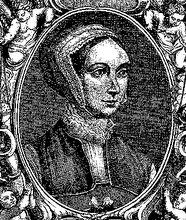
Today is her feast day; the day of her martyrdom, 25th March 1586. I was in York a few days ago and visited her shrine in the Shambles. St Margaret Clitherow is one of my favourite people; she is for me the greatest british person in the history of England. She is wonderful and, in the company of a friar of the Renewal, we visited all the sites which are connected with her, finishing our visit by calling into the Bar Convent to venerate the relic of her hand.
During our tour we popped into the Merchant Adventurer's Hall where hangs a painting of the old Ouse Bridge. It was at one end of this bridge that St Margaret Clitherow was pressed to death. Today's Ouse bridge dates from the 1800s, but the painting which hangs in the Adventurer's Hall depicts the old bridge. The painting was made in 1784 by Joseph Faringdon; it depicts the bridge almost 200 years after her execution. However, it is so interesting to see what the old bridge and its associated buildings looked like. 
St Margaret was pressed to death at the Toll Booth, which is one of the buildings on the left of the picture on the viewers side of the bridge. Before her trial and execution she was held in prison in a building on the right hand side of the bridge, probably on the further side and so, somewhat obscured in this painting.
There are a number of paintings and prints of old York and the old bridge in the Adventurer's Hall, which is well worth a visit if you in York. As a building of this kind, it is unique in this country.
St Margaret Clitherow's witness and intercession is so powerful; I rely on her so much. For priests she is pure grace.

Friday, 22 March 2013

Hope springs again.

The words of the new archbishop of Canterbury, that England recognise what it is presently doing with its Christian personality, and that he, as archbishop, personally desires fraternity with Pope Francis, are words of great hope indeed.
I visited Canterbury Cathedral in January and beheld again that awful empty space where the shrine of St Thomas Becket had been, and which the whole architecture of the building seeks to emphasise. This vacuum in Canterbury cathedral is symbolic, I think, of the dreadful emptiness which lies in our culture; that scoured out place when faith had  been. Christ was planted here in this island and, as the archbishop pointed out, for a thousand years we had embraced Him. And that this emptiness is organically linked to England's rejection of unity with the Church. The archbishop's voice, calling as it does from an Impeded See, is a voice of real hope. If our country can recognise what he is speaking of and allow it to resonate, this would be a moment of grace on grace.

Thursday, 14 March 2013

Faith, Catechesis and Schools.

I returned yesterday in time to see the news programs showing white smoke emitting from the Sistine Chapel, from a three-day conference for priests. The 'Thornycroft Priests Conference 2013', held at Thornycroft Hall (photo above), in Cheshire.
Over thirty priests, mainly from dioceses in northern England took part, and it was really quite enriching to experience the wealth of talent and priestly contribution which is present in our northern dioceses. Our effect on one another, one springing from priestly fraternity, was an experience of grace in itself and an expression of the value and need for such priestly encounters.
The subjects which we covered, led by a superb range of speakers, are summed up in the title of this post: the morality of economics, an analysis of the last Synod on the New Evangelisation, bio-ethics and the renewal of the mind, the priority of adult catechesis, re-evaluating the relationship of faith and science, and the role of our Catholic Secondary schools. I know that what I learned during this Conference will influence much of what I think and do in the future.
This Conference and then the election of Pope Francis mean that this week has, so far, been almost a life-changing experience. Thanks go, in the first place, to the organisers of the Conference, the priests of the Opus Dei Prelature.

Wednesday, 13 March 2013

A great joy indeed.

How wonderful it is that we have a new Pope so soon. He looks like a Pope too! His presence expresses a new experience of that fraternity which is always welling up from deep within the Church; priestly fraternity, Christian fraternity, ecclesial fraternity. It is indeed a great joy. We thank our heavenly Father for this great gift.

Saturday, 9 March 2013

Who would the world choose now?

The coming Conclave will be the fifth during my lifetime. I was too young to remember the first of these which elected Pope Paul VI, but the others were a real focus of expectation and of excitement. 
A Conclave is first and foremost the moment when the Cardinals of the Church come into their proper role, but for the rest of us it is a time of humble prayer to God - almost a time of vigil - endeavouring to place the Church and especially the Cardinals under the mission of the Holy Spirit - that the choice which the Cardinals make will be God's choice. We all have a role to play in this matter, then.
I sense that the world, and particularly the Media, do not know who to look for in this Conclave. The gap between the Church and the (western) world has grown since the last Conclave, partly because of clerical scandals but much more because of the world's distain for the Christian life. I would expect to see the Media's own focus on the Conclave to miss the point entirely, which will help the Church and the Cardinals in their task.
Come Holy Spirit, come by means of the powerful intercession of the Immaculate Heart of Mary, your well-beloved spouse.

Wednesday, 6 March 2013

Prepare yourself well.

With the closure of the centres of Christian formation in England one of the most important things that you can do is to better equip yourself to take part in the future mission of the Church in this country.
In the past we relied largely upon the Religious Orders to lead us in developing our Christian formation. Those days are gone and the Church now comprised of just parishes, many of them merely Mass centres. Your presence and your gifts are needed today, but just as in the past, the Church needs us to be formed so that we can more competently take part in Her mission.
I know of no better place in England than Maryvale Institute in Birmingham where you can prepare yourself for an apostolic role in the Church today. The photo above is of me receiving my MA in Theology from Archbishop Csabo Ternyac, in St Chad's Cathedral in Brimingham in 1998. In those days Maryvale offered just two MA courses. Today there are five:
1. Personal, moral and spiritual development in a Theological perspective (which I studied).
2. Spiritual formation.
3. RE and Catechetics.
4. Marriage and the Family.
5. Apologetics.
Alongside these there are two Pontifical Licenses in Catechetics, and in Marriage and the Family. There are a whole range of under-graduate courses and more post-graduate ones. Check out the Maryvale Institute website and consider undertaking one of their courses this year. The Church needs you and it needs your skills, your enthusiasm and your desire to grow in God-given role in the Church. 

Saturday, 2 March 2013

Aglow

Last weekend Youth 2000 held its weekend-long "Aglow" retreat in Leeds at Notre Dame Sixth Form College. Two hundred young people took part, many of them from Leeds and Yorkshire, but there were people from all over the country. I was able to devote the best part of Saturday to the event and was so pleased to walk into the presence of the Blessed sacrament and the throng of young people in the college's gym. It too me back to the very first Youth 2000 event which I took part in in this country at the end of 1997. A whole new generation is now being led into the Presence, and I felt again that same enthusiasm for the Faith in young people, which I had encountered then.
Thanks to the Youth 2000 organising team; the venue was great - it would be good to have more than one annual event in Leeds.

Thursday, 28 February 2013

Witness to love.

Benedict XVI's predecessor was known as the 'witness to hope', but I think that this Holy Father will be remembered as the 'witness to love'. From the very first moments of his papacy, when he embraced the Church so profoundly, teaching us about love, pointing to its fullness in Christ and witnessing to the humble simplicity of Christian love - in his face, his gestures and in his sheer graciousness - Benedict XVI has given of himself for the life of the Church.
I am sorry that he did not have the time to do two things: to appoint more English bishops and to write the Post-Synodal Apostolic Letter on the New Evangelisation. I say this not by way of criticism, but rather to reveal something of my own expectations. But God's plan is much better than my expectations. Benedict's successor will have the responsibility of these tasks.
But much more than my expectations of any Pope is the way in which our lives have been embraced by Benedict XVI. He has been such a tremendous father to all of us. We will miss him. I hope that God will greatly bless the rest of his life from the store of His grace

Monday, 25 February 2013

The two Kingdoms.

I said in my last post that the secular world no longer wants a relationship with the Church and that this is mainly an implicit reality at present, but there is an inevitablity to it soon becoming an explicit state of affairs.
There will be pros and cons to this lack of relationship. On the "cons" side there will be a lack of common ground upon which to discuss human affairs. The two Kingdoms, that of man and that of God, have radically different understandings of who man is. Metaphysics has long been eschewed by the secular vision, but now it is clear that the way in which the two Kingdoms approach morality, anthropology and freedom are utterly distinct. Christianity has an integral vision in which these three foundational dimensions of our life are clearly understood. But along with rejecting the Christian life, these building bricks are also rejected by the secular world. This will make communication between the Church and the world difficult.
In the Kingdom of man, there is a refusal to claim any foundational basis for morality. Secular morality can be summed up in the phrase, "seek success in whatever you attempt". A very dangerous principle!
Likewise, an integral and adequate anthropology is neither present in, nor required by, the secular world, and the riches of the Christian vision of man are regarded as mere opinion. It is very reckless to abandon milennia of acquired wisdom.
When we look at freedom, the most interior and personal dimension of man's life, we find a immediate problem. Bl John Paul II spoke frequently about this, describing freedom as the great dilemma for contemporary man: is it a terrible burden or is it a great gift? We have seen in history that human beings cannot live for long with an internal division. The secular world has yet to end its wrestling with this dilemma, and in what way will it bring its wrestling to an end? 
On the "pros" side the two Kingdoms will increasingly be seen for what they are. Christianity will be seen again in its radical truth: a human life marked, transformed and living by grace, which is the person and the power of the Risen Lord Jesus. In Christianity man's most intimate possession, his freedom, is not a burden, but is his radical surrender to the person of Jesus Christ.
The radical distinction between the two Kingdoms will be a moment of great power in the new evangelisation and will give great glory to God.
The above photo was taken when I was being vested at my ordination is St Anne's Cathedral, Leeds, in 1988.

Sunday, 24 February 2013

No relationship at all.

The relationship between the Church and society, or the State, has gone through many changes in its history; most notably with the Edict of Milan and then with the rise of the nation States in the modern era. Today another permutation of this relationship is taking place as the newly secular Western States come to terms with their identity. I believe that what we are seeing today is an implicit move by Western democracies away from any relationship at all with the Church. I don't think that we have woken up to this state of affairs.
I say this because of the widespread rejection of the Christian life by our societies, together with an increasingly firm adherence to a secular way of living. So many baptised people have been going along with this movement for decades. The State's involvement in this movement is explicit in its anti-life laws and, latterly, in moving to change the definition of marriage. Whether or not Western democracies move to explicitly reject the Church remains to be seen, but we can't pretend that they have not rejected the Christian life. The bases for the Christian life and for secular living are radically different and those differences will become more apparent as secular societies become more established.
All of this has taken place during the last four decades. It is a movement somewhat akin to the Renaissance - a complex and largely non-rational movement from deep within humanity which sought to bring about change by returning to an older culture. In the case of the Renaissance, societies took their Christian inheritance with them, sometimes in vastly diminished forms; but today's movement from deep within humanity seeks to free itself totally from its Christian inheritance. The relationship between Church and State is drawing to a swift close and we will soon be living in the same context as the Early Church: pockets of Christian communities within a neo-pagan culture. The Church will soon look very different indeed.
I took the above photo about three years ago during the refurbishment of Our Lady of Lourdes church in Huddersfield. I had been parish priest there. I visited one day while the work was being done and found the tabernacle had been despoiled and set aside, to be replaced by a new one.

Monday, 18 February 2013

Hunting in Hertfordshire.


I am not a great fan of any of the Tudors (as you might imagine), but last year I drove through the village of Hunsdon in Hertfordshire, hoping to catch a glimpse of the old Tudor retreat of Henry VIII and especially of his daughter, Mary Tudor. She spent much of her teenage years at this former royal palace before becoming queen. It was from here that many a royal hunting party set out.
The house is now privately owned and I only caught the merest glimpse. The house was built in the late 1400s of brick. It has been re-modelled, in stone and brick, many times over the centuries. The photo above shows the house as it is now; the image below is a drawing of the house from (probably) the late 1700s. At the time of Mary Tudor the house is thought to have been four times its present size.
The village church stands very close to the house and there appears to be a private access between the two buildings. It was a shame that the church was locked as, no doubt, Mary Tudor would have taken part in the Mass many times here. I find that, these days, Anglican churches are more often than not locked up; even as architectural links to the age of faith, they are falling silent.
What was most intriguing to me, as I drove through Hunsdon, was the distance between the church and house, and the village itself. They are a mile apart. I can imagine that such a heavy Tudor presence in the area would have required the ordinary people to establish their dwellings some distance away. 

Friday, 15 February 2013

Searched but not found.

St Edmund Campion stayed at Samlesbury Hall at Easter 1581, just a few months before he was captured at Lyford Grange. We know that the Hall was searched  on 21st November 1592 in the roof space above the great hall of the house. Another hide, which was not described at all by the searchers, was also found during this search. I am not aware of any other documentary evidence above Samlesbury's hides.
When I visited the Hall I was asked to sign a form stating that I could not publicly use any photos which I took of the hides. I did take photos of the three places which are regarded as hides, but I will not use them here.
The first hide is in the room that you first enter and pay for your admission. The hide is within the hearth and chimney, and to the left, of the open fire. It is a space which you can climb into, if you wish. I wonder if this is actually the remains of a hide. It would be very dangerous to be closeted so close to the fire and its smoke. Perhaps it was a a way into or out of the hide itself, or simply a discrete place for Catholic items.
The second hide cannot be seen. It is within the ornamented and painted fireplace in the larger chamber to the right of the entrance. The Hall is listed and, although the presence of this hide is known, it remains out of bounds in order to protect the remaining fabric. This is a shame. In fact, the most interesting part of priest holes, in my estimation, is not the hide itself but the means of access. It would be good to see something of this hide's means of access.
The third hide is on the first floor in the roof space near, but not quite over the great hall. This space is very large indeed but its entrance is, presumably, not the original, since it would easily have been discovered. 
Samlesbury, like most houses, has been adapted and refurbished over the years; 19592 is a long time ago and much has changed in the fabric of the Hall. Nevertheless, what remains is a wonderful for it takes us back into the time of our recusant forbears and their heroic witness.

Thursday, 14 February 2013

Another centre of faith in Lancashire

Samlesbury Hall, near Preston, during the fourteenth to the seventeenth centuries, was the home of the Southworth family. In the late sixteenth century, John Southworth was a recusant. His son, Christopher, was ordained priest in 1583 but was captured in London and     imprisoned in Wisbech Castle. He managed to escape after thirteen years. 
The Hall was then a quadrangular building, but only two of the wings now remain. The old chapel and, what is regarded as three hides, still remain.
I took the above photo of the rear of the long wing. There is thought to be hides in two of the three chimney stacks in this photo; the massive one on the left and the one on the right. A third possibility is in the attic space. More in the next post.
The Hall is now owed by a Trust; it is well worth visiting, but check times of opening before you set out.

Tuesday, 12 February 2013

Priesthood: a long term vision.

The Holy Father's announcement yesterday has been a humbling event for me. Pope Benedict has made me more aware than ever before of the greatness of the priesthood - how great it is in itself, how far it can go, what it achieves, and to what lengths it breaks through any notional understanding of what it is. And that I am a sharer in this priesthood!
The Holy Father, in allowing the priesthood to encompass his life, has shown just how deeply Christ has marked human life and events. What we frail men, who call ourselves priests, are taking part in is something far greater than human capacity could begin to imagine. It is indeed Christ's work; it is His Priesthood, and he gives us a part in it. 
Benedict XVI's own humility in the face of the mission that he was entrusted with, is giving us a deeper glimpse Jesus Christ, Risen from the dead, right in our midst, and of His way of transforming humanity. The priesthood is about Him, not about us. This is why it is so humbling - that He has chosen all of us to be a part of what He is doing.
(I took the above photo at the Opening Mass for the "Days in the Diocese" in Barcelona, just before MADWYD.)

Monday, 11 February 2013

62 years as a priest.

Everything thing that I know about Joseph Ratzinger, especially from the time he  received a vocation to the priesthood as a young man, and the way in which he responded to it, speaks to me of a very great man. His greatness became particularly evident when, during the Pontificate of John Paul II, he laboured behind the scenes for the good of the Church. As Pope, Benedict XVI, he is another of those Popes who makes me think that I having been living in a time of Greatness. Even now, with his announcement that he is soon to renounce the Office of Bishop of Rome, his character is marked by greatness. 
For him, I wish that God has saved the very best wine till last.

Friday, 8 February 2013

25 years of priesthood

Since this year is my Silver Jubilee year and today is my birthday, a day in which I always remember Mary, Queen of Scots and, since the year 2001, celebrate the Mass of St Josephine Bakhita, I will make here an itinerary of my priestly appointments.
September 1982 till June 1988 - preparation for priesthood at the English College, Valladolid, Spain.
11th April 1987 - ordained deacon in Valladolid.
16th July 1988 - ordained priest at St Anne's Cathedral, Leeds.
17th July 1988 - First Mass at Our Lady of Lourdes church, Headingley, Leeds.
August 1988 to September 1990 - Curate at St Anne's Cathedral, Leeds. During this time I was also chaplain at the Leeds General Infirmary.
September 1990 to August 1994 - Curate at St Gregory the Great parish, Leeds.
May 1991 to September 1998 - Part-time chaplain at HM Prison Thorpe Arch, near Wetherby.
August 1994 to September 1998 - Parish priest at St Peter's, Leeds.
October 1996 to May 1998 - MA studies through Maryvale, Birmingham.
September 1998 to June 2000 - Licentiate studies at the John Paul II Institute in Valencia, Spain. During this time I worked in the parishes of Nuestra Senora del Remedio, Valencia, San Jose in Torrente, and Nuestra Senora de Serra in Serra.
August 2000 to August 2004 - Parish Priest at St Aelred's in Harrogate. During this time I was also chaplain to the Harrogate Hospital.
September 2000 to December 2004 - Chaplain to the Youth 2000 Mission Team in East Keswick, near Wetherby.
August 2004 to September 2007 - Parish priest at Our Lady of Lourdes in Huddersfield. During this time I was also Chaplain to Huddersfield University.
September 2007 to July 2008 - Parish priest at St Briget's in Leeds.
August 2008 to August 2010 - Chaplain to Campion College, Sydney, Australia.
August 2009 to August 2012 - Assistant Spiritual Director at the Seminary of the Good Shepherd, Sydney, Australia.
September 2012 to present - acting supply to St Joseph's parish in Pontefract.

As you can see I have been a Parish priest four times already and I have lived abroad for twelve years; eight years in Spain and four years in Australia. Everything that has happened to me above was chosen for me - I had no part in it! I never in my wildest dreams thought that any of the above would happen to me as a priest. God is in charge and God is very, very great indeed. Where will He send me next? 

(The above photo of me with Bishop Julian Porteous and Fr Julian Green was taken in July 2009 in the sacristy of St Mary's Cathedral, Sydney.)

Wednesday, 6 February 2013

The ss"m" vote

Yesterday's vote in the House of Commons in support of Same-sex "marriage" has come upon us so suddenly that it has taken most of us by surprise. What strikes me most is the power within the contemporary anti-theist movement; it is like a tidal wave, an image which St Augustine used to describe paganism.
Paganism, when unleashed, has a power in it which seems almost unstoppable - a massive movement of self-seeking from deep within humanity. We live in the aftermath of such a tidal wave - the World Wars of the last century. No one now knows how the force within this present wave will wear itself out. What we do know is that Christ's victory is complete, it is present, it is unassailable.

Monday, 4 February 2013

A winter's grace.

On behalf of all those who took part in events at the Vocations Centre in Whitstable during the last two weeks of January I would like to express thanks to Fr Stephen and his energetic staff for their hospitality and support. The new Vocations Centre is already a place of warmth and grace; may it go from strength to strength.
One day, at dusk, we ventured to the sea-front where a throng of locals had established a busy tobogan run. It was a great sight to see - a sight sadly not well reflected in my poor photograph.

Friday, 25 January 2013

Soft light on a winter shore

Last week the SPES mission school retreat took place at the Vocations Centre in Whitstable. The whole week was lovely and, with God's grace, will bear fruit in the lives of the young mission school members.
I was out on the sea front earlier today and took this picture looking east towards Herne Bay. In a short while another group will be arriving at the Vocations Centre to take part in a Marriage Discernment weekend. Hopefully there will be more soft winter sunlight during the weekend so that this young might likewise enjoy a walk along the seashore.  

Wednesday, 16 January 2013

One cold winter's afternoon in Whitstable

The bleak, shuttered, row of beach huts along the seafront at Whitstable stood in stark contrast to a very warm welcome at the new Vocations Centre in the town. I am here with the SPES missionary school members giving them their mid-year retreat. Our thanks go to Fr Stephen, the Director of the Centre, for the way in which he has prepared the Centre for use by such groups and for his warm hospitality.

Saturday, 12 January 2013

A deeper glimpse


I took some photos inside the remains of the old Manor at Ince. Do you think that it is a building which could be renovated as a piece Catholic legacy for the future? 

Friday, 11 January 2013

A glimpse of Lancashire recusancy

In the grounds of Ince Blundell Hall just north of Liverpool is a remnant of the old Blundell Manor House of Ince. The Manor House dates back to the 1100s but the remaining wing is early 1500s. Robert Blundell, born 1575, was a recusant and established priests in his home,  building a secret chapel (no longer extant) nearby in the woods of his estate. 
In 1720 the Blundells began building a new Hall, a short distance from the old Manor, which remained a centre of faith down to the present day. Today the Hall is a home for retired priests run by Augustinian Canonesses. The wing of the old Manor which you see in the photograph is now derelict, but still allows you to see the brick and stones of a house that survived the Reformation and the Civil War with its Catholic life intact.

Wednesday, 9 January 2013

A powerful perspective.

I have read many histories and commentaries on the Reformation, many of which are loaded with partisan rhetoric, some of which I enjoy using myself. But the historical perspective on the Reformation which I regard as second only to that given by the Martyrs themselves (which should be evident from this blog), is that of Christopher Dawson. 
In his book "Progress and Religion" he speaks very pithily about the Reformation in about four pages (pp140 - 144) from the perspective of sociology. What he says speaks volumes, I think, about the history and culture of England since the early 1500s, by speaking about it in with reference to the Renaissance.
His point is essentially that the Renaissance was a movement in Europe which sought to move away from the Medieval world and to return to an older form of culture. In southern Europe this culture was obviously Classical culture, a culture which was now linked to the Catholic Faith, a Faith to which southern Europe maintained its embrace. In Northern Europe however, what had preceded Christianity was pagan culture, and so what took place there was not simply a rejection of Medievalism but of the Catholic Faith as well. In other words, rather than re-embrace its pagan background again (which, incidentally, it is doing now), the focus of the Renaissance in Northern Europe was to re-mould Christianity.
Such a perspective helps us to appreciate the force with which the Catholic Faith and Church was rejected in the North, and how that rejection is still so firmly in place. As Dawson says, "The Renaissance of Northern Europe is the Reformation." (p141) 
No where more than in England did this rejection take place in such a powerful way, incorporating all the energies of the State to scour out, in a detailed way, the very substance of Christianity from the fabric of English life, and to impose in its place an idealistic form of Christianity.
So, when we look at such topics as the Royal Succession or Ecumenism itself, Dawson helps us to see beyond merely Theological or cultural arguments, to something which lies very deep in the psyche and personality of a people who have gone through a profound and complex revolt. Making England Catholic again must involve a deep respect for what has transpired here; many of the prejudices and now subconscious attitudes to whatever is Catholic, can only be undone by grace. 
Dawson's book, "Religion and Progress", is a book which you should all have and imbibe, especially its second Part.

Tuesday, 8 January 2013

Towards an honest posture.

The questions being raised by the Prince of Wales about the Royal Succession are a step in the right direction. However, it would be reasonable to ask, for instance, why stamp collectors are not barred from the British Throne as are Catholics? 
The most important question to ask is what is the basis for barring Catholics? Once this question can be publicly asked then there is a chance that the present discussion about the Succession become one that goes beyond another round of posturing. Surely the English have it in them to come to terms with truth.
I paste the above image of King James III of England, not as a pro-Stuart gesture, but simply a reminder that the 1702 Act of Succession was set in place specifically to exclude Catholics. 

Monday, 7 January 2013

Lincoln Green

On the western side of the castle at Lincoln, away from the Cathedral and city centre is the old execution site. The only evidence that it was here is the pub which is called "The Strugglers Arms" (photo above). The place of execution itself was probably where the Phone Box is. In the past, his site would have commanded a tremendous view looking out west to the countryside below. On 1st July 1600 two priests were here hung, drawn and quartered for their priesthood. Frs Thomas Hunt and Thomas Sprott; both were beatified by Pope John Paul II in 1987.
Fr Thomas Hunt had previously been captured and imprisoned in Wisbech Castle; Fr Thomas Sprott had also been captured and imprisoned in the Bridewell, London. Both priests had escaped and were brought together by the then Jesuit Superior, Fr Henry garnet and sent north as missionary companions. While staying in the Saracens Head pub in Lincoln they were arrested and condemned. At the scaffold they were prevented, by the authorities, from addressing the crowd, who then insisted that both priests should hang till dead before they were butchered.
Their witness remains unmarked at this former gallows site, and it would be very fitting for a public memorial to be placed near this place. It is not every town that has a beatified saint; and Lincoln has two! 

Friday, 4 January 2013

Warwick Street

I am so pleased that there has been a turn of events at the church of the Immaculate Conception in Warwick Street, Soho. And I am very glad that this wonderful church has been given to the Ordinariate of Our Lady of Walsingham; what a beautiful church for the Ordinariate to have as their own.
The three Soho churches have long been my favourite churches in London: the Immaculate Conception, Warwick Street, Notre Dame de France, Leicester Square and St Patrick's, Soho Square. I make a point of visiting these three churches each time I am in the West End, but my preference has always been for the Warwick Street church. I look forward to keeping up my visits to this church now that it is given over to the Ordinariate. 

Wednesday, 2 January 2013

A jubilee year.

This year, 2013, is the year of my Silver Jubilee of Ordination. I was ordained priest on the feast of Our Lady of Mount Carmel in 1988. The photo above was taken two days later. I intend to offer this year to God for Him to use, and I hope that some fitting celebration(s) of this anniversary, in thanksgiving to God, might take place later in the year.

Tuesday, 1 January 2013

The Year of the Lord 2013.

What is time, asks St Augustine; "If no one asks me, I know; if I want to explain it to someone who asks me, I do not know." (Confessions, Book XI) Time is a mystery which we live with daily, and we are satisfied to consider it as something as meaningless as 'duration', something which we somewhat neurotically have to measure as 'periods of duration'. 
Yet here's a thing: the Church does not live in time; time is in the Church! Who but the Pope has ever established, and changed, a calender? What is unique about the calender is that it is oriented by Jesus Christ (rather than the Pope). His incarnation uniquely establishes meaning and orientation in the mystery of time. Time is now His, and He gives it to us as a gift. It is the Church which again, is uniquely disposed to receive the gift of time. The Liturgy of the Church expresses our real relationship with time.
The purpose of time is Christ; it receives its meaning and its fulfillment in Him. The Church knows and understands this; she knows that time is given in order to be marked, imprinted, and consecrated by the Person of Christ. That is why this new year is the Year of the Lord, 2013. This new year is not another period of the passage of duration, to be entered into as something fundamentally ambiguous. No, time is a part of the Mystery of Christ, by which He enters into human life, and the life of the Universe, in order to transform it. This is the real meaning of the splendid fireworks that we have seen. 2013 is already in good hands, and it comes loaded with Grace. What a gift - and He comes every day in the Mass!