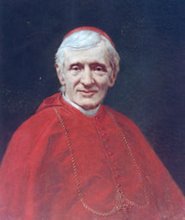
Contraception: Why not? A lecture by Prof Janet Smith. Thursday 6th March, Westminster Cathedral Hall, 7.00 - 9.00pm. £5 admission - places are limited - register at cathmacgillivray@rcdow.org.uk Prof Smith offers a stimulating opportunity to seriously reconsider the modern enthusiasm for contraception. Her message has captivated audiences all round the world, particularly married couples, those considering marriage, catechists, counsellors, doctors, priests and seminarians.
Tuesday, 26 February 2008
An anniversary event
Contraception: Why not? A lecture by Prof Janet Smith. Thursday 6th March, Westminster Cathedral Hall, 7.00 - 9.00pm. £5 admission - places are limited - register at cathmacgillivray@rcdow.org.uk Prof Smith offers a stimulating opportunity to seriously reconsider the modern enthusiasm for contraception. Her message has captivated audiences all round the world, particularly married couples, those considering marriage, catechists, counsellors, doctors, priests and seminarians.
Sunday, 24 February 2008
Youth 2000 in Harrogate

Over the weekend about 160 young people have been taking part in the winter Prayer Festival in Harrogate. St John Fisher College chapel provided a very fine setting for the spiritual events of the retreat.
In the photo Fr Luke from the Friars in New York is addressing the young people and speaking about the Life of Grace. It is a great privilage for us priests and religious to see young people actively seeking Christ - to see them hearing the message and to witness them endeavouring to embrace the Life of Christ for themselves and for the Church today. I met and spoke with young people who are filled with enthusiasm for the Gospel and for the Culture which it creates, and which they are seeking to be a part of. Thanks especially to the Youth 2000 Leadership Team and the Music Ministry Team who spent themselves this weekend offering an opportunity of grace.The rebel-Cardinal's Coat of Arms hung above the main entrance to the school and we passed beneath it each time we went to and fro from the school; surely with so great a Patron, the conversion and evangelisation of England can be conceived anew by this generation.
Friday, 22 February 2008
How does a priest enter into Jesus' prayer?
 Continuing the reflections from last Autumn's Priests' retreat in Ars, Fr Frost focussed on the Priestly Prayer of Christ in John's Gospel (chapter 17). In this segment of the Gospel we encounter Christ, the second Person of the Trinity, praying to the first Person and drawing human nature into this relationship through the ministry of His apostles and through them, all those who will be ordained.
 The next day Christ will draw human nature into this relationship as he suffers and dies on the cross - the greatest outpouring of love will be given to humanity from the cross and it will continue being given through time through the ministry of priests. But on the eve of his Passion, Christ first draws His priests into this new intimacy as He prays. What John 17 tells us is that Christ is plunging human nature fully into the life of the Trinity through His Paschal Mystery.
Today we still encounter attempts to secularise the Priesthood - we should get married, we shopuld be able to have 'fun' like everyone else, we shouldn't 'cut ourselves off'. But Christ, in His prayer, is not taking us out of the world, rather He is sending us into the world in order to pastor souls. Priest are included in the Prayer of Christ, the Priesthood is specific in this way - this is why they are ministers of Christ, unlike lay-people who are not ministers. Priests have a ritual and a sacramental role, not becuase these jobs need doing, but because priests have been given an ontological relationship by Christ.
Those who say that the New Testament does not speak about the Priesthood are speaking nonsense. In John 17 we see the way in which the Priesthood has been established. And it is good to note how JPII in Christifideles Laici, 23 taught that lay-people cannot be understood as ministers. What is proper to priests is not proper to lay-people; what is proper to them is the apostolate.
Saturday, 16 February 2008
A screening in Leeds.
 Last night twenty three of us sat down to watch the film "Therese - ordinary girl, extraordinary soul" in my parish. We were grateful to Alanna for making the DVD available to us. The film presented all the significant events in the life of St Therese of Lisieux and was a worthy attempt in portraying the making of a saint. If you have watched the film then you will be aware of how sensitively the film-makers handled her life.
 I was particularly struck by the portrayal of Louis Martin, Therese's father, and the way in which events challenged his powers of discernment. In the film, as in his life, Louis Martin was faced to make decisions as a father that would affect his family, individual members of the family and himself. He approached these decisions as a real servant of grace.
Also for me, the film managed to express the enormous generosity of soul of Therese herself, in the way in which she responded to God in the real events of life. In this Lenten setting, this screening offered us a concrete vision for our own lives. Watching the film together was a grace in itself.
How extraordinary it is that The Little Way has become a great movement of grace in the Church since Therese entered Heaven.
Friday, 15 February 2008
Teaching in Soho
 This week I visited the St Patrick's Evangelisation School in Soho in order to do a little teaching on my favourite subject: The New Evangelisation. It was very good to meet this year's student group who are taking part in this project of formation, community life and evangelisation in the heart of London.
SPES is virtually unique in this country in offering young people the opportunity to spend a year in a School of Evangelisation.
There are links to their site and their Blog on this site.
Monday, 11 February 2008
Entering into the Prayer of Jesus
 Last November I was with a group of priests who were lead in Retreat by Mgr Francis Frost in Ars. His talks to us were utterly engaging for he spoke with us about the heart of the Priesthood. I would like to share some of the ideas with you that I took from the retreat.
How should we live out our priesthood? The answer lies in our relationship with Christ in the Eucharist: being faithful in solitude to Christ present as the Eucharist will lead us to become aware of what Christ has given to us. This solitude with Christ will sustain us in a world which doesn't regard such things.
How does Jesus pray? Jesus, in the Gospels, is aware that when his disciples see him pray they are confronted with the Mystery of his person. The Jewish scribes used to teach methods of prayer, but when his disciples come and ask him to teach them how to pray he gave them the words of the "Our Father" - with these words you have everything that I want to say to my Father - he gave them the example of his own prayer. They saw him pray and he told them what he said to his Father. Christ confronts his disciples with the fact that they had to "catch" the filial relationship which he had with his Father, and which they had seen him have. This is something for us to be aware of during times of Adoration.
It is the Holy Spirit that would bring the the apostles into the fullness of this relationship. (Indeed, it was on the Cross that Jesus fully reveals that the Kingdom of God is his person - it is, above all, by looking at Christ on the Cross that we begin to understand Jesus' parables and his teachings. This is no "method" of prayer, here we see God's Kingdom being fashioned. This is a theme which B16 refers to time and time again in his book "Jesus of Nazareth".)
Sunday, 10 February 2008
A pilgrimage of grace
 Yesterday I had the privilage of taking a group of young people to the very ancient shrine of Our Lady in North Yorkshire at Mount Grace. The Lady Chapel at Osmotherly has roots which date back to the ninth century.
It is quite remarkable that this shrine still persists today and it is a great place of pilgrimage, set on the top of the escarpment of the North Yorkshire Moors overlooking the vale of York.
The prayers and the lives of these young people are now in the very best care.
Friday, 8 February 2008
A bright flame in Europe.

Last week Fr Julian and myself were in Ars with the other members of the John Vianney Society for its winter session. It was a week of grace! We took part in so many prayer-times and conversations with priests and seminarians which were full of the power of grace.
The Bishop of Belley-Ars was also with us throughout the session. Mgr Guy-Marie Bagnard is the founder of the Priestly Foyer and Seminary at Ars and the founder of the John Vianney Society. As Bishop he is now the guardian of the Charism of the Society: to seek the renewal of priestly interiority and spirituality through fraternity. One evening he wished to see both Fr Julian and myself, he shared his joy with us that we had become members of his society and he addressed us as brothers wanting to know both of us as persons. We were left in no doubt that the Bishop of Belley-Ars has the charism and gift of fatherhood in great measure - he is a real father to his priests and his seminarians.
One evening the whole house took part in a Holy Hour of silent adoration in the seminary chapel. The bishop was in a front bench, bowed in prayer throughout. Suddenly, it became obvious to us how this beautiful house for priests and seminarians has come about, and how the Society has come about - Mgr Bagnard has prayed them into existence. His prayer for us, for priests and for the Church was tangible in that Holy Hour. Not only was Christ feeding us in his presence, but the Bishop too was a channel of grace. This bishop is a light in the Church in Europe; he is a bishop of the New Evangelisation. His priestly frienship is very active - he is a brother, a father and a spouse. St John Vianney's prayers and the Bishop's prayers are bringing priests alive! Let us ask that their prayers and their lives will continue to bear much fruit for the Church in Europe.
Thursday, 7 February 2008
Is an immoral Government fit to rule?
 Now that anti-life legislation is coursing through the British Parliament again - currently the matters at hand are the creation of huge numbers of human embryos for death, so that their stem cells can be harvested, and also the creation of human/animal hybrids - we should ask ourselves: Is an immoral Government fit to rule? I am slowly waking up to the realisation that our Government at its Parliament are not worthy of the Office which they hold.
Nearly a hundred years ago millions of men gave their lives in the First World War for values which we now deem as irrelevant. What was the point of their deaths? Did they make this sacrifice in order that we should have a licentious society governed by the rule of immorality? What if we had lost the war? Would fewer men have died in the trenches? Would we then have been in a position to create a society and a Government which diregards the value of the Gospel, human life, marriage, the family, age, work, character, wisdom and virtue? Would we have been better off had we lost the First World War? The men who died in it did not die for the kind of society which now exists in the UK. We are in huge debt to the bravery of that generation - but we have let them down. Recent Governments in the UK have lead us awry and the path we are now following is a path which no society should follow. Who will lead us now? Nearly a hundred years ago we fought to stave off a Dark Age, but when the fighting stopped we failed and entered willingly into a Dark Age. Who will point us back towards the light? Who today is even looking for the light?
The Pelagian Herald
 Will Gore, writer for the "Catholic Herald", gave us last week his take on John Pridmore's new book "A Gangster's Guide to God". Gore gives away his kind of faith when he says of the former gangster, John Pridmore, that "he turned around his life through faith." The rest of Gore's review of Pridmore's book is a rough scetch of how inadequately John did this. I'm sure John Pridmore would agree with him on that, but not on the abscence, in Gore's review, of any reference to Grace.
Indeed, Gore in this short piece presents faith as a human project - the classical Pelagian position. And with Pelagians discussing the faith in the public Catholic forum we are not going to get very far - not unless you spot them first and then re-focus your attention on Grace. Which is what John Pridmore did and continues to do. It isn't that John turned his life around, but that God turned John's life around.
You can't be a Catholic journalist unless you can "see" Grace first, and then speak about it in way which enables others to see what God is doing. Journalism is a God-given skill; we need journalists. It is a great shame that there are so few real journalists today, Catholic or otherwise. This is a project we need to foster.
Wednesday, 6 February 2008
A parish which is not missionary has no future.
This article was recently published by Zenit; here a priest of the Emmanuel Community speaks frankly about parish life today. I was so pleased to read this for what he says parrallels my own experience. However, I think that even though what he says might be the experience of many priests and people, they are still not ready to start engaging with the New Evangelisation. And as a consequence we see parishes visibly dying, and priests and people living like shadows. What is good is that this Movement is responding in a good way to the situation of parishes and is waking the Church up with regard to parishes.
If a Parish Priest in a parish today wishes to have souls to care for, he needs to go looking for them, says the leader of the priests of the Emmanuel Community. Father Yves le Saux, general delegate for ordained ministry of the Emmanuel Community, spoke during a conference under way in Rome on "The Parish and the New Evangelization. "The congress is organized by the Emmanuel Community and the Pontifical Institute Redemptor Hominis. Priests in the Emmanuel Community are diocesan priests under the authority of their respective bishops who allow them to be members of the group.
Is there a future for parishes? Today, in different regions of the world, some are wondering about the future of parishes. I think that the parish is and will continue being the principal and privileged space of the life of the Church. By nature, the parish is the place where the Christian community meets. It has the vocation of welcoming all Christians around the Eucharist, around Christ, also through the ministry of the parish priest. The parish is the place where every Christian, every baptized, independently of his sensitivity, his personal charism, can live and be integrated into ecclesial life.That said, the model of the parish in which the pastor is there, in the midst of its community, available for all the people to go to, is no longer sufficient today. If a pastor wishes to still have sheep, he should go to find them. Today, the parish should be understood as "mission territory." It seems to me that perhaps the term "mission territory" has to be added to the term parish so that the priest and Christians who live in a determined place can enter into a dynamic of announcing the Gospel. Said in another way, does the parish have a future? Yes, on the condition that it is missionary.
What advice could you give to a pastor who has a deep consciousness of the evangelizing role of his parish but who feels alone facing this challenge? It is clear that the responsibility for the mission should not fall on only one man. I think that today the parochial function should not be entrusted to only one man, but to a team of priests who have a demanding community life and who are prepared for working together in the mission.But this is insufficient. Today a parish priest has to be surrounded by the baptized who share with him the same missionary drive. The priest who feels alone should, in principle, have the objective of surrounding himself with people who not only evangelize with him, but who also pray with him, reflect with him, have a Christian life with him. That being said, I think that there is also a responsibility of the bishops themselves, who should be on guard to not leave a priest alone. A man alone, even with a lot of help and talents, remains limited in his fruitfulness. Today the world needs witnesses, not only individuals, but also groups. This restlessness corresponds not just to the priest but also to the baptized, who should accompany their priest and also their bishops, who should be preoccupied about not leaving their priests alone.
Sunday, 3 February 2008
A letter from a father.

The new Encyclical Letter, Spe Salvi, is a letter from a father. Indeed, you might say that it is the letter from a grandfather. It is written for a universal readership and it is written with enormous gentleness and compassion. Quite unlike almost anything that is written today, Spe Salvi is given to a world in doubt and it reassuringly points the way.
Spe Salvi is a biography of the Church. It is written for both Christians and non-Christians alike. For Christians it opens up, in a serene and simple way, the whole Mystery of the Christian Life. For non-Christians, it comes as a gentle reminder of the fact of God and His plan for the world. This Letter does not speak harshly, but seeks to engage all people in the real project of life.
I think that the heart of the Holy Father's message is to show us again the human person in his dignity before God. So much of humanity has been eclipsed in modern culture that, without knowing it, we have needed a compassionate Father to show us again the meaning of life. And, in a most brilliant way, the Holy Father has expressed in this short letter the central call which was made by the Second Vatican Council - for the Church to enter into an evangelising dialogue with the world.
However, if I were asked to say why the Holy Father has written this Encyclical then I would say that it was to bring together the many, sometimes disperate, sometimes weak, sometimes wandering strands of the Christian people, and to focus again on the great movement in history and its Mission: the Church - the Community of Salvation.
I'll post more on this soon.
A Father speaks ...
 After last Sunday's midday Angelus, the Holy Father spoke to school administrators, teachers, parents and pupils. He encouraged them, despite difficulties, to continue their work "which has the Gospel as its focus, following an educational syllabus that aims at the integral formation of the human person. He noted that education today "seems to be becoming ever more difficult. [...] Hence there is talk of an 'educational emergency,' confirmed by the failures that too often crown our efforts to form well-rounded individuals, capable of collaborating with others and of giving meaning to their lives. There is also talk of a 'break between the generations,' which certainly exists and is a burden, but is the effect rather than the cause of the failure to transmit certainties and values."The Holy Father said parents and teachers may feel the "temptation to give up" on education, and even run the risk "of not understanding what their role is." He identified "a mentality and a form of culture that lead people to doubt the value of the human person, the meaning of truth and of good and, in the final analysis, the goodness of life itself." Faced with such difficulties, "which are not insurmountable," the Pope said: "Do not be afraid! [...] Event the greatest values of the past cannot simply be inherited, we must make them our own and renew them through often-difficult personal choices." "However," he added, "when the foundations are shaken and essential certainties disappear, the need for those values returns to make itself imposingly felt. Thus we see today an increasing demand for real education." It is demanded by parents, by teachers, "by society as a whole, [...] and by the young people themselves who do not want to be left to face the challenges of life alone." He spoke of the need "to identify certain common requirements for authentic education," noting that "it requires, above all, the nearness and trust that are born of love." "It would, then, be a poor education that limited itself to imparting notions and information while ignoring the great question of truth, above all of that truth which can be a guide to life". The Pope contended that "the most delicate aspect of education" is that of "finding the right balance between freedom and discipline." However, he affirmed, "the educational relationship is above all an encounter between two freedoms, and successful education is formation in the correct use of freedom. [...] We must, then, accept the risk of freedom, remaining ever attentive to helping it and to correcting mistaken ideas and choices." "Education cannot forgo that authoritative prestige which makes the exercise of authority credible" the Holy Father wrote. He added that this is "acquired above all by the coherence of one's own life." He also highlighted the decisive importance of a sense of responsibility: "Responsibility is first of all personal but there also exists a responsibility we share together." In this context, Benedict XVI observed that "the overall trends of the society in which we live, and the image it gives of itself through the communications media, exercise a great influence on the formation of new generations, for good but also often for evil. Society is not an abstract concept; in the final analysis it is we ourselves."The Holy Father then referred to hope as the "soul of education," citing "Spe Salvi" and saying that "our hope today is threatened from many sides and we too, like the ancient pagans, risk becoming men without 'hope and without God in the world.'""At the root of the crisis of education lies a crisis of trust in life," he concluded. "Hope directed toward God is never hope for me alone, it is always also hope for others. It does not isolate us but unites us in goodness, stimulating us to educate one another in truth and in love."
 Which sect does he represent?
 I lived in Barry Sheerman MP's Constituency of Huddersfield for three years - long enough to witness a population visibly labouring under the culture of death (endemic alcohol poisening, petty drug wars and endemic prostitution were the most obvious indicators). I wrote to him once about this, voicing my concern that whilst his own political ideas were against life, his constituency was showing clear signs of his influence. He replied saying that was sending a copy of my letter to my bishop with a complaint note attached. I heard no more.
More recently Mr Sheerman MP has been speaking out against Catholic schools: “My experience is that there is a move away from joint faith and multi-faith co-operation in the Catholic education sector, which is disappointing.”
He has commented on a report by the Bishop of Lancaster, Dr Patrick O’Donoghue, ordering Catholic schools in the North-West to teach children that contraception was wrong and that sex should only take place within marriage.
He has also criticised the Bishop of Leeds, the Rt Rev Arthur Roche, saying he had been “very difficult to engage with” on the future of All Saints Catholic College at Bradley Bar.
He has commented on a report by the Bishop of Lancaster, Dr Patrick O’Donoghue, ordering Catholic schools in the North-West to teach children that contraception was wrong and that sex should only take place within marriage.
He has also criticised the Bishop of Leeds, the Rt Rev Arthur Roche, saying he had been “very difficult to engage with” on the future of All Saints Catholic College at Bradley Bar.
Why is he so concerned to catch the media's attention for his criticism of our schooling system? What sinister organisation is he speaking on behalf of, or belong to? Just because he is an MP does not mean that he does not have other, less public, links. Huddersfield, beware who you vote for!
Friday, 25 January 2008
The State Creche
In Education the secular movement is now in full swing and is heading along its logical course; today you can't speak about God, spirituality or morality, but you can develop a hedonistic approach to life among children and young people, leading them to take up pursuits that are the answer to the question - "What will give me the greatest pleasure now?". The secular movement is even leaving behind the goals of academic excellence, as we can see.
For Catholics the watershed was the 1944 Education Act, which brought our schools under the Government's wing, and for that matter also initiated the contemporary project of the Church - that of being a Church of maintenance, not a Church of Mission. Gradually, the secular movement has overtaken our schools also and, their lay-run administration seems, more or less, to have caved in under the incoming tide. Perhaps if our schools were still run by priests and religious there would be a different story.
Nevertheless, one of the most important consequences of the modern secular movement has been the subbordination and relegation of the role of parents in the education of their children by the State. So much so is this the case that in many (most) communities, parents now are glad to absolve themselves of their duty to their children and to hand over their children to the State for a huge portion of their young lives, seeking work, leisure and other pursuits while free from their children. And all the while the State has been happy to allow the secular movement to manipulate schooling at will. We can see this especially in communities of immigrants to our country who have fostered their own cultures more than they have given themselves over to State control, and in so doing we see families and communities in which traditional values are still maintained.
So, it is already late in the day, but how can we rebuild a climate and a culture in which parents recover their primary role as educators of their children? First of all, I think that quite a bit of personal interest and initiative by parents is necessary; an interest and initiative whereby parents actively seek to build a culture and a way of life for themselves and their families in which they embrace their God-given mission to form and guide a family. Secondly, by building friendship and association with other (like-minded) families. John Paul II spoke loudly about this on numerous occasions. In Familiaris Consortio he said:
Family associations should "foster among the faithful a lively sense of solidarity, to favour a manner of living inspired by the Gospel and by the faith of the Church, to form consciences according to Christian values and not according to the standards of public opinion; to stimulate people to perform works of charity for one another and for others with a spirit of openness which will make Christian families into a true source of light and a wholesome leaven for other families."

Recent news reports have made us aware of the strength of Catholic family life in Spain and of how families have recently rallied together to oppose Spanish Government interventions in schooling. Visit http://www.familiasnumerosas.org/ for a closer look at this huge family movement. (Click on the Union Jack for the English language version.) I have been involved for some years now with "Teams of Our Lady" and I have seen how influential this Catholic Association of Spouses has been in rebuidling the spirituality and culture of marriage and family life, and how powerful if has been in rebuilding the culture of Catholic communities and even parishes. You will be aware of other similar associations where this is the case.
What we're speaking about here is parents becoming parents again. The State runs a creche for every parent in the land, should they so wish to reliquish their own role. Catholics should be a the forefront of the re-embracing of the tremendous parental mission and accompanying skills which God has given them. Nor should we delay or doubt the influence that we can have here. But don't follow the culture!
Friday, 18 January 2008
A navigator's starter pack

I have recently come across a website which I recommend to you: Mercatornet is a site in which the dialogue between the Gospel and culture is made in an intelligent and extensive way. This is the kind of site which provides the basis for understanding as well as for forums and blogs.
Wednesday, 16 January 2008
Politicised schooling
 I'm back with a new Dell machine after my last laptop crashed out just after Christmas.
 The present educational environment in the UK in very concerning and surely points Catholics towards creating a new environment for the education of their children. Indeed, there is so much change and manipulation in education today that this is not the era in which to be a pupil in a school in which the State has any control whatsoever! Our Government is doing by stealth what the Spanish Government recently did by law (Law of Historical Memory.)
Whilst the Government seeks ways of challenging and closing Catholic Schools because of their Faith; Catholic schools, by and large, are far more concerned about being winners in the community than being Centres of Faith. So much so is this the case that their prevailing ethos is Pelagianism not Catholicism (and Pelagianism is not at all at odds with British culture.)
State schools on the other hand are focussing more on their ethos and the development of the new secular orthodoxy, rather than being winners in the community. If I were a child now, I would not want to be in either a Catholic or a State school.
Eric Hester has recently reviewed Robert Whelan's new book The Corruption of the Curriculum, a book which expresses how Blair's proclamation "education, education, education" has in fact meant "politics, politics, politics", and that the curriculum is now subject to the tenets of feminism, gender discrimination, racism, environmentalism and homophobia. Independent schools, he points out, still constitute a real hope for they are mainly rejecting the new code. (One thinks also of the recent Australian initiative of Campion College - a Liberal Arts College on the outskirts of Sydney which teaches a secular curriculum from a genuine Catholic perspective.)
It is in such a climate that Catholic families should come together to discern how best to educate their children, how they can support one another, inform one another and develop new ways of creating an environment and a culture in which their children can be educated. I for one would help.
Sunday, 6 January 2008
Please wait about a week ...
I know that various people have contacted me via the Blog, Facebook and email. My computer is brok (yorkshirism) and I can't reply to you yet. I'll be back online about 12th Jan and will get back to you then. (Don't ask how I've been able to post this!)
Friday, 4 January 2008
Father-daughter
I had to paste this in - for those who didn't see it in Zenit:
The way a father treats his daughter is a strong indicator of how she will relate to men for the rest of her life, says author and teen-health expert Doctor Meg Meeker.
Meeker, who has practiced pediatric and adolescent medicine, as well as teen counseling, is the author of "Strong Fathers, Strong Daughters: 10 Secrets Every Father Should Know," by Regnery Publishing. The book highlights how the fundamental relationship of a girl with her father can affect all areas of her life.
In this interview with ZENIT, Meeker, who also wrote "Epidemic: How Teen Sex Is Killing Our Kids," talks about the profound role a father plays in his daughter's life, whether he knows it or not.
Q: A father is a daughter's best ally seems to be the consensus of your book. While studies say that it is parents who are the key to their children's happiness, what is the unique offering of a father to a daughter that a mother cannot offer, especially in her relationship to God?
Meeker: I think that one of the reasons I wanted to address this issue head-on, is that a father is a daughter's great ally, which today is not only overlooked, but is directly attacked. If you look at the typical sitcom, the father is portrayed as someone who is comical, humorous and just plain dumb, and as though he has something to learn from his daughter.
Research shows that a father's influence builds up self-esteem, helps his daughter to avoid sex, drugs, alcohol, and stay in college. What it is that a father offers is that he carries an authority in his daughter's eyes. This authority is not ascribed to the mother, not that she is not important, but a father's influence is different.
When a girl is little, her dad is her primary male love relationship. When he gives her something as a man, she learns lessons about men, setting a template in those early years on her heart about what to expect, to think, to feel, and know about men from there on out, affecting even her relationship to God, because Christ is a man.
Q: What are the specific characteristics of a dad that help daughters in their development?
Meeker: One of the big ones is a sense of protectiveness. It is intuitive in a dad's heart to protect and guard a daughter. Our culture, however, has been training men not to do that because gender neutrality has become such a big deal.
The reason this is very important is because, particularly in the area of sexuality, dad has an enormous role. Girls are under sexual siege, with aggressive marketing, especially in clothing, from the age of 6 on. If a father, feeling protective, says, "I don't want my daughter going to school in a jog bra," and mom says, "No, this is the way girls dress," a father needs to trust his judgment. Sometimes his intuition is better on this one.
Another is that dads in general tend to be very pragmatic and solution-oriented, discovering first what the problem is, and then how to get to the solution. Sometimes women are insulted, because we think differently, but this difference is wonderful. A man says, "Now, what's the problem? What can we do?" This pragmatism can serve a daughter well in teen years.
For example, perhaps a boyfriend has broken up with her. A girl will feel sad, think she is too fat, too stupid -- all kinds of things get added to the situation in her own mind. But dad compartmentalizes, "What's the problem? What can we do to solve it? Just because he broke up with you, doesn't mean all these other things are true."
However, the most important thing a father can do is live a life of integrity -- living truthfully. A daughter, within 15 seconds, can tell if her father is in a bad mood, good mood, telling the truth or not, etc. Those fathers who don't live truthfully do a great disservice because a daughter doesn't believe in him, doesn't trust him. Dads think they need to earn heroism, but they really don't. The role of a hero is just given to him until proven otherwise. Most dads don't know this.
One thing I try to do is help fathers get behind their daughter's eyes, see you as she sees you. If you compared your vision of yourself to how she sees you, your life would never be the same.
Q: You say that there is a clear connection between depression in girls and young women and sexual activity. How can a father's love help protect against this in our sexually saturated culture?
Meeker: Depression in girls is all about ungrieved losses accumulated in the heart. This connection can be backed up with medical data, although no one has studied it extensively. But what I have found is that as a culture, we are bombarded with sexual saturation. Sexual activity is through the roof and sexually transmitted diseases (STDs) are at an all-time high.
When girls approach sexuality, a huge emotional component is involved. When a girl is sexually active once, and it doesn't matter if it is oral sex or intercourse, she incurs a loss. In the physical act, she has lost something in her heart, her virginity, her respect for herself. When girls feel this, if they don't acknowledge that they are hurt and that something that happened to them, then they will live with unresolved grief, which leads to depression.
Another interesting phenomenon is that if a young person has a bad sexual experience that didn't meet their expectations, both boys and girls, they will immediately think they did something wrong -- not, "Maybe I shouldn't be doing this." In order to correct this "wrong," they will try to make up for it in some other experience, which leads to a downward spiral of messy relationships, physical risk and emotional damage.
Ironically, while our culture is now immunizing girls against STDs, we endlessly market sex to them, paying little attention to all the layers of risk. This, incidentally, would never happen with cigarettes or alcohol, where we would give kids an immunization against lung cancer yet promote smoking. This problem is missed by many because sexual freedom has come to be seen as a right.
Q: You suggest the importance of raising a daughter with humility, emphasizing that she should see the world like a pioneer, asking, "What can I do for others," instead of like a princess who lives with a sense of entitlement. How can this contribute to her long-term happiness?
Meeker: One of the greatest mistakes that parents make in their kids is a misunderstanding of what happiness and joy is in their kids. Parents just want their kids to be happy, but they perceive incorrectly that it comes from receiving pleasure, so when children receive, receive, receive, happiness does not come, resulting in a lot of unhappy kids.
Despite our material wealth, depression rates have never been so high. Clearly we are missing something. Parents have been duped. What works is when we teach kids to serve, to look beyond themselves. Real joy and happiness comes when kids understand that they have a purpose in life, and a mission to fulfill. The only way to get them to understand this is to look beyond self and doing good for others.
This is the source of real transformation, but this can't happen without humility, the opposite of which is pride. When parents instill humility, a kid understands that he or she is important, and lovable, but not separate from others in their humanity. If a kid really wants to feel good about himself, humility brings people closer, whereas pride separates.
A kid raised without humility will always strive to be better than others, smarter than others, but can only bring a frustrated "happiness" because no one can always be the best at everything. True happiness for kids, then, is to give them a purpose to fulfill through working, striving, giving to and for others.
Q: There is repeated mention in the book that a father should do all he can to keep a family together. Why is this so important, and what can men do to care for their daughters if they find themselves divorced or widowed?
Meeker: First, we as a culture have failed to teach boys to live courageously, which means to live with profound discomfort. In not being taught how to live, men have been failed.
All the psychology, pediatric, and medical literature says divorce is at the top of the list for of putting kids at risk for all high-risk behaviors. It is an enormous factor in kids' emotional, mental and physical health. My job is to try to help fathers stick it out with difficult wives until their daughters are older. The longer they can wait, the better it is for kids. Kids need full cognitive skills to cope with the trauma of divorce, and men need to call upon courage to gut it out.
A father who is separated from his daughter must maintain as strong a connection as possible, which means big phone bills, letters, pressing his way into her life in a gentle but firm manner. Stick with her over the long haul. Even when the daughter pulls back, the father has to be the grown-up. If you get your feelings hurt, forget it, it's not about you. Don't take it personally, maintain your integrity and rely on God to give you the strength to persevere.
And angry mothers need to know that you can divorce your daughter's father, but she can't. She has emotional needs, no matter what damage has been done. Give her the right to have a relationship with her dad.
If a father refuses to stop loving, a daughter will respond eventually. A daughter will follow where a dad leads when she knows she is loved.
Meeker, who has practiced pediatric and adolescent medicine, as well as teen counseling, is the author of "Strong Fathers, Strong Daughters: 10 Secrets Every Father Should Know," by Regnery Publishing. The book highlights how the fundamental relationship of a girl with her father can affect all areas of her life.
In this interview with ZENIT, Meeker, who also wrote "Epidemic: How Teen Sex Is Killing Our Kids," talks about the profound role a father plays in his daughter's life, whether he knows it or not.
Q: A father is a daughter's best ally seems to be the consensus of your book. While studies say that it is parents who are the key to their children's happiness, what is the unique offering of a father to a daughter that a mother cannot offer, especially in her relationship to God?
Meeker: I think that one of the reasons I wanted to address this issue head-on, is that a father is a daughter's great ally, which today is not only overlooked, but is directly attacked. If you look at the typical sitcom, the father is portrayed as someone who is comical, humorous and just plain dumb, and as though he has something to learn from his daughter.
Research shows that a father's influence builds up self-esteem, helps his daughter to avoid sex, drugs, alcohol, and stay in college. What it is that a father offers is that he carries an authority in his daughter's eyes. This authority is not ascribed to the mother, not that she is not important, but a father's influence is different.
When a girl is little, her dad is her primary male love relationship. When he gives her something as a man, she learns lessons about men, setting a template in those early years on her heart about what to expect, to think, to feel, and know about men from there on out, affecting even her relationship to God, because Christ is a man.
Q: What are the specific characteristics of a dad that help daughters in their development?
Meeker: One of the big ones is a sense of protectiveness. It is intuitive in a dad's heart to protect and guard a daughter. Our culture, however, has been training men not to do that because gender neutrality has become such a big deal.
The reason this is very important is because, particularly in the area of sexuality, dad has an enormous role. Girls are under sexual siege, with aggressive marketing, especially in clothing, from the age of 6 on. If a father, feeling protective, says, "I don't want my daughter going to school in a jog bra," and mom says, "No, this is the way girls dress," a father needs to trust his judgment. Sometimes his intuition is better on this one.
Another is that dads in general tend to be very pragmatic and solution-oriented, discovering first what the problem is, and then how to get to the solution. Sometimes women are insulted, because we think differently, but this difference is wonderful. A man says, "Now, what's the problem? What can we do?" This pragmatism can serve a daughter well in teen years.
For example, perhaps a boyfriend has broken up with her. A girl will feel sad, think she is too fat, too stupid -- all kinds of things get added to the situation in her own mind. But dad compartmentalizes, "What's the problem? What can we do to solve it? Just because he broke up with you, doesn't mean all these other things are true."
However, the most important thing a father can do is live a life of integrity -- living truthfully. A daughter, within 15 seconds, can tell if her father is in a bad mood, good mood, telling the truth or not, etc. Those fathers who don't live truthfully do a great disservice because a daughter doesn't believe in him, doesn't trust him. Dads think they need to earn heroism, but they really don't. The role of a hero is just given to him until proven otherwise. Most dads don't know this.
One thing I try to do is help fathers get behind their daughter's eyes, see you as she sees you. If you compared your vision of yourself to how she sees you, your life would never be the same.
Q: You say that there is a clear connection between depression in girls and young women and sexual activity. How can a father's love help protect against this in our sexually saturated culture?
Meeker: Depression in girls is all about ungrieved losses accumulated in the heart. This connection can be backed up with medical data, although no one has studied it extensively. But what I have found is that as a culture, we are bombarded with sexual saturation. Sexual activity is through the roof and sexually transmitted diseases (STDs) are at an all-time high.
When girls approach sexuality, a huge emotional component is involved. When a girl is sexually active once, and it doesn't matter if it is oral sex or intercourse, she incurs a loss. In the physical act, she has lost something in her heart, her virginity, her respect for herself. When girls feel this, if they don't acknowledge that they are hurt and that something that happened to them, then they will live with unresolved grief, which leads to depression.
Another interesting phenomenon is that if a young person has a bad sexual experience that didn't meet their expectations, both boys and girls, they will immediately think they did something wrong -- not, "Maybe I shouldn't be doing this." In order to correct this "wrong," they will try to make up for it in some other experience, which leads to a downward spiral of messy relationships, physical risk and emotional damage.
Ironically, while our culture is now immunizing girls against STDs, we endlessly market sex to them, paying little attention to all the layers of risk. This, incidentally, would never happen with cigarettes or alcohol, where we would give kids an immunization against lung cancer yet promote smoking. This problem is missed by many because sexual freedom has come to be seen as a right.
Q: You suggest the importance of raising a daughter with humility, emphasizing that she should see the world like a pioneer, asking, "What can I do for others," instead of like a princess who lives with a sense of entitlement. How can this contribute to her long-term happiness?
Meeker: One of the greatest mistakes that parents make in their kids is a misunderstanding of what happiness and joy is in their kids. Parents just want their kids to be happy, but they perceive incorrectly that it comes from receiving pleasure, so when children receive, receive, receive, happiness does not come, resulting in a lot of unhappy kids.
Despite our material wealth, depression rates have never been so high. Clearly we are missing something. Parents have been duped. What works is when we teach kids to serve, to look beyond themselves. Real joy and happiness comes when kids understand that they have a purpose in life, and a mission to fulfill. The only way to get them to understand this is to look beyond self and doing good for others.
This is the source of real transformation, but this can't happen without humility, the opposite of which is pride. When parents instill humility, a kid understands that he or she is important, and lovable, but not separate from others in their humanity. If a kid really wants to feel good about himself, humility brings people closer, whereas pride separates.
A kid raised without humility will always strive to be better than others, smarter than others, but can only bring a frustrated "happiness" because no one can always be the best at everything. True happiness for kids, then, is to give them a purpose to fulfill through working, striving, giving to and for others.
Q: There is repeated mention in the book that a father should do all he can to keep a family together. Why is this so important, and what can men do to care for their daughters if they find themselves divorced or widowed?
Meeker: First, we as a culture have failed to teach boys to live courageously, which means to live with profound discomfort. In not being taught how to live, men have been failed.
All the psychology, pediatric, and medical literature says divorce is at the top of the list for of putting kids at risk for all high-risk behaviors. It is an enormous factor in kids' emotional, mental and physical health. My job is to try to help fathers stick it out with difficult wives until their daughters are older. The longer they can wait, the better it is for kids. Kids need full cognitive skills to cope with the trauma of divorce, and men need to call upon courage to gut it out.
A father who is separated from his daughter must maintain as strong a connection as possible, which means big phone bills, letters, pressing his way into her life in a gentle but firm manner. Stick with her over the long haul. Even when the daughter pulls back, the father has to be the grown-up. If you get your feelings hurt, forget it, it's not about you. Don't take it personally, maintain your integrity and rely on God to give you the strength to persevere.
And angry mothers need to know that you can divorce your daughter's father, but she can't. She has emotional needs, no matter what damage has been done. Give her the right to have a relationship with her dad.
If a father refuses to stop loving, a daughter will respond eventually. A daughter will follow where a dad leads when she knows she is loved.
Thursday, 3 January 2008
Subscribe to:
Posts (Atom)